
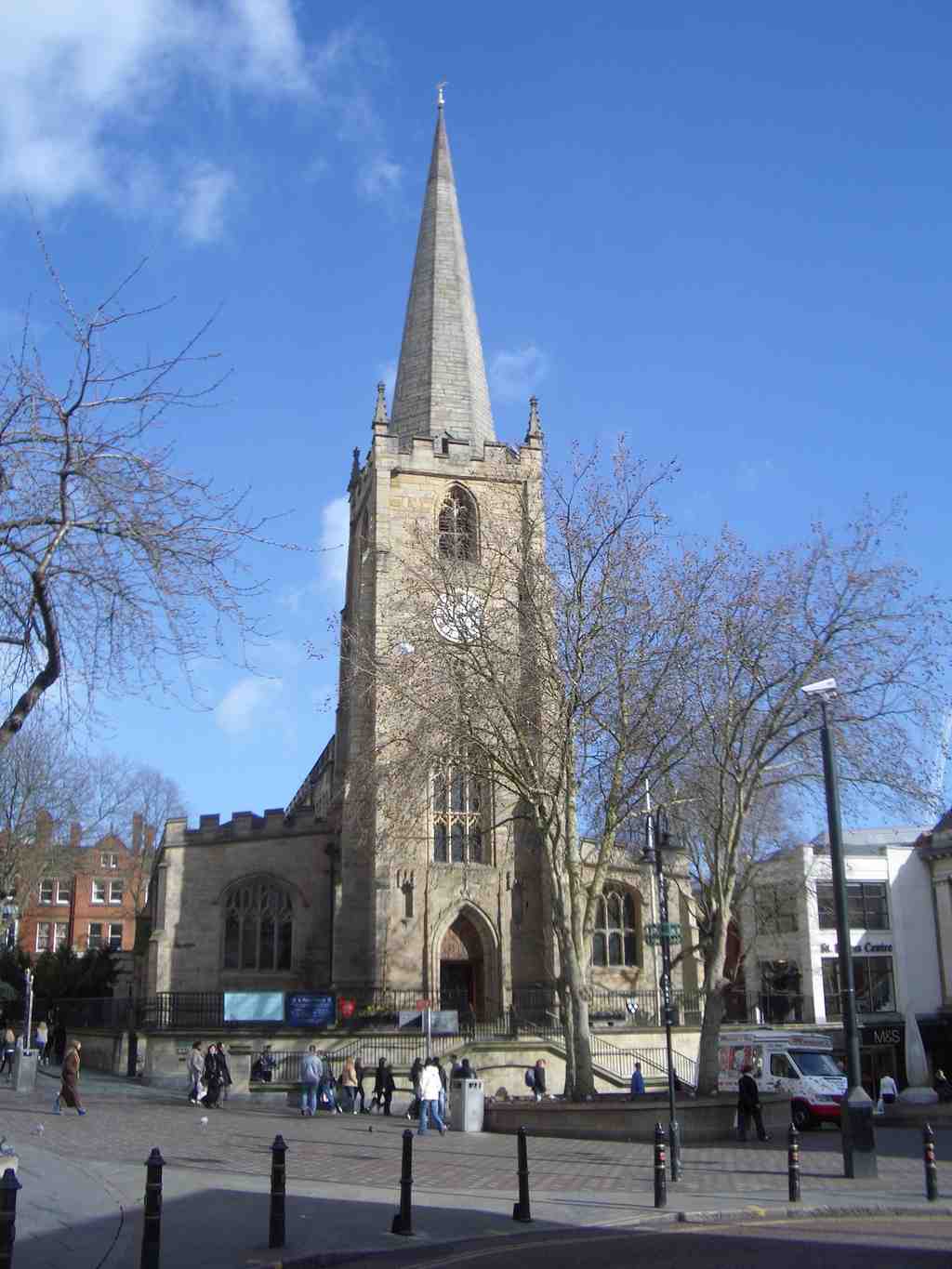
Alright, adventurer! As you stand here, feast your eyes on the impressive structure before you-St Peter's Church. You'll know you're in the right place when you see a tall, pointed spire that almost seems to pierce the sky. The church sports a striking, sandy-colored exterior and is surrounded by a mix of old and new architecture. The large clock on the tower is a dead giveaway, keeping everyone in check since the 19th century!
Now, let's dive into some fascinating history! St Peter's Church, officially The Church of St Peter with St James, is an Anglican parish church right in the heart of Nottingham. Being Grade I listed, it's recognized for its outstanding architectural and historical significance. St Peter's is actually one of the three medieval parish churches in the city, alongside St Mary's and St Nicholas.
Now, let's time travel a bit-this beauty shows signs of construction dating back to around 1180. The original church, founded around 1100, was unfortunately destroyed by a fire. The current structure offers an eclectic mix of architectural styles from various eras.
But St Peter's isn't just about bricks and mortar; it's got soul too! This place has an organ that dates back to 1812, providing melodies for a choir that's world-class. These choristers don't just sing for their supper here; they perform both locally and globally.
If music warms your heart, you’re in luck. The church hosts a series of Saturday morning concerts, a tradition since 1988. The organ, boasting a blend of old and new elements, ensures every note resonates through the historic halls.
Oh, and that clock tower! Installed in 1847 and once the largest in Nottingham, it’s not just there to tell time but to remind you of the craftsmanship of Reuben Bosworth. If you're a fan of quirky historical trivia, get this: in 1785, William Bradley earned a guinea for teaching the boys to sing-now that’s dedication!
So, while you take in the architectural splendor, remember that St Peter’s Church is much more than a pretty face; it’s a living, breathing piece of Nottingham’s rich history.


