
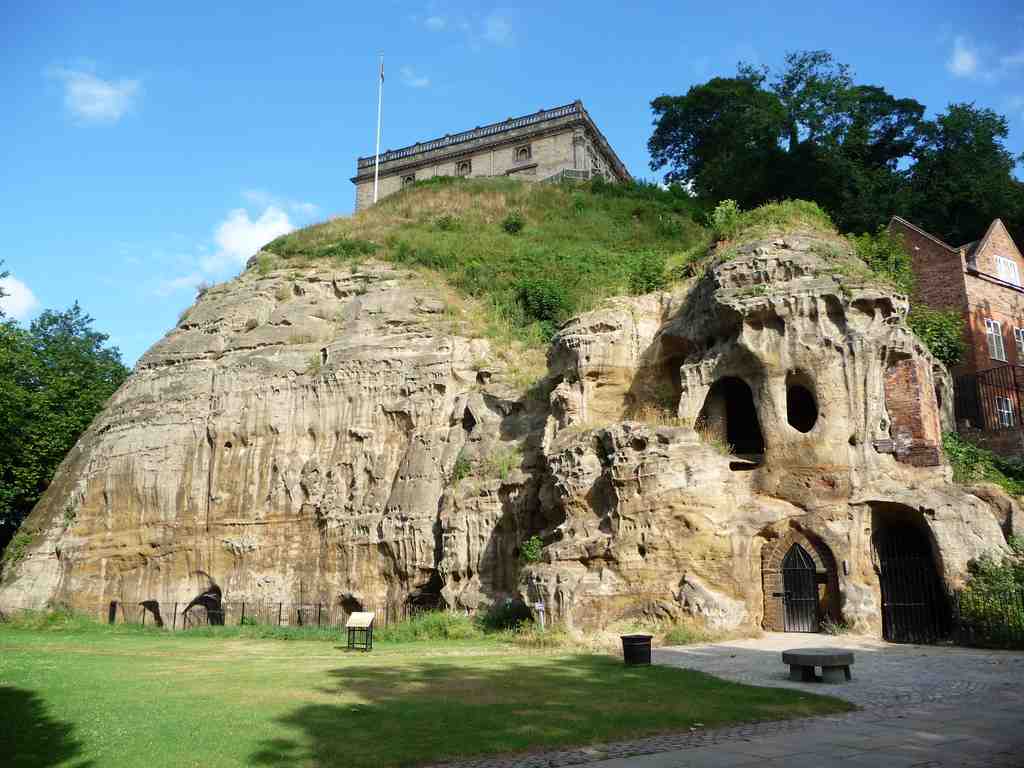
Alright intrepid explorer, you’re approaching the City of Caves! Look out for a modest entrance nestled against the hill, likely to have signs directing you into the depths below. The exterior might be a bit unassuming, but trust me, there’s a whole world waiting underneath your feet!
Now, let's time-travel back into these fascinating underground labyrinths. The City of Caves is truly an underground marvel, carved out of Nottingham's soft sandstone. Over the centuries, these caves have seen it all - from a medieval tannery to pub cellars to life-saving air raid shelters during World War II.
Nottingham, or as the Welsh Bishop Asser called it, Tig Guocobauc, meaning ‘place of caves,’ has more than 800 cataloged caves, some dating back to 1270-1300. Imagine living in one of these during medieval times - not exactly a penthouse suite, but hey, it had its charm!
Drury Hill, the medieval street under which these caves were once situated, saw its fair share of highs and lows. By the 19th century, this wealthy neighborhood transformed into one of Britain’s roughest slums, complete with overcrowded basements and rampant diseases. Not the kind of place you'd want to call home!
During WWII, these caves were vital, serving as air raid shelters, providing refuge from bombing raids. Walking through these tunnels, you may hear echoes of those tumultuous times.
The caves have been lovingly preserved and are now part of the National Justice Museum, run by the Egalitarian Trust since they opened to the public in 2004. Here, you’ll learn about the lives of those who sought shelter, worked, and lived in this underground world.
Don’t worry, your visit should be a bit more comfortable than medieval or wartime living conditions. So, ready to explore the subterranean secrets of Nottingham? Dive in and let your imagination run wild through these historic tunnels!


