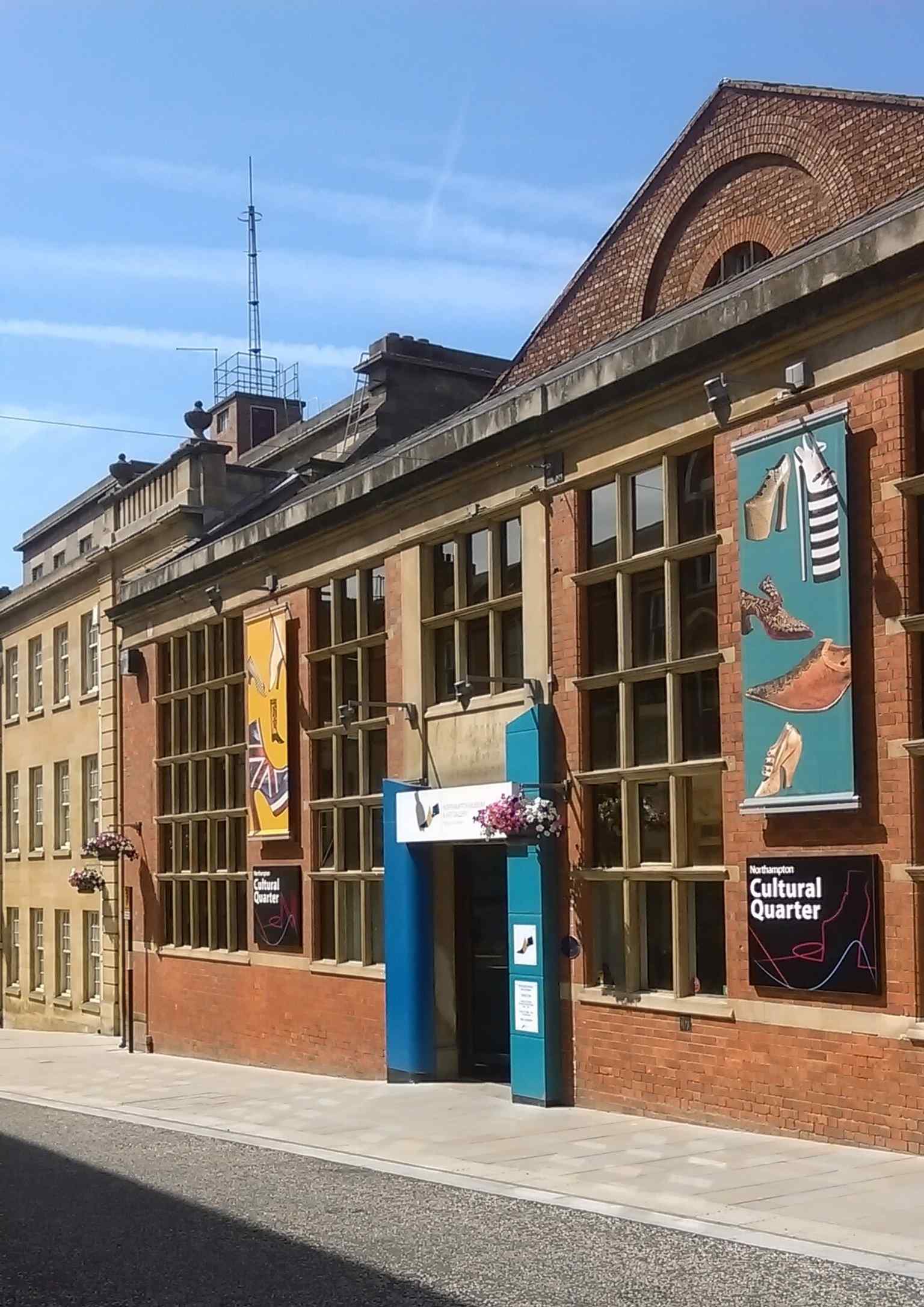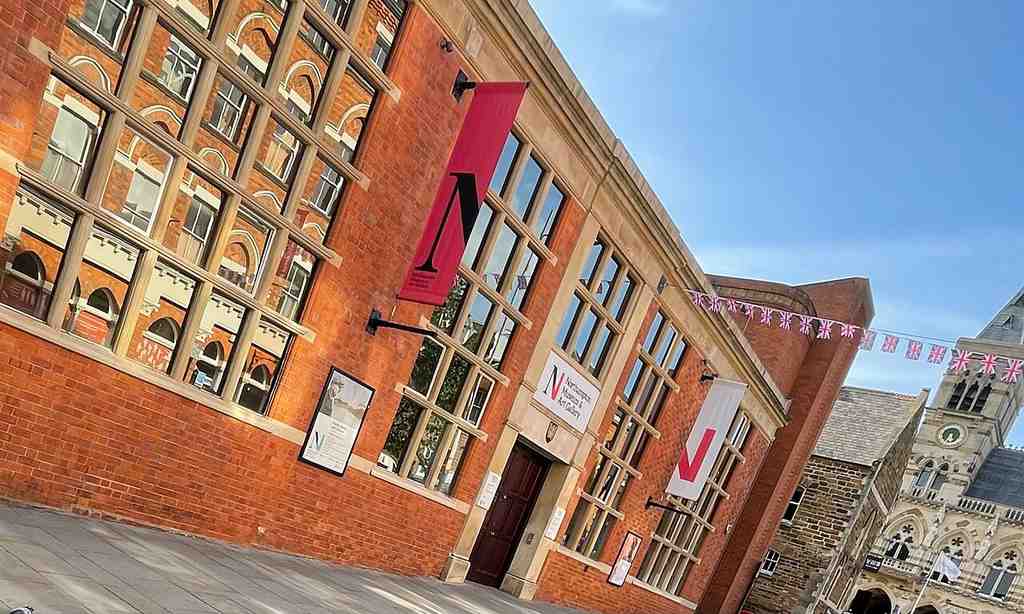
On your right is a long red-brick and stone building with tall rectangular windows and, beside it, a modern glass-and-sandstone extension marked by a high glazed atrium.
This is Northampton Museum and Art Gallery, but the bones of it tell a sterner story. You’re standing at the old County Gaol on Guildhall Road. In seventeen ninety-one, reformer John Howard argued for a better kind of prison design, and by eighteen forty-six this east wing followed that thinking: a galleried jail, with single cells stacked over four floors for around one hundred and fifty inmates. The place once kept people in line... and now it keeps memory in order, which is a much better use of the space.
Most visitors never clock what happened after the prison closed. The east wing became a library, public reading room and museum, while the west wing turned into a Salvation Army barracks, with a mineral water factory down in the basement. Northampton, as ever, found a practical second life for everything.
The town founded its museum in eighteen sixty-five and moved it here in eighteen eighty-four. Not long after, local shoe manufacturer Moses Philip Manfield began donating footwear as a kind of technical library. That was in the eighteen seventies. The idea was simple and sharp: let local workers study the best shoemaking from around the world, and they’d improve their own craft. Very Northampton, really - culture, yes, but preferably with useful stitching.
If you glance at your screen, the newer work shows clearly there: the redevelopment added that glazed link and courtyard extension in glass and sandstone, more than doubling the public space when the museum reopened in twenty twenty-one. G-S-S Architecture of Kettering led the project, and the new Shoe Gallery now sits in the reclaimed vaulted cells below. Old confinement, new purpose.
That expansion cost six point seven million pounds, and the money came with a long shadow. In two thousand and fourteen, the council sold the ancient Egyptian statue of Sekhemka for fifteen point seven six million pounds. The sale caused public outrage, raised serious questions about whether the statue should ever have been treated as an asset, and cost the museum its Arts Council accreditation for years. The building you see now is part of the result: improved, bigger, and tied to an argument the town still hasn’t entirely finished having.
Inside, though, the collection earns its place. It holds more than fifteen thousand pairs of shoes, one of the largest collections in the world. If you look at the interior image, you can see how that story now unfolds in the new gallery space. And it is not only about famous footwear, though Queen Victoria’s wedding shoes, Elton John’s towering boots, and the red boots from Kinky Boots all make their entrance. The deeper story belongs to the people who worked. The anonymous outworkers sewing at home. The closing-room women stitching uppers. The four-step chain of clicker, closer, laster and finisher. The factory hands who made millions of military boots in Northamptonshire during the First World War. The makers from Raunds, from the great workshops, from the Goodyear-welted trade that gave this town its stride.
That is the quiet triumph here. In the old prison vaults, the last word no longer belongs to warders, magistrates, or donors. It belongs to the workers, and the cells below have turned from places of confinement into rooms of remembrance.