
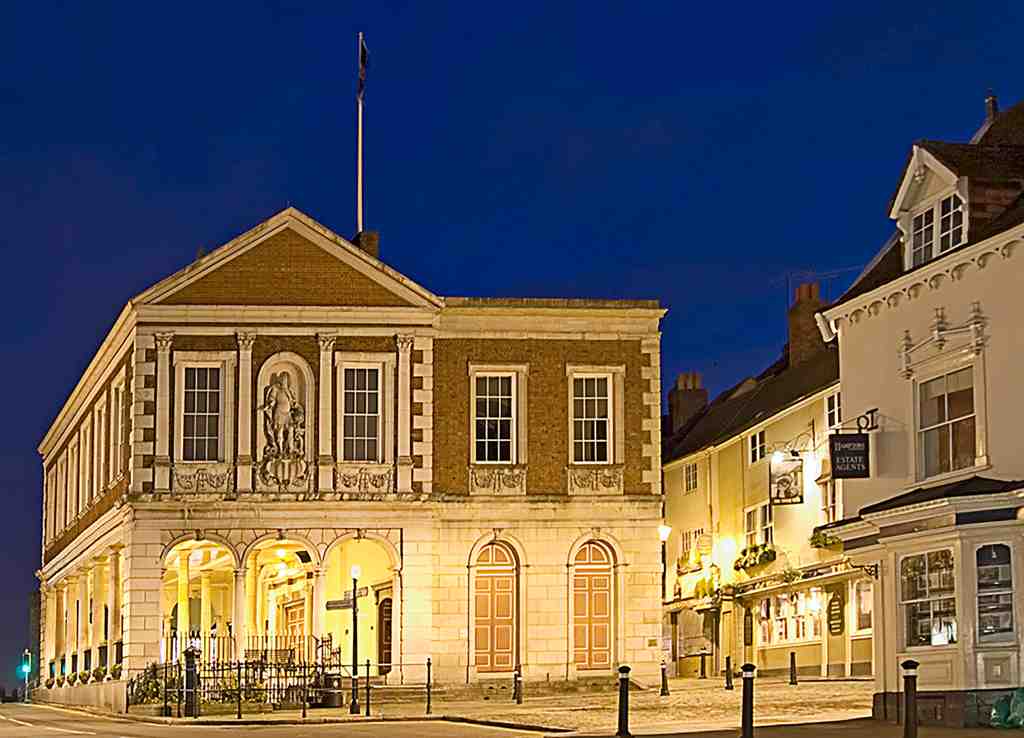
To spot the Windsor Guildhall, just look for the grand stone building on your left, with tall columns and arches out front, an eye-catching statue above the entrance, and a row of large windows gazing out over the bustling High Street.
Welcome to the magnificent Windsor Guildhall, where history, tradition, and a pinch of mystery come together right before your eyes! Take a deep breath and imagine the generations of townsfolk, mayors, and even royals gathering here-sometimes for grand ceremonies, sometimes just to haggle over sacks of corn. It all began way back in medieval times, with records from 1369 mentioning a place called the “gildaule,” where residents settled their disputes and planned their markets-even then, Windsor folk liked to keep things official!
By the early 1600s, this site was home to a wooden market house, built high up on pillars so farmers could sell their grain rain or shine, protected from England’s unpredictable weather. Now, as you stand before the impressive stone columns of the Guildhall, try to imagine that same bustling scene-the air thick with the smell of fresh bread, farmers shouting, coins clinking--the town alive and thriving beneath these arches.
The building you see now started taking shape in 1687. Legend says the famous Sir Christopher Wren himself completed the job after the original architect passed away. Here’s a fun bit: folks claimed that Wren was forced by the town council, who didn’t trust his skills, to add extra columns for support. Undeterred, he’s said to have left them just a hair short, so they don’t quite touch the ceiling-sort of an architectural “I told you so!” A cheeky move, if true. Or is it? Turns out that’s probably just a story, but what’s history without a few tall tales to keep architects on their toes?
Wren’s actual connection might be a little more complicated: his son, Christopher Wren Junior, served as Windsor’s Member of Parliament and even put his mark here, commissioning the statue of Prince George of Denmark on the southern end of the building in 1713. Meanwhile, the north side sports a statue of Queen Anne, added by the town council in 1708. It’s hard not to feel the weight of centuries as you look up at these stone rulers keeping watch over the town.
Step around to the back, and you’ll find a bit of Victorian flair-an 1829 extension designed by James Bedborough added a two-story wing, and the whole building underwent serious restoration in 1851 and again just after World War II. If these walls could talk, they’d tell stories of Quarter Sessions and justice served until 1971, and perhaps even whisper tales of food rations and wartime hustle during the 1940s.
And in more recent times, who would have thought this stately hall would play host to not one but two truly historic weddings-Prince Charles and Camilla Parker Bowles in 2005, and Sir Elton John with David Furnish later that very same year, marking one of England’s first same-sex civil partnerships. Can you hear the church bells and camera shutters snapping?
Today, Windsor Guildhall is still the beating heart of the community, home to the borough council’s ceremonies and committee meetings-and since 2011, a delightful museum opened by none other than Queen Elizabeth II herself. Now, before you head off, just remember: there’s no better spot in Windsor to stand still and let almost seven centuries of history swirl around you!


