
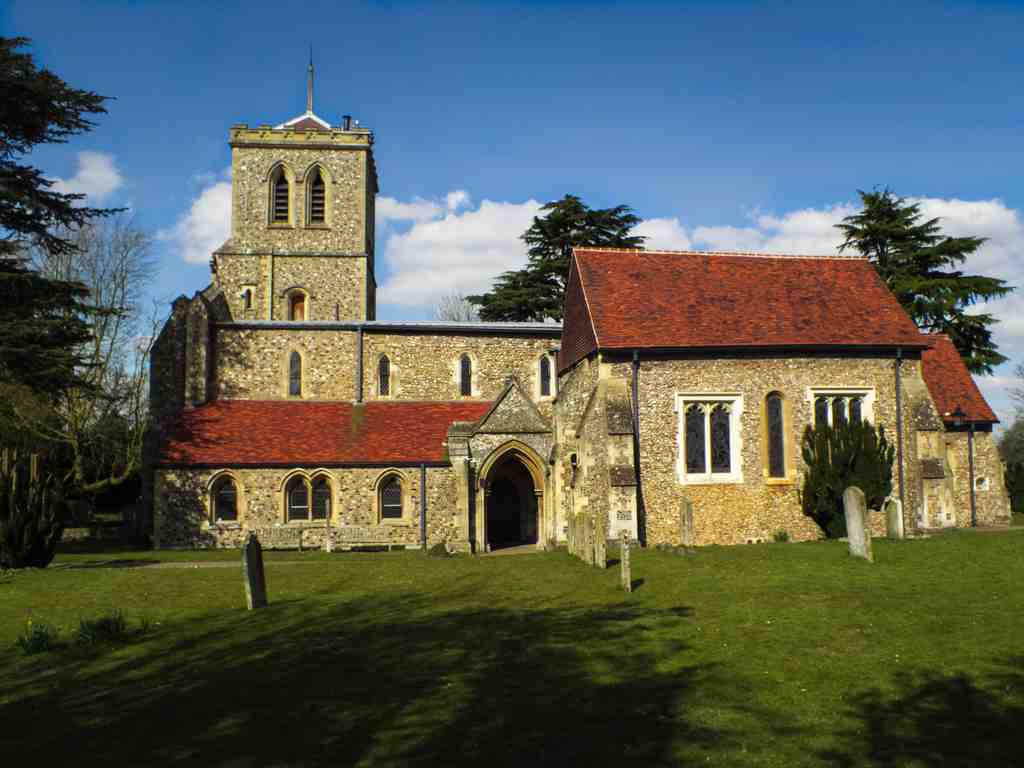
Look ahead for a low, rugged building with a red-tiled roof and a square stone tower topped by a weather vane, sitting amidst a grassy graveyard and stands of old yew trees-this is St Michael’s Church.
As you stand before St Michael’s Church, imagine the centuries slipping away beneath your feet, all the way back to when Roman Verulamium thrummed with life here, its ancient streets just steps from where you are now. This church, with its weathered walls and that solid square tower rising boldly into the sky, is one of the oldest and most precious survivors of Anglo-Saxon craftsmanship in all Hertfordshire. Picture dusty travelers and pilgrims trudging up the road a thousand years ago, their cloaks whipping in the wind, pausing here on one of the three old routes converging on the sacred city of St Albans, drawn by the promise of the mighty Abbey and the shrine of the first British martyr, Saint Alban.
It was Abbot Wulsin, or maybe Ulsinus-records muddle his name-who founded St Michael’s around the year 948, or even earlier. He dreamed up a trinity of welcome points: a church on each main road, to greet the pilgrims flooding in. The stone of St Michael’s was hewn and stacked by those seeking refuge and blessing, using bricks robbed from the very Roman ruins scattered nearby. Even today, if you peer closely, you’ll spot those warm, reddish Roman bricks in the window splays, silent witnesses from a vanished empire.
Walk around the church and you’ll notice how it doesn’t quite match from side to side-one set of arches is uneven, another a little larger, the south chapel rising higher than the main nave, all growing and shifting as centuries pressed on and different hands shaped the stone. Imagine the sound of stonemasons at work,, building onto what their ancestors had started. The north aisle appeared in the 12th century, then the south; tall lancet windows pierced the walls in the 13th to let in light, but the south aisle became unstable and crumbled away, only to find new life as a chapel.
Picture the 15th century, when the great nave roof was hoisted up, its beams resting on sturdy stone corbels. The church was alive with sound and color-wooden screens, a painted ‘Doom’ depicting souls at judgment over the chancel arch, and a bell tower with the clatter of bells calling the faithful. Not all the grandeur survived. The tympanum and its fearsome painting were lost in a later Victorian restoration, the rood screen removed, but you can still find the stairs leading up to where it once stood, hinting at secret rituals and ancient drama.
Inside, a strange sense of peace lingers, but also whispers of important guests. Francis Bacon-the great thinker, the man who gave birth to modern science-rests here in a north wall alcove, immortalized in stone, seated as though deep in thought. Look for the 14th-century brasses too: worn yet beautiful, testifying to generations of townsfolk and knights who found rest beneath these shadowed rafters.
The bells overhead are a special legacy: originally there were six, famed throughout town and the namesake of a neighboring pub, and now eight, layered over the years by famous foundries, their sound marking coronations, jubilees, and everyday joys and losses.
And what about the music? St Michael’s has always filled with song and spirit, its organ evolving through the years. The current one, with pipes partly recycled from its predecessor, stands proudly in oak cases, filling the church with the echoes of centuries’ worth of hymns and hopes.
All around you, every stone, pew, and window tells a story-of Roman governors, medieval builders, Elizabethan worshippers, even eccentric Victorian lords tinkering with the design. But through it all, St Michael’s remains a place of gathering, remembrance, and quiet awe, a living link between ages past and present. As you let the breeze carry the faint sound of bells or music, remember you’re part of the next chapter in a tale that began before William the Conqueror set foot in England-here, on the old road through St Albans, where faith, stone, and time are stitched tightly together.
To delve deeper into the monuments, bells or the organ, simply drop your query in the chat section and I'll provide more information.


