
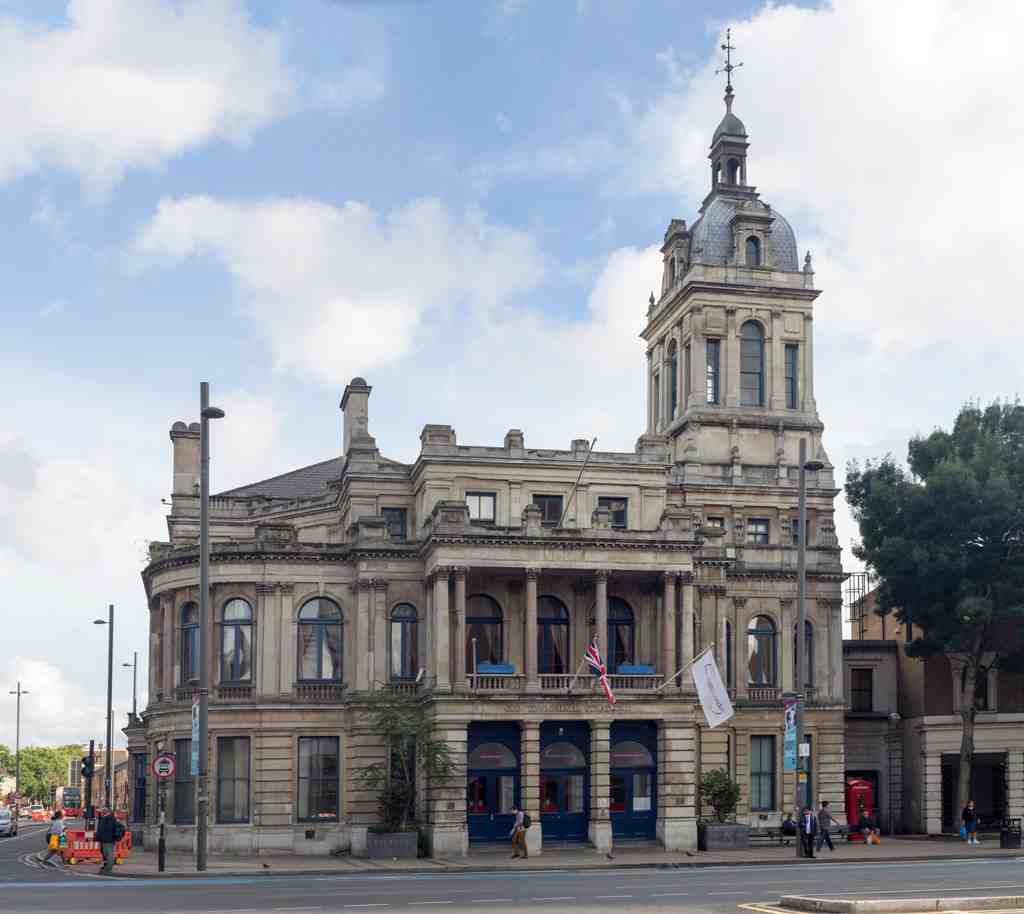
To spot the County Borough of West Ham, look for the grand old stone building with tall arched windows, a flag flying out front, and a striking domed tower rising above the street-just ahead of you, standing proudly on the corner.
Here you are, standing in front of a building that’s more than bricks and mortar-it’s the centrepiece of a wild and wonderful chapter in London’s history. Imagine, if you will, a chilly morning in 1886. The streets are alive with the hammering of factory machinery, the rattle of carts, and the steady buzz of a growing Victorian town-West Ham, or as it was often nicknamed, “London over the border.” Back then, this area pulled in people from all over, drawn by jobs in the booming factories, churning out pharmaceuticals, chemicals, and food. This might sound quite industrious, but trust me, the marshy grounds weren’t always sweet-smelling-thanks to the Victorian habit of moving all the smelly, dangerous industries out of central London and right over here!
West Ham started off as part of Essex, balanced right at the edge of London, with the River Thames to its south and the River Lea to the west. The surrounding area grew so quickly that by the 1901 census, it was the ninth most populous spot in all of England, home to more than a quarter of a million people. You could say it was the hotspot of the industrial revolution-if by hotspot you mean factories springing up everywhere and neighborhoods popping up so fast the map-makers almost gave up. But as the factories flourished, so did the problems. Imagine crowded houses, poor plumbing, and outbreaks of illness sweeping through the muddy streets.
A group of determined local residents thought, “Enough is enough!” and took matters into their own hands. These folks pushed for change, and soon a medical officer named Alfred Dickens-yes, the brother of the famous Charles Dickens-showed up to investigate the grim living conditions. His 1855 report was more damning than a rainy London afternoon, leading to a fresh start: new health boards, better water supply, paved streets, and even a fire brigade.
By 1886, local pride ran deep, and so did the desire for independence. The people here wanted nothing to do with being swallowed up by London’s government. Instead, they fought for-and won-their own charter, electing their very first mayor, John Meeson. He was a local lime-burning and cement-making man, and I dare say, probably always had dust on his coat and a strong handshake. Later on, Daisy Parsons would make history as West Ham’s first woman mayor in 1937, bringing a fresh voice (and probably some much-needed sense) to the job.
West Ham’s council grew fast-new wards popped up like mushrooms after rain, each one with its own lively characters and tales. The area also ran its own trams, which clanged along the streets, first pulled by horses, later powered by electricity. At their peak, these rattling cars zipped across more than 16 miles of tracks, making sure every corner of West Ham could hear their cheerful bells.
And the politics! After the famous London Dock Strike in 1889, Labour Party councillors made their way into local government, squaring up against a Municipal Alliance who wanted to keep things old-fashioned. For decades, the council’s chambers rang with the debate: progress or tradition, change or comfort? Labour eventually held on to power for good after the First World War, but not before more than a few spirited arguments and dramatic council meetings.
Take a good look at the building’s coat of arms if you can spot it-the crossed hammers represent the mighty Thames Ironworks, and the ship speaks to West Ham’s connection to London’s docks. The Latin words below, “Deo Confidimus,” mean “In God We Trust”-probably a handy phrase on days when the river threatened to flood or the factories belched out a new smell.
By 1965, a new chapter began. West Ham’s days as a county borough ended, as it was swept into the newly formed London Borough of Newham. Yet, whenever you pass this grand old building, you get a sense of all those bustling factories, smoky skies, and the voices of a community that cherished its independence-and always managed to stand out in the great story of London.
For a more comprehensive understanding of the area and boundaries, predecessors or the incorporation, engage with me in the chat section below.


