
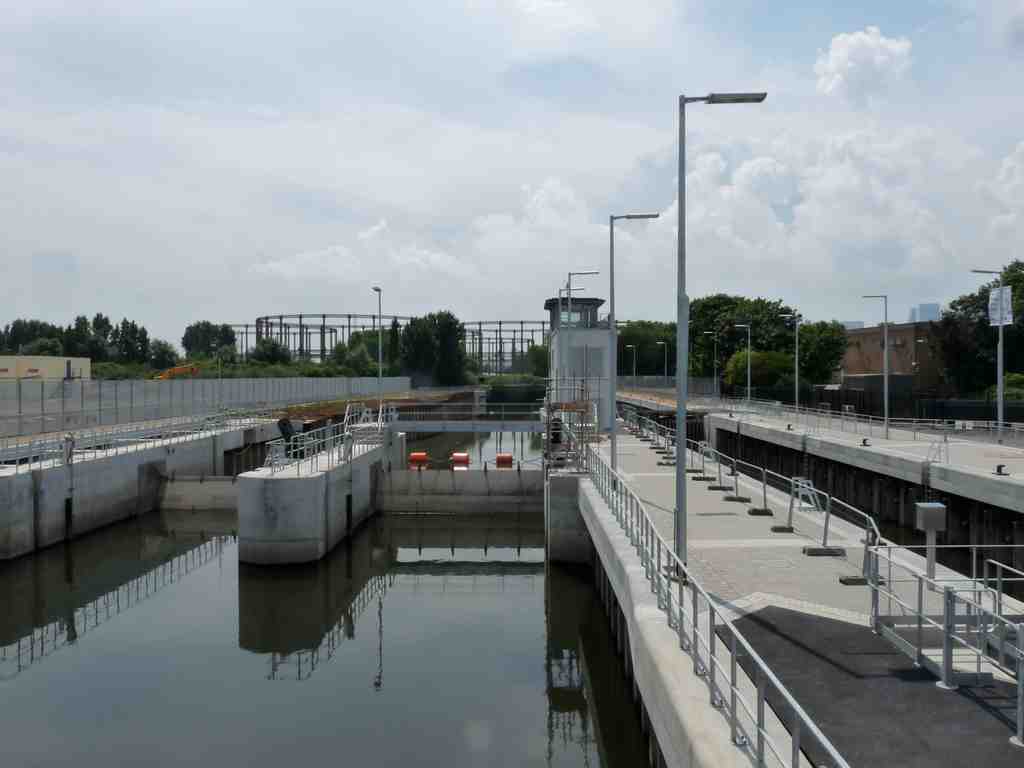
You’re looking for a stretch of calm water, flanked by neat concrete walls and guardrails, with a modern lock structure and pathways running alongside - direct your gaze ahead and slightly down to spot this unique waterway feature, surrounded by railings and walkways.
Now, as you stand in front of the Bow Back Rivers, imagine you’re at the entrance to a true maze of London’s watery past and present, where history and industry ripple out together just like the water at your feet. Picture yourself centuries ago, walking not on solid ground but atop the marshy wetlands of Stratford. The Bow Back Rivers, a network of channels winding between Bow and Stratford, have connected the River Lea to the Thames for well over 800 years. Can you hear it? That sound would once have been mixed with the turning of ancient mill wheels, as these waterways were carved out to drain the marshes and power watermills starting in the twelfth century.
It wasn’t just any marsh, though - this damp expanse was common land, where cattle would graze in the summer and hay would grow tall for winter feed. In those early days, there was no Olympic Park, only a stone causeway stretching between settlements, and people forded the river where Viking ships once sailed. As early as 896, Alfred the Great, keen to outfox invading Danes, ordered the river to be split, stranding enemy ships on receding tides, their angry shouts likely echoing much like the squawks of gulls today.
Fast forward to Queen Matilda, a medieval lady with a taste for bridges and a knack for splashing out on infrastructure. Legend says she funded the first ‘Bow’ Bridge after falling into the river herself - I guess even queens can’t avoid a soggy accident! The ‘bow’ shape of the bridge, elegant and arched like a drawn bow, may have inspired the name for this spot, setting herself apart from those straight-laced Anglo-Saxon structures.
As you scan the water, imagine tidal mills clattering along the banks, tidepools swirling with the movement of grinding stones and bargemen shouting as they ferried grain, chalk, coal, and even timber up to London. By the 1700s, the waterways were crucial for getting food and supplies to the growing city, all while dodging tolls and keeping ahead of the ever-annoyed millers, who preferred their water nice and high for milling, not lowered by passing boats.
The river experienced highs of commerce and lows of neglect. Picture the 1930s, with workers desperately digging and reshaping the banks during hard times, rebuilding locks and channels to stave off unemployment. In the 1960s, though, commercial boats dwindled, and the waterways shrank to tired tidal creeks.
But these rivers refused to be forgotten. By the 21st century, British Waterways saw their potential; the Olympic bid offered a second act. For the London 2012 Olympics, builders imagined the rivers bustling again, barges carrying in stadium steel instead of just carrying away history’s silt. Although the barges’ grand return was more of a trickle than a flood, the restoration transformed the rivers. The aquatic planting here was the largest in Britain - hundreds of thousands of water-loving plants now tremble in the breeze, providing havens for fish and birds that weren’t invited to the party back when it was all locks and sluices.
Standing here now, you’re on ground once unreachable, above channels that shaped the landscape for centuries. The locks in front of you are part of the latest changes, their up-and-over gates lifting and clanking to manage both floods and boats. Sometimes, when the gates rise and the water swirls, you might imagine echoes of Alfred’s strategy or Queen Matilda’s watery mishap, all woven together in the gentle swirl and splash of the Bow Back Rivers.
So, while these rivers might look calm today, they carry stories of industry, invention, royal drama, and even Olympic dreams riding just beneath their surface. And if you listen closely, you might just catch the timeless chorus of water, wind, and the endless movement of London itself.
Exploring the realm of the name, olympics or the locks? Feel free to consult the chat section for additional information.


