
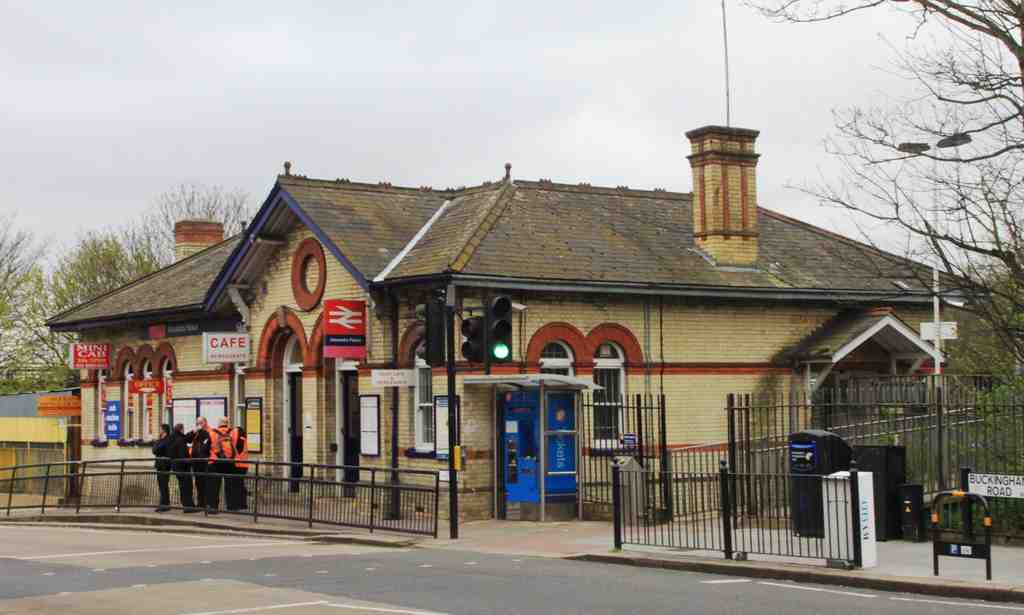
To spot Alexandra Palace railway station, look for a low, yellow-brick Victorian building with arched windows and a blue-framed gable right on Buckingham Road-just follow the red British Rail logo and you can’t miss it!
Alright, you’re standing outside Alexandra Palace railway station-an unsung hero of rail travel, tough enough to survive while its two sibling stations, just like socks in a washing machine, mysteriously disappeared over the years. Take a deep breath and picture the buzz of trains on tracks stretching toward London King's Cross just a few miles down the line, the air tingling with possibility and the faint scent of strong platform coffee. This unassuming station has worn more identities than an undercover detective. It started life in 1859 simply as Wood Green, expecting a quiet existence, but before long the dramatic rise of Alexandra Palace nearby thrust it right into the limelight, and in 1864, it picked up a glitzy new title: Wood Green (Alexandra Park).
Imagine Victorian London-the clatter of carriages, the buzz of anticipation in the air as crowds made their way here to see Alexandra Palace, that grand “People’s Palace” perched on the hill. The station became a hub, carrying everyone from eager families with picnic baskets to proper gentlemen in top hats (and, if you look hard enough, probably a fox sneaking in for a free ride). For a time, it seemed like the area would be blanketed with railways; not just this station, but another right at the Palace itself, and one at Palace Gates too. But as history loves a twist, only this one survived while the others slipped quietly into obscurity-leaving behind ghostly memories and the occasional oddball enthusiast hunting for old platform remains in the undergrowth.
Next, take in the beautiful old station frontage-those bricks have seen over a century and a half of stories. Trains, of course, have thundered past, from the days of steam to today’s silent, electric Great Northern expresses. The London and North Eastern Railway took over during the roaring twenties, and the station’s name would boomerang, reverting to Wood Green in 1971 then-like a pop star making a comeback-snapping back to Alexandra Palace in 1982.
Now, look closer and you’ll spot echoes of modern life. Maybe you see the blue ticket machines and Oyster readers, silently beeping away as Londoners tap in and out, a far cry from the days when “contactless” meant merely avoiding eye contact with the ticket inspector. Plans were even made, more than once, to turn this spot into the grand terminus of an underground line-imagine the hum of excited voices about to travel beneath the city, only to have the project swept away like dust in the wind when rail magnate Charles Yerkes changed the route.
Not everything here is about trains rushing onward. Today, the station is a little green jewel thanks to the Friends of Ally Pally Station-a band of tireless volunteers who turned the platforms into gardens bursting with roses, herbs, fruit, and art. Some folks come for the train, end up staying for the tulips! Their monthly Gardening Parties keep the platforms lively, and their biggest project-the Bedford Rose Garden-rose (pardon the pun) from lockdown days, built up by a community sharing seeds, saplings, and neighborly cheer.
Listen closely and you’ll hear the past still quietly echoing in the present. The hustle of old commuters, the hopes of 1920s railway planners, and the laughter of modern gardeners all blend into one unlikely but welcoming symphony. Even now, as you stand among the cheerful bustle-maybe dodging a pigeon or two-you’re a part of its story. And who knows? If Crossrail 2 ever makes Alexandra Palace its terminus, the station will once again become a gateway to countless new adventures, its history rolling on like the tracks heading north and south.
So next time someone tells you train stations are just places to pass through, tell them the tale of Alexandra Palace station-it’s living proof that sometimes, waiting for your train is just the beginning of the story.


