
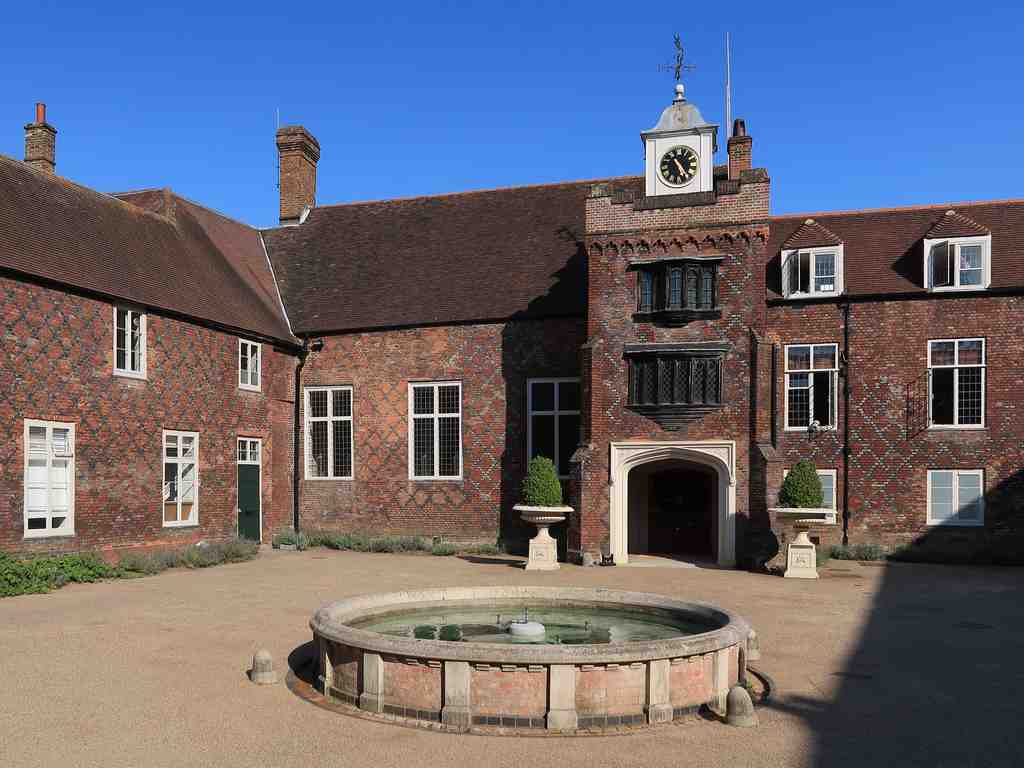
To spot Fulham Palace, look for a large, red-brick building with ornate diamond patterns pressed into the walls, a central clock tower above the main entrance, tall windows, and a peaceful fountain right in front-simply follow the path until you reach the grand courtyard.
Welcome, time travellers! As you stand here, take in the crisp air swirling around the old bricks of Fulham Palace. Imagine, if you will, you’re not strolling through 21st-century London but slipping back through thousands of years of history-don’t worry, there’s no need to dodge any Vikings unless you see someone with a horned helmet by the fountain.
Now, let’s wind the clock back-way back. The site of Fulham Palace was no ordinary plot of land; ancient folks once camped here in prehistoric times, working flint on what was then a little eyot surrounded by the wild Thames. Fast forward a bit to the Romans, and you’d have found farmers working the land, maybe a villa standing proud by the water’s edge, with the sound of distant river traffic in the air.
In AD 704, this land became truly special. Bishop Waldhere acquired the Manor of Fulham and its reach stretched far and wide-imagine ruling everything from Chiswick to Chelsea! Since the 8th century, almost every Bishop of London has called this palace home, and the epic saga really begins here.
If you’re a fan of Medieval drama, picture a roaring hearth around 1080, the flicker of candlelight bouncing off stone walls, and, oh yes-a few surprise house guests. Bishop Robert de Sigello was once held captive here during “The Anarchy.” No Netflix in those days, but at least the roof was solid-thanks to a shingle board borrowed (let’s hope they used the word ‘borrowed’) from the nearby church!
By the late 1400s, the palace was transformed by Bishop Thomas Kempe and Richard FitzJames, with fantastic Tudor touches still visible today. The gate you might have just walked past? Its timber dates to 1495-older than most family trees. Some bishops barely had time to admire their fresh home before moving on-much like a London flat rental these days.
As you walk through the courtyards, you’re crossing layers of architectural time: the grand Tudor hall, elegant Georgian court, and hints of Gothic flair. Add in the occasional creak or groan from these ancient timbers, and you’ve got an atmosphere that would make any ghost feel right at home.
Fulham Palace has survived wars, fashions, and waves of history. During World War I, the grounds grew food for the war effort while the palace itself buzzed with the activity of a military hospital. The bishops that remained after such hustle and bustle couldn’t always keep up with the bills, and the poor old palace was nearly handed over to secular hands… but in true dramatic fashion, the bishops clung on!
World War II wasn’t kind either-bombs left scars, but resilience runs deep in these walls. After the Church of England finally vacated in 1973, Fulham Palace had seen better days. Luckily, a dedicated group swooped in by the 1990s to restore and protect it, bringing the palace back to life for curious explorers like you.
Strolling through the gardens, you tread where exotic plants from all over the world first grew in England. The palace boasts one of London’s oldest botanic gardens-founded by Bishop Grindal in the 1500s-and introduced tamarisk, azaleas, and even the first English coffee tree! Imagine the rumble of 17th-century horticultural excitement, the snip of pruning shears, and the eager exchange of seeds between continents. In fact, a giant holm oak has stood here for 500 years. Maybe give it a pat for sticking around so long!
A mysterious moat once protected the palace-nearly 1.4 km long-the greatest domestic moat in all medieval England. Though filled in during the 1920s, it’s all still there, silently circling underground. Some say it was for defense, others claim it was just handy flood protection (the Danes were clever like that).
Finally, be sure to peek into the Tait Chapel, marvel at the ancient rooms restored by the Fulham Palace Trust, and enjoy stories of lost manuscripts, American grapes sent to Queen Elizabeth I, and bishops who never seemed to sit still for long. If you listen close enough, you might just hear them whispering through the halls-or giggling about you taking this tour.
So, as the sun glints off these old bricks, and the fountain splashes gently at your feet, know you’re standing on ground shaped by centuries of secrets, power, and the odd well-timed joke. Now, onwards: adventure awaits at the next stop!
Yearning to grasp further insights on the fulham palace today, the palace moat or the the palace garden? Dive into the chat section below and ask away.


