Lincoln Audio Tour: Unveiling History's Treasures
Beneath the shadow of Lincoln Cathedral, ancient stones guard tales few ever hear. This self-guided audio tour unlocks a city layered with rebellion, scandal, and breathtaking survival—hidden in plain sight for centuries. Wander beyond the postcards to discover where The Drill Hall rang with the raw energy of The Rolling Stones, where a single accusation at the Jew’s House sparked violence that shook a kingdom, and where at The Collection Roman mosaics lie buried beneath modern feet. Why did soldiers and stars alike converge inside the same imposing walls? What secret was unearthed beneath a new museum wing? And whose story echoes through Steep Hill’s oldest limestone arches? Let curiosity guide your steps through battles fought, reputations shattered, and wonders rediscovered. Lincoln’s history pulses underfoot, inviting you to see each street anew. Begin now—unlock the secrets written into Lincoln’s ancient stones.
Tour preview
About this tour
- scheduleDuration 80–100 minsGo at your own pace
- straighten2.7 km walking routeFollow the guided path
- location_onLocationLincoln, United Kingdom
- wifi_offWorks offlineDownload once, use anywhere
- all_inclusiveLifetime accessReplay anytime, forever
- location_onStarts at Lincoln Drill Hall
Stops on this tour
lock_open 3 free previews · 9 unlock with purchase
Designed by the talented architects Goddard and Son, this building was originally constructed in 1890 for the 1st Lincolnshire Rifle Volunteers. But don't worry, we won't be…Read moreShow less
Designed by the talented architects Goddard and Son, this building was originally constructed in 1890 for the 1st Lincolnshire Rifle Volunteers. But don't worry, we won't be asking you to do any military drills today. Instead, we'll be exploring the exciting events and history that have taken place here. Now, I've got an interesting fact for you. Did you know that The Drill played host to a legendary performance by The Rolling Stones on New Year's Eve in 1963? Talk about starting the new year in rock 'n' roll style! The very next day, they made their debut on the BBC's Top of the Pops. They must have been practicing their moves right here at The Drill! Over the years, this building has seen its fair share of transformations. It served as a military training site for most of the 20th century, but eventually fell into disrepair and closed in 1999. Thankfully, the people of Lincoln wouldn't stand for that! In response to public demand, The Drill was reopened after a magnificent refurbishment program in 2003, thanks to the hard work of local company Lindum Construction. Unfortunately, The Drill faced another challenge in 2020 when its funding was cut, and it had to close its doors. But fear not! The Lincoln College Group stepped in to save the day and gave this iconic venue a fresh lease on life. After an extensive renovation, The Drill reopened in December 2021, just in time for some fantastic pantomime performances. This Grade II listed building has a main auditorium with a maximum capacity of around 500. It has been graced by the likes of Buzzcocks, The Damned, Iron Maiden, and many more. Comedy fans have also had their share of laughs with acts like Russell Howard, Marcus Brigstocke, and Mark Thomas tickling their funny bones. If that's not enough, The Drill also plays host to a variety of events, including theatre performances, literature talks, films, classical music, and even business meetings. And let's not forget the Lincoln Beer Festival, where you can enjoy some tasty brews while soaking in the lively atmosphere. Oh, and did I mention that The Drill is home to The Butterfly Club? This beloved disability club night provides an inclusive party experience for people with learning disabilities and physical impairments. It's all about bringing people together and having a great time. So, whether you're here for a night of music, a dose of comedy, or just a tasty meal at The Limelight restaurant, The Drill has got you covered. Get ready for an unforgettable experience at this buzzing community hub right here in Lincoln! Let's move on to our next stop, The Collection. Keep up, we've got lots more to see!
Open dedicated page →Now, I have to tell you, this museum goes way back, all the way to 1906 when the City and County Museum was founded. The first curator, Arthur Smith, was quite the natural history…Read moreShow less
Now, I have to tell you, this museum goes way back, all the way to 1906 when the City and County Museum was founded. The first curator, Arthur Smith, was quite the natural history enthusiast. He collected everything from bugs to butterflies, flies to bird specimens. I guess you could say he was a collector extraordinaire! But let's not forget about the Usher Gallery, which was built to house the collection of James Ward Usher. He must have had a serious love for art to leave funds for a whole gallery! The Usher Gallery is actually the only purpose-built public art gallery in Lincolnshire. Impressive, right? The museum and gallery are now housed in a purpose-built building, designed by the talented architect Sir Reginald Blomfield. It's quite the sight to see, with stone and brick panels, pilasters, and even a broken pediment. I must say, the Prince of Wales must have had good taste, as he officially opened the Usher Gallery back in 1927. In 2005, a new building was added to the mix, designed by Panter Hudspith Architects. They even conducted an archaeological excavation before building, and guess what they found? A corner of a mosaic-paved passage from Roman times! Talk about a hidden treasure! Inside the museum, you can journey through time, starting from the Stone Age all the way to the Medieval period. They've got it all covered, from Roman occupation to Viking invasions. And don't forget to check out the Horncastle boar's head from the Anglo-Saxon era. It's quite snoutstanding! So, grab your sense of adventure and immerse yourself in the history and art at The Collection. It's a treasure trove of knowledge and entertainment! Eager to learn more about the history, buildings or the exhibits? Simply drop your inquiries in the chat section and I'll provide the details you need.
Open dedicated page →Now, the Jew's House is located on Steep Hill in Lincoln, just beneath Jew's Court. It has a strong connection to the Jewish community that thrived here during medieval times. But…Read moreShow less
Now, the Jew's House is located on Steep Hill in Lincoln, just beneath Jew's Court. It has a strong connection to the Jewish community that thrived here during medieval times. But let me tell you, things weren't always easy for them. In 1255, there was this crazy blood libel scandal that spread like wildfire. People started accusing the Jews of kidnapping and ritually killing a Christian child. Can you imagine? It caused so much hysteria and hatred towards the Jewish community. It was a really tough time. Then, in 1290, King Edward I decided he'd had enough and expelled the entire Jewish community from England. The Jew's House was allegedly taken away from its Jewish owner during this time. But guess what? This place has stood the test of time and has been occupied ever since! Since around 1973, it has been transformed into a delightful restaurant. Before that, it was an antiques shop. So, you can imagine all the stories these walls hold! Speaking of walls, the Jew's House is made of local limestone in a style called Norman or Romanesque. The building is a real beauty, with a hall on the first floor, measuring about 12 by 6 meters. You'll also find some surviving features like a fancy carved doorway, some double-arch windows, and loads of stonework on the upper level. Oh, and don't miss the chimney breast that rises above the front door! It used to serve a fireplace on the upper floor. There used to be a couple of columns supporting the arch, but those have disappeared over time. Maybe they just needed a break, who knows? Alright, my friend, that's the story of the Jew's House. Hope you enjoyed it! Let's move on to our next stop.
Open dedicated page →
Show 9 more stopsShow fewer stopsexpand_moreexpand_less
Ah, the Norman House! Located on Steep Hill in Lincoln, England, this historic building is a marvelous example of Norman domestic architecture. Dating back to around 1170 to 1180,…Read moreShow less
Ah, the Norman House! Located on Steep Hill in Lincoln, England, this historic building is a marvelous example of Norman domestic architecture. Dating back to around 1170 to 1180, this house has quite the intriguing history. Now, here's the fun part! This place was actually known for a long time as "Aaron the Jew's House." But don't worry, I promise no treasures are hidden inside. It was believed to be the former residence of Aaron of Lincoln, a prominent figure from the 12th century. However, it turns out that was just a mix-up, and we've learned that Aaron probably didn't actually live here. Oops, sorry Aaron! But fear not, this Norman House has been a vibrant shop for many years. And guess what? It's currently home to a tea importer! Can you imagine sipping on a delightful cuppa while surrounded by history? It's quite the experience, trust me. Oh, and before I forget, this place is a Grade I listed building by English Heritage. So, whenever you visit, take a moment to appreciate the impressive architectural details. And don't forget to snap a selfie outside this unique and storied gem on your Lincoln adventure! Onward we go!
Open dedicated page →Ah, the magnificent Lincoln Cathedral! Also known as Lincoln Minster, this impressive Church of England cathedral is a must-see here in Lincoln. It's like the Beyoncé of…Read moreShow less
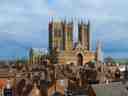
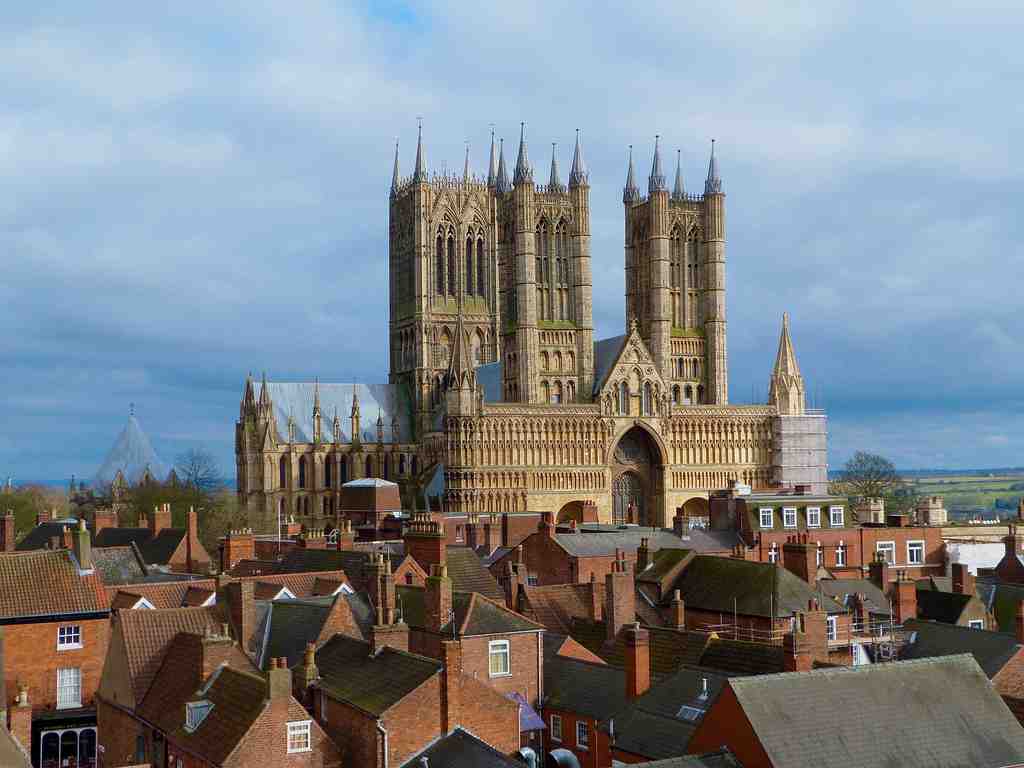
Ah, the magnificent Lincoln Cathedral! Also known as Lincoln Minster, this impressive Church of England cathedral is a must-see here in Lincoln. It's like the Beyoncé of cathedrals, you know what I mean? Built in 1072 by bishop Remigius de Fécamp, this place has seen its fair share of action. It was completed in 1092, but unfortunately, Mother Nature decided to shake things up a bit with an earthquake in 1185. Talk about bad luck! The cathedral was seriously damaged, but hey, we're resilient creatures, aren't we? We rebuilt it over the following centuries in that famous Gothic style. Get this, my friend: when the central spire was completed in 1311, it became the tallest building in the world! Yes, tall enough to give the Great Pyramid of Giza a run for its money. It stood tall and proud at 160 meters (525 ft), until it collapsed in 1548. Oopsie! Well, at least we held onto the record for a while. Now, here's a fun fact for you. Lincoln Cathedral holds one of the sacred original copies of the Magna Carta. That's right! It's like having a VIP ticket to history. But don't worry, if you want to see it, you'll have to head over to Lincoln Castle. No shortcuts here! Architectural scholars go gaga over this place, my friend. The famous Victorian writer John Ruskin once said, "I have always held... that the cathedral of Lincoln is out and out the most precious piece of architecture in the British Isles." High praise, isn't it? Well, what are you waiting for? Let's go explore this architectural gem together! Intrigued by the history, features or the modern history? Make your way to the chat section and I'll be happy to provide further details.
Open dedicated page →Now, here's a fun fact for you. The palace is located on a hillside, just below the famous Lincoln Cathedral, which means you'll get some amazing views of the city from here. And…Read moreShow less
Now, here's a fun fact for you. The palace is located on a hillside, just below the famous Lincoln Cathedral, which means you'll get some amazing views of the city from here. And who doesn't love a good view, right? Unfortunately, the palace went through some tough times, especially during the Civil War. It got damaged and was mostly abandoned afterward. But hey, it's not all doom and gloom! In the 19th century, the palace got a makeover in a Tudor revival style, giving it a whole new look. Fast forward a bit, and in 2009, it became the Old Palace Hotel, where you can now have a delightful stay. And if you're curious about the ruins, don't worry! They're now managed by English Heritage, and they've done a fantastic job with restoration, excavation, and interpretation. Oh, and did I mention there's even a vineyard here? Yep, a vineyard! It was re-established in 2012, so if you're a wine enthusiast, you're in for a treat. Now, if you want to dive deeper into the history of the Bishop's Palace, you can thank Edward James Willson. He surveyed the ruins back in the 1840s and even created drawings to show how the palace looked in Medieval times. Talk about dedication! So, stroll around, take in the views, and imagine yourself as a powerful bishop of old. Who knows, maybe you'll even find some hidden treasures while you're here! Enjoy your time at the Lincoln Medieval Bishop's Palace, my friend. For further insights on the history and architecture, drawings by hieronymus grimm of the old bishops’ palace or the see also: other palaces and residences of the bishop of lincoln, feel free to navigate to the chat section below and inquire.
Open dedicated page →Back in the late 13th century, Bishop Sutton had this place founded as a college of priests. These priests would step in and lead services in the Cathedral when the Prebendaries…Read moreShow less
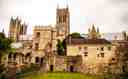
Back in the late 13th century, Bishop Sutton had this place founded as a college of priests. These priests would step in and lead services in the Cathedral when the Prebendaries were off doing...well, who knows what? Maybe they were at the local pub enjoying a pint! Now, let me tell you, the Vicars' Choral of Lincoln is one of the eight colleges of its kind in all of England. And you know what? It's also one of the oldest and best preserved. Talk about bragging rights! Most of the building has survived over the years, apart from the hall and the chapel. The hall, the kitchen, and some chambers were all finished by 1305. And by 1328, they even admitted some lay brothers and built more houses for them. That's what I call expansion! During the English Civil War, these poor buildings took quite a beating. But fear not, my friends, because afterwards, they were transformed into four cozy houses. Talk about a renovation project! Now, let me paint you a picture. Imagine four two-story ranges surrounding a spacious sloping courtyard. The entrance range facing the cathedral sports an entrance gateway from the 14th century. You'll even spot the arms of Bishop Gravesend above the entrance arch. How fancy! The northern block on the left side has a near-central 14th-century doorway, complete with a hood mould and mask stops. To the left of that, you'll find a four-centred arched window with another hood mould and a small pointed arched casement window. And we're just getting started! The southern range steals the show with its central flat-headed doorway, complete with a keystone and a shield above it. Talk about making an entrance! To the right, you'll spot a flat-headed window with three pointed arched lights, as well as a moulded doorway with some 19th-century hood moulds. Beyond that, there's a single gabled buttress. When you raise your gaze, you'll notice a large gabled dormer window to the left, accompanied by two smaller dormer windows to the right. And to add a bit of flair, there's a central canted wooden oriel window on a shaped bracket. Are you getting all this? I hope you're taking notes! If we turn around, we'll see four chimneystacks made of brick and stone, along with a charming garderobe tower. Now, don't worry, a garderobe isn't a fancy robe for the garden. It's actually an old-school term for a medieval toilet. Ah, the wonders of history! Inside, you'll find several intact garderobes (you know, the medieval toilets) and a medieval ceiling with transverse chamfered beams on double corbels. Trust me, it's all very impressive. So, there you have it - the hilarious journey through Vicars' Court. I hope you enjoyed it as much as I enjoyed telling it. Now, let's move on to our next stop!
Open dedicated page →Now, let me tell you about what you can find inside this library. Prepare to be amazed! We've got a collection of 120 "incunabula," which are books printed way back before 1500.…Read moreShow less
Now, let me tell you about what you can find inside this library. Prepare to be amazed! We've got a collection of 120 "incunabula," which are books printed way back before 1500. That's like ancient times in book years! And that's not all! We've also got a reference collection with around 10,000 items. It's like a bookworm's paradise. But wait, there's more! We've got 260 medieval manuscripts in here. Yep, you heard me right, that's 260! These manuscripts cover a wide range of subjects including theology, canon law, devotional books, music, and literature. It's like taking a trip back in time! Now, let me give you a sneak peek into some of the cool stuff we have. How about the earliest written account of the death of King Arthur? Yep, we've got that right here in the "Thornton Romances" found in the Lincoln Thornton Manuscript. It's so old, even Thomas Malory used it as a source for his famous work, Morte d'Arthur. Oh, and did I mention we also have the first Bible ever printed in the Americas? It's called "Mamusse Wunneetupanatamwe Up-Biblum God," but luckily we just call it the Algonquian Bible for short. It was printed way back in 1663. That's a whole lot of history right there! If you're into devotional books, we've got something pretty special too. How about an illuminated Book of Hours? It's so small, you can actually slip it into your pocket. Perfect for those moments when you need a little spiritual inspiration on-the-go! Now, let me tell you about the history of this place. Back in the medieval era, these manuscripts were kept in a chest or cupboard. Scholars from far and wide would come just to consult them. Then in 1422, a fancy new chained library was built over the east walk of the Cloister. Yep, you heard me right, chained! Those books weren't going anywhere without permission. But let's fast forward a bit. After some turbulent times during the Civil War, dear old Michael Honywood, the Dean of Lincoln, finally got around to repairing our beloved cathedral. And guess what? He also had a grand vision of a new library building. So, he dished out £780 of his own money to make it happen. Talk about dedication! Who else did he call? None other than Christopher Wren, the master architect himself. Wren designed this building and supervised the process, making sure everything was just right. Of course, he left his mark with a few baroque features and some trompe-l'œil marbling on the inside. It's like a feast for the eyes! Oh, and did I mention that we're one of only two surviving Wren libraries? Yep, the other one is at Trinity College, Cambridge. We're in pretty good company, if you ask me! Well, my dear visitor, this library is truly a special place. The ceiling might be undergoing some repairs at the moment, but that doesn't mean you can't soak in the history and marvel at the incredible collection we have here. Enjoy your time in the Lincoln Cathedral Library!
Open dedicated page →Now, let me tell you a little bit more about this incredible arch. It's a Scheduled monument and Grade I listed building, so you know it's something special. The arch was actually…Read moreShow less
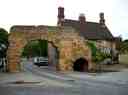
Now, let me tell you a little bit more about this incredible arch. It's a Scheduled monument and Grade I listed building, so you know it's something special. The arch was actually remodeled and enlarged in the 4th century when Lincoln became the capital of the province Flavia Caesariensis. Talk about a glitzy upgrade! This arch is truly one of a kind in the United Kingdom, but it's not alone in the world. There are other Roman arches still open to traffic in different parts of the world. It's like they're having a big arch party! And to add to its cool factor, this arch used to be the north gate of the city, guiding the major Roman road Ermine Street straight up to the Humber. Talk about being a highway star! Now, I should mention that over the years, this arch has had a few encounters with vehicles. In 1964, a goods lorry decided to test its driving skills and accidentally struck the arch. And not just once, but in 2004, another lorry had a little fender bender with the arch. But don't worry, both incidents only caused minor damage, and the arch has been able to stay strong throughout the ages. So take a moment to appreciate this marvel of Roman engineering as you pass under it. And remember, if you drive a lorry, please be extra careful! Let's move on to our next stop, Lincoln Castle. They say it's guarded by knights, but I promise they won't bite!
Open dedicated page →Ah, the Battle of Lincoln (1217)! This was quite a showdown between the future king of France, Louis VIII, and good ol' King Henry III of England. These guys went head to head in…Read moreShow less
Ah, the Battle of Lincoln (1217)! This was quite a showdown between the future king of France, Louis VIII, and good ol' King Henry III of England. These guys went head to head in a fierce battle at Lincoln Castle on May 20, 1217, during the First Barons' War. Now, before we get into the nitty-gritty, let me just say this battle had some serious consequences. You see, Louis thought he could claim the English crown for himself, but the citizens of Lincoln were pretty loyal to him. So when King Henry's forces won, they weren't too happy with the people of Lincoln. Let's just say the city got a little looting makeover, which later became known as the "Lincoln Fair." Not the kind of fair you'd want to take your family to, I assure you! Okay, back to the battle. So, Prince Louis had made himself comfy in London and declared himself the King of England. But then, young Henry III comes into the picture as the rightful heir, and things start to get a bit messy. Enter William Marshal, the 1st Earl of Pembroke, who was basically the knight in shining armor for young Henry. He called all the noble folks with castles in England to a little gathering in Newark. Now, get this. About 400 knights, 250 crossbowmen, and a whole gang of mounted and foot soldiers showed up. They were ready to rumble! They all marched their way to Lincoln, determined to break Prince Louis's siege. You see, Lincoln was quite an important place. It was a walled city with a Norman castle smack dab in the middle. And let me tell you, those Romans knew how to build some fancy roads. Ermine Street and the Fosse Way intersected right in Lincoln, making it the epicenter of trade and government. Talk about being in the right place at the right time! So, picture this. Louis's forces had taken over the city, but the castle was still standing strong, guarded by the formidable Nicola de la Haie. Marshal's army came rolling in from Stow, a few miles northwest of Lincoln. Some of Thomas, the Count of Perche, Louis's right-hand man, knights weren't quite sure if Marshal's force was a bunch of daisies or a force to be reckoned with. So, they had some disagreements on how to tackle the situation. In the end, they went with a defensive plan. They wanted to delay Marshal at the city gates while pressing the siege and capturing the castle. Sounds like a solid strategy, right? Well, Marshal had other plans. His crossbowmen led the charge, storming the north gate, while the main force secured it and set up shop on the rooftops nearby. They were like snipers from above, raining bolts of death and confusion on Perche's troops. It wasn't looking great for Louis's side. And then, the final blow! Marshal's knights and foot soldiers charged Perche's army, and let's just say it didn't end well for them. Perche fought to the bitter end and didn't take any offers of surrender. The poor guy didn't stand a chance. The remaining French soldiers fled south to London like scared rabbits, and the Battle of Lincoln was officially over. But remember, my friend, this battle was a turning point in the First Barons' War. King Henry III reclaimed his throne, and peace slowly started to settle. Well, as much peace as you can expect in those times, anyway. Now, let's move on to our next stop, shall we? Up next, we have the Norman House. And don't worry, no more battles for now! Eager to learn more about the background, battlefield or the battle? Simply drop your inquiries in the chat section and I'll provide the details you need.
Open dedicated page →Imagine this: it's the late 11th century, and a certain William the Conqueror, who happened to be quite handy with a sword, decided to build himself a nice, fancy castle. And…Read moreShow less
Imagine this: it's the late 11th century, and a certain William the Conqueror, who happened to be quite handy with a sword, decided to build himself a nice, fancy castle. And where did he choose to construct it? Right here in Lincoln, England, on the site of an old Roman fortress. Talk about finding prime real estate! Now, what makes Lincoln Castle extra special is that it has not one, but two mottes. For those of you scratching your heads, a motte is basically a big mound of earth where a fancy castle sits on top. It's like a castle's very own mountain. Only two other castles in the whole country have this fancy feature, so Lincoln Castle is pretty unique! But wait, there's more! Lincoln Castle has had many uses throughout history. It served as a prison and court, which meant that even back then, people were getting into trouble and facing the consequences. Today, the Crown Courts are still in session. So be on your best behavior, folks! As you explore the castle, make sure to take a stroll along the castle walls. From up there, you'll be treated to stunning views of the castle complex, the magnificent cathedral, the city itself, and the picturesque countryside. Talk about a sight for sore eyes! Oh, and here's a little trivia for you: inside the castle, you'll find one of only four surviving copies of the Magna Carta from 1215. This document was basically a big deal in English history, guaranteeing certain rights and freedoms. It's like the medieval version of the Constitution! Lincolnshire County Council now owns the castle, and it's open to the public most days of the week. So come on over and soak in history while enjoying the fresh air. Just remember to leave your swords at home! We've moved on to selfie sticks instead. Now, let's continue our adventure and move on to our next stop: Lincoln Crown Court. Don't worry, you won't need your lawyer skills. So put on your walking shoes, and let's go! Interested in knowing more about the history, layout and architecture or the other defences
Open dedicated page →And here we are at our final stop, the Lincoln Crown Court! This magnificent building is a prime example of Gothic architecture and has been dispensing justice for centuries. Can…Read moreShow less
And here we are at our final stop, the Lincoln Crown Court! This magnificent building is a prime example of Gothic architecture and has been dispensing justice for centuries. Can you imagine having a court hearing inside a castle? Well, that's what has been happening here since the Lincoln Castle was built in the 11th century, talk about a historical setting for some legal drama! Now, the current Lincoln Crown Court building was completed in 1823, designed by the famous architect Sir Robert Smirke. It's listed as a Grade II* building, which means it's considered to be of significant historical and architectural importance. And you know what's even more fascinating? It was built at a cost of £40,000, which was a pretty penny back then! When you take a look at the front of the building, you'll notice its symmetrical design, with thirteen bays facing the east gate of the castle. The central section has a beautiful arched doorway and a triple Gothic window on the first floor. And if you look up, you'll see the crenellated roof and the octagonal corner turrets, giving it a majestic and imposing presence. Inside, you'll find two courtrooms, one for criminal cases and the other for civil cases. They are approximately square in shape and adorned with lovely wainscot panelling. The grand jury room is worth a visit too, with its ornate fireplace guarded by lions bearing shields. I bet those lions have some interesting stories to tell! Now, let me share a juicy piece of history with you. In March 1872, the Lincoln Crown Court played a significant role in the trial and conviction of William Frederick Horry, who was accused of murdering his wife. Sadly, Horry became the first person to be executed in the UK using the "long drop" method, which was developed by William Marwood. They thought it was a more humane and faster way of execution, but it's a chilling chapter in history. Over the years, the Lincoln Crown Court not only served its purpose as a court but also became the meeting place for the Lindsey County Council. However, after the County Council moved to County Offices in Lincoln in 1932, the building continued to be used as a court. There were some proposals to move the Crown Court out of the castle grounds, but in the end, it was decided that it wasn't the best use of resources. And that wraps up our tour! I hope you've enjoyed exploring Lincoln with me today. If you have any questions or need any further information, feel free to ask. Thank you for joining me, and remember, justice may be blind, but it's not deaf to a good joke!
Open dedicated page →
Frequently asked questions
How do I start the tour?
After purchase, download the AudaTours app and enter your redemption code. The tour will be ready to start immediately - just tap play and follow the GPS-guided route.
Do I need internet during the tour?
No! Download the tour before you start and enjoy it fully offline. Only the chat feature requires internet. We recommend downloading on WiFi to save mobile data.
Is this a guided group tour?
No - this is a self-guided audio tour. You explore independently at your own pace, with audio narration playing through your phone. No tour guide, no group, no schedule.
How long does the tour take?
Most tours take 60–90 minutes to complete, but you control the pace entirely. Pause, skip stops, or take breaks whenever you want.
What if I can't finish the tour today?
No problem! Tours have lifetime access. Pause and resume whenever you like - tomorrow, next week, or next year. Your progress is saved.
What languages are available?
All tours are available in 50+ languages. Select your preferred language when redeeming your code. Note: language cannot be changed after tour generation.
Where do I access the tour after purchase?
Download the free AudaTours app from the App Store or Google Play. Enter your redemption code (sent via email) and the tour will appear in your library, ready to download and start.
If you don't enjoy the tour, we'll refund your purchase. Contact us at [email protected]
Checkout securely with