
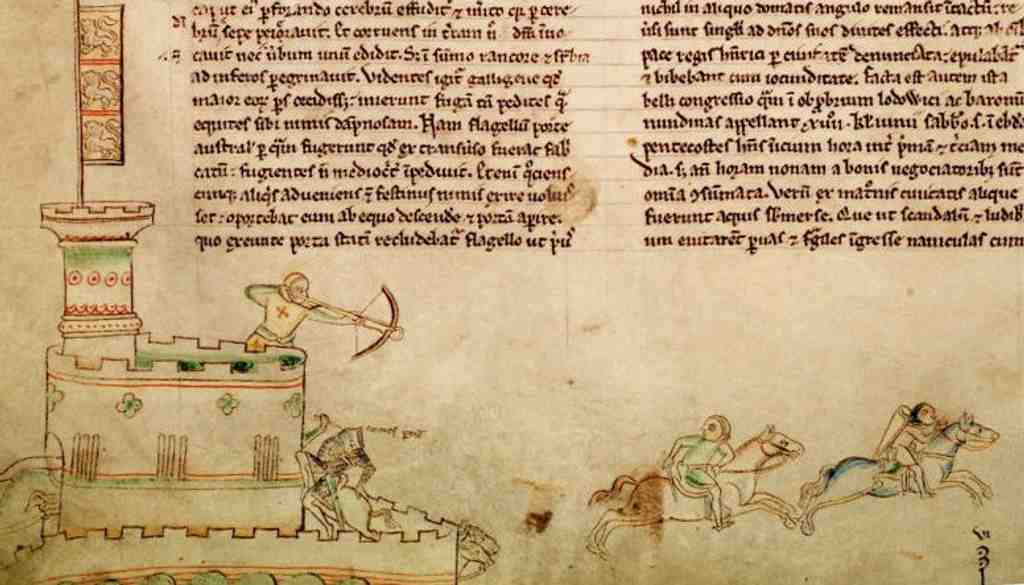
In front of you, look for the castle’s ancient stone towers and battlements rising beside the city’s old walls-these sturdy defenses mark the heart of the action during the legendary Battle of Lincoln in 1217.
Alright, hold onto your helmet-let’s take you back to the early 13th century! The city around you isn’t just a peaceful spot for tourists and students now-it was the stage for an epic showdown that shaped the fate of England. Imagine it: the year is 1217, and Lincoln is a city under siege, its streets crowded with soldiers, its mighty castle still proudly standing on top of the hill, stubborn as ever against wave after wave of attackers.
Back then, two powerful roads, Ermine Street and the Fosse Way, met here-think of them like the medieval M1 and A1-so whoever controlled Lincoln pretty much controlled half the country. The air would have been thick with the smell of wood smoke, horses, and, probably, nerves.
But why was the city under siege? Well, after King John dropped dead (literally, during the First Barons’ War), England was in total chaos. Some barons, hungry for a bit of French flavor, invited Prince Louis from across the Channel to come and be their king. He shows up, declares himself boss in London, and boom-civil war! But here comes the plot twist: after John’s death, many of those rebel barons started to get cold feet and swapped sides to back nine-year-old Henry III, England’s very young new king. Let’s hope his bedtime wasn’t too early for war councils.
Stepping into these streets, imagine yourself as one of the hundreds of knights William Marshal-the real-life knight in shining armor, and basically England’s action hero-led to Lincoln. Marshal had mustered his army in Newark and then advanced here with 400 knights, 250 crossbowmen, and a mighty mix of foot soldiers. The defenders inside the castle, led by Nicola de la Haie (yes, a woman in charge in 1217!), were holding out faithfully for King Henry, surrounded by Prince Louis’ French and rebel troops, commanded by Thomas, Count of Perche.
Outside the walls, tension built like thunder. The French and rebel knights couldn’t agree on whether to march out and meet Marshal’s force in an open clash, or hunker down and keep hammering at the castle, hoping to grab it before help arrived. In the end, nerves won the argument-and they stuck to the siege.
Now imagine Marshal and his men sneaking up from the northwest through the town of Stow. Towering stone gates and defensive walls stand between them and their besieged friends. Marshal’s secret weapon? Falkes de Breauté, leading the crossbowmen, rushes the north gate and wins it. The castle’s defenders cheer, but the French? They keep battering away at the stubborn fortress, unaware that doom is climbing up behind them.
The rooftops quickly fill with crossbowmen-picture them crouching, aiming downward-and suddenly, a deadly rain of bolts showers Louis’ troops below. Confusion erupts. The attackers don’t know which way to turn-are the shouts coming from behind, above, or inside the walls?
And that’s Marshal’s moment. With everything in chaos, his knights and foot soldiers crash down onto the French ranks-a wild charge through winding, echoing streets. Thomas, Count of Perche, is offered the chance to surrender. But pride or stubbornness (or possibly both) push him to fight to the end. He dies in the melee as the French siege collapses into a panicked rout. Survivors scramble through the south gate, leaving Lincoln behind in a mad dash for London, hoping to escape the victorious army at their heels.
What happened next? Well, let’s just say it wasn’t a craft fair. Marshal’s army, apparently thinking “finders keepers,” looted the city mercilessly, plundering even the churches and the grand cathedral. The townsfolk, who’d backed Louis, were in for a very rough time. Some women, desperate to escape, tried to flee by boat-sadly, not all made it out alive. Back on the roads to London, locals ambushed and attacked the escaping French soldiers.
This “Lincoln Fair,” as it was sarcastically called later, made the city infamous for a time. But it also turned the tide in the First Barons’ War-Henry’s enemies were captured, French reinforcements were smashed at sea, and finally, Prince Louis had to sign a treaty and sail home with his dreams of ruling vanished like a ghost at dawn.
So as you stand here today, picture the roars of battle, the crash of swords, the thrum of crossbows, and maybe, just maybe, the odd knight sheepishly admitting he really didn’t want to loot the cathedral, but peer pressure is a terrible thing. The stones beneath your feet hold the echoes of one of medieval England’s wildest cliffhangers-and you’re right at the center of it.
If you're keen on discovering more about the background, battlefield or the battle, head down to the chat section and engage with me.


