
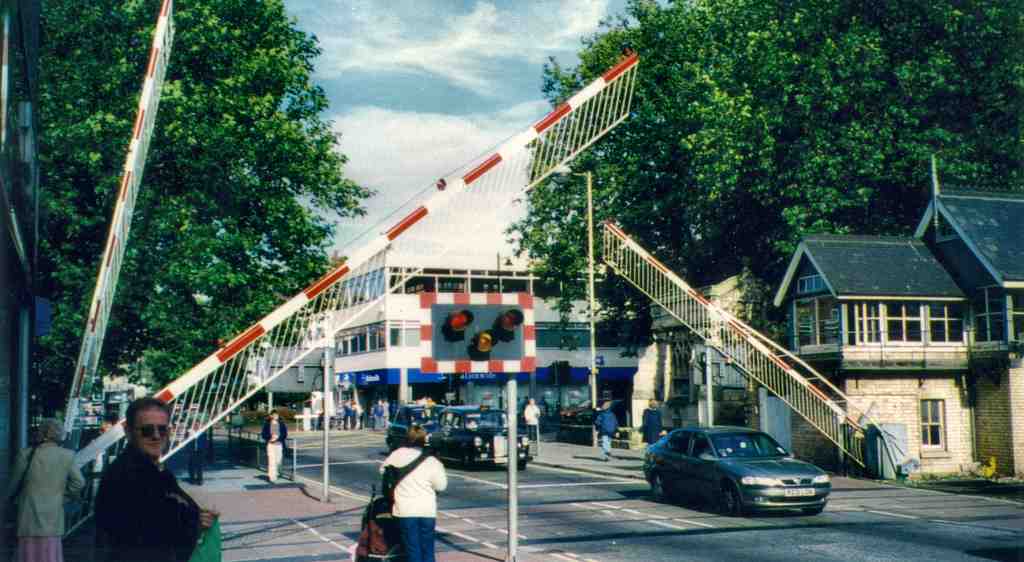
To spot Lincoln’s High Street, look straight ahead for the unmistakable railway crossing barrier arm stretching upward, traffic paused, and a brick signal box perched next to the line-this is the lively heart where past and present meet.
Now, let’s imagine we’re strolling back through time, right from where you stand, dodging a few imaginary market carts and perhaps a Roman sandal or two. Close your eyes for a second and picture the street beneath your feet as a grand Roman road, called Ermine Street. Over 2,000 years ago, this was the superhighway of its age, stretching all the way from London-yes, Londinium!-to Lincoln, which the Romans knew as Lindum Colonia. You can almost hear the distant clop of Roman horses and the creak of wooden-wheeled carts carrying spices, fine pottery, or swords sharp enough to cut through a bad haircut.
As centuries slipped by, Lincoln’s fortune rose and fell. Once the Romans packed up and left (probably muttering about the unpredictable weather), the city hit a bit of a slump. But High Street wouldn’t let that keep it down! By the Middle Ages, people had built houses, markets, and even streets like Silver Street and Flaxengate branching off into neat lines of burgage plots, those long, narrow strips behind each home. Picture medieval merchants peddling their goods, horses snorting, and six churches calling folks to worship. Two of those would even survive the whirlwind of history.
Fast forward to the 16th and 17th centuries, and High Street was hopping. Timber-framed houses sprang up, markets bustled, and the whiff of baking bread and brewing ale probably filled the air. Even the bridges here were sites of busy trade-fancy a spot of flour with your gossip?
With the thundering arrival of the Industrial Revolution, the whole character of High Street shifted gears. Imagine ironworks hammering, train whistles blowing, and sooty-faced workers marching off to build the future. The railway blasted through in 1846, and soon after came hotels and inns for travelers, as well as lively places of worship for non-conformists-people determined to do things just a bit differently!
And that railway crossing just in front of you? Once, it belonged to the grand Midland Railway, which would see throbs of people heading north and south under the watchful gaze of Lincoln Cathedral-if you glance north, you can't miss its towers reaching above the city like a stone crown.
But High Street has its quirks, too. Did you know the shop numbers just keep marching along in one big loop? They start at number 1 on the west side, trek north, and as soon as you reach the top, they march right back south again on the east! It’s like a conga line of addresses, and by the time you get to number 471-480, you’re right back opposite number one. No wonder lost tourists sometimes look dizzy.
You’re also at the crossroads of some dramatic history; during construction on the Boots store nearby, workers uncovered the remains of a Roman hypocaust-an ancient central heating system! That’s right, the Romans even managed to keep cozy while plotting their empire. If you fancy a chilly adventure, you can peek into the basement to see these 2,000-year-old ruins today.
Don’t forget-there’s High Bridge, the medieval river crossing just a little north, where water once roared under its arches, delivering goods to merchants. And tucked amongst busy shops are architectural treasures like the Guildhall and Stonebow. If you spot two statues on a medieval arch, you’re looking at the Archangel Gabriel and the Virgin Mary keeping watch-just as they have done since the 15th century, though I doubt they ever dealt with late-night shopping crowds.
There’s also the humbler St Mary le Wigford church-so close to the railway signal box it feels like you could order a sermon with your train ticket-and down south you’ll find St Peter at Gowts, once serving the marshlands of the Great Gowt Drain. Here, too, are the grand echoes of St Mary’s Guildhall-once a grand home, then a maltings, a school, and today, a proud protector of Lincoln’s civic past.
With a puff of smoke and a clatter of carriages, the Industrial Revolution left its mark as rows of terraced workers’ homes sprang up, and the hum of new industry filled the southern High Street. Even now, you’ll notice the character changes after you cross the tracks: in the north, a charming parade of historic shops, in the south, big bold development and the buzz of urban life.
Through it all, High Street has shown a knack for reinvention-just like your favorite pop star, only with more medieval masonry. Recent efforts by English Heritage and the city have helped restore its historic sparkle, so you’re walking not just through one street, but a living timeline of Lincoln’s story.
The sounds of passing cars and distant footsteps remind us that, though centuries have passed, High Street is still the beating heart of the city-always moving, always changing, always ready for the next chapter.
Ready to delve deeper into the landmarks and listed buildings, gallery or the numbering? Join me in the chat section for an enriching discussion.


