
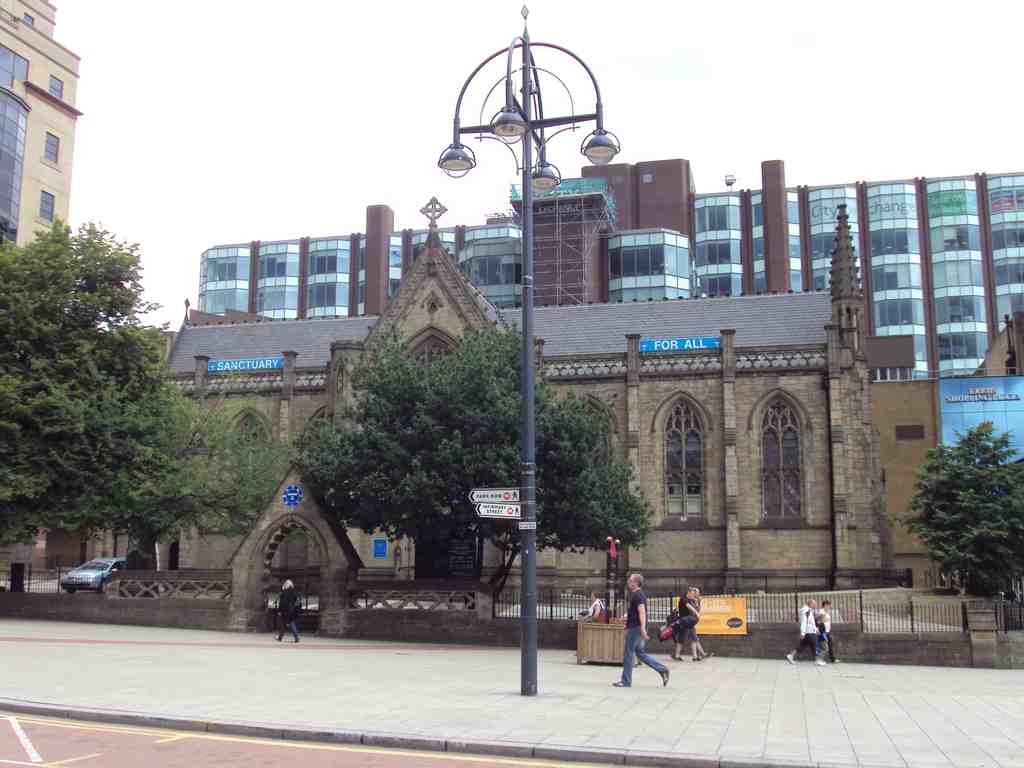
To spot Mill Hill Chapel, look across City Square for a low, stone building with pointed arched windows, Gothic details, and a blue plaque by the entrance-nestled snugly between the trees and modern glass towers behind it.
Now, as you stand outside Mill Hill Chapel, take a moment to let your mind wander back in time! Imagine Leeds in the 1670s-a bustling market town, filled with the sound of horses’ hooves and chatter from the cloth halls. Right here, where traffic now whizzes by and glass skyscrapers rise, a small group of bold thinkers built a chapel, making this slice of land the heart of religious rebellion. These were the Dissenters, folks who disagreed with the established church and wanted a space for their own ideas-a little bit like unplugging the Wi-Fi to host a board game night when everyone else wants to binge-watch TV.
One of these early plotters was the father of historian Ralph Thoresby. Together with his friends, he steered the congregation into the leafy, sometimes controversial, path of Unitarianism-a Christian movement that loves debate and welcomes questions. You might say, Mill Hill became the place in Leeds to have a good argument, but in a friendly way!
Jump forward to the 18th century and this little chapel was anything but shy. Many of Leeds’ most prominent families took up seats in these Victorian pews. There were the Oateses and the Dixons, local gentry like Hans Busk who preferred his very own Unitarian chaplain-because why have Netflix when you can have theology, right? Even the grand Lupton family hung their hats at both Mill Hill and the old Call Lane Chapel, making this place a power hub for politicians, industrialists, and passionate merchants. At one point, Mill Hill was jokingly called “the mayors’ nest” because so many mayors-and even lord mayors-were regulars. If these walls could talk, they’d spill more secrets than a city council WhatsApp group!
Let’s jump again, into the 19th and early 20th centuries. The Kitson family left their mark here-William Morris, the famous designer, made a stained glass window to honour Ann Kitson. Later, her son James Kitson, the first Baron Airedale, paid generously to widen the vestry, and after James’s death, a colourful window by Archibald Keightley Nicholson was added in his memory, reminding us the spirit of this chapel was always evolving-much like Leeds itself.
But this wasn’t just a place for wealthy families and beautiful glasswork. Mill Hill Chapel sparkled with ideas. The congregation was packed with members of the Leeds Philosophical and Literary Society-a group of the city’s brightest minds, who loved nothing more than debating science and philosophy over tea (or something a little stronger, if the rumours are true). There was a buzz of independence and identity here; middle-class values jostled with political activism. More than once, these corridors echoed with conversations about equality, education, and the future of Leeds.
Among Mill Hill’s ministers, you’ll find some real characters. Joseph Priestley, for example, was here from 1767 to 1773. You might know him as the man who discovered oxygen (making him everyone’s favourite guest at a birthday party, since he literally brought the air). He led the chapel closer to Unitarianism before hammering on about liberty so vigorously that his ideas still leave a mark today. Others, like Thomas Walker, kept things fresh by stirring up a little heresy-which, let’s be honest, always livens up a Sunday sermon!
Then there was the Victorian period-Rev Charles Wicksteed, who championed education and edited the progressive Prospective Review, helping Unitarian chapels around England swap stuffy eighteenth-century styles for bold, new Gothic architecture. Fitting, too, since you’re standing in one of the finest examples around!
Fast forward to today, and Mill Hill still makes history. The plaque outside marks it as the first place of worship in Leeds city centre to conduct a same-sex wedding. That’s right-the tradition of forward-thinking, headline-grabbing spirit lives on.
As you stand here, take in the pointed arches and textured stonework. Picture all the lively debates, the political deals whispered in corners, and the cheerful laughter of generations past. This isn’t just a building; it’s a living story, stitched deep into the fabric of Leeds, and one more stop on our grand adventure through the city’s quirkiest corners!




