
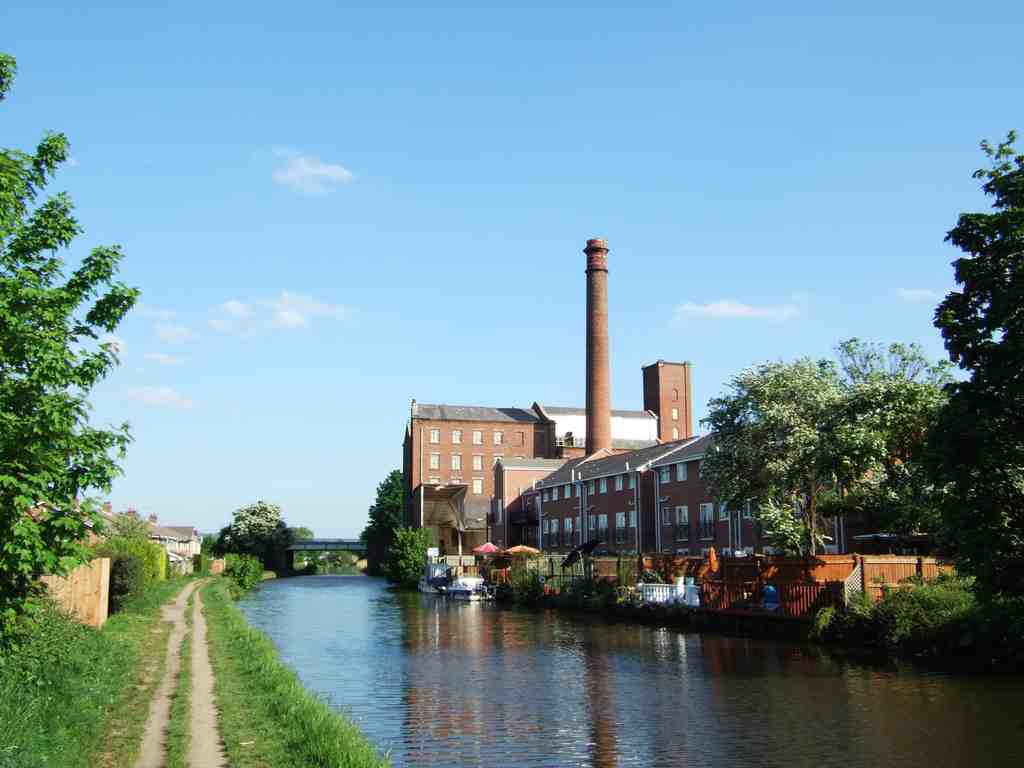
To spot the Leeds and Liverpool Canal, just look for the peaceful, narrow waterway stretching out ahead with a towpath beside it, and an old brick mill with a tall chimney rising above the modern houses on the right.
Now, as you stand here by the shimmering water, close your eyes for a second and imagine the air full of hustle and bustle, the soft splash of narrowboats drifting through the canal, and the distant clanging of hammers from the old mill. You’re standing by the gateway to centuries of tales and toil - because this canal isn’t just a quiet slice of scenery in Leeds; it’s a ribbon of history stretching all the way from here to Liverpool, snaking across 127 miles, wrestling with the Pennine hills, and sliding through a whopping 91 locks.
The idea for this watery highway bubbled up in the 1760s, when Yorkshire’s growing towns - Leeds, Wakefield, and Bradford - were bursting with energy and ambition. Leeds was desperate for easier ways to move its coal, limestone, and famous textiles. Over in Liverpool, traders dreamt of cheaper coal by the boatload to power their booming industries. But building a canal? That was a piping hot debate, bouncing between rival committees in Bradford and Liverpool. Arguments about cost and which towns should get a stop along the way flew back and forth faster than a flock of startled pigeons by the water.
Eventually, surveyors, engineers, and even the famous James Brindley were called in to settle the matter. “Let’s build the canal along the northern route!” declared Brindley - and, after much disagreement (and a few sulky faces in Liverpool), plans were drawn up. Think of this moment as the Marvel cinematic universe bringing together all your favourite superheroes, only with more mud, shovels, and powdered wigs.
The first sod was cut in 1770, and the work began with pickaxes and spades. The canal grew in segments - first from Bingley to Skipton, then to Shipley, and onwards, wiggling east from Liverpool. It was a jigsaw puzzle of water, stone, and sweat. One of the greatest feats was the Bingley Five Rise Locks, an aquatic staircase overcoming a steep valley cliff.
But it wasn’t all smooth sailing. The funds dried up, war broke out with America, and for more than a decade, the project seemed stuck in the mud. It took fresh acts of Parliament and even more money to get the canal we see today flowing through the coalfields of Burnley, Accrington, and Blackburn. When it reached hilly Burnley, engineers didn’t just dig - they built the mighty Burnley Embankment, a half-mile stretch of man-made earth towering 60 feet high, letting the canal float above town like a watery highway in the sky. You can almost hear the sighs of exhausted workers, and perhaps a few creative Yorkshire grumbles about “how much further to go?”
Eventually, after almost 50 years, the canal was finished in 1816 and became the backbone of heavy industry along its path. By the Victorian era, over a million tons of coal sailed west every year, fueling Liverpool’s ships and factories. Leeds sent more coal than limestone, and cargo boats lined the canal, their crews swapping stories about leaky holds, mischievous children, and the most stubborn lock gates. The canal never truly ran out of steam - even with trains arriving, it kept carrying goods right through the 1900s.
During World War II, the canal became part of Britain’s last-ditch line of defense. Pillboxes popped up along the banks, barns and pubs were fortified, and in Bootle, a bomb even breached the peaceful water. But the canal, stubborn as a Yorkshireman with a wet umbrella, held firm, patched up and pressed on.
There have been droughts, repairs, new branches, and a modern link right into Liverpool’s city center. Today, when the sun dances on the surface, people stroll and cycle on the old towpaths where horses once pulled barges, and boats float quietly by, carrying echoes of coal smoke, laughter, and the determined voices of builders from an age gone by.
So next time you hear the gentle splash of water here, remember: behind every ripple lies a tug-of-war, a bit of Yorkshire grit, and a waterway that was once fought for every inch, every penny, and every lock.




