
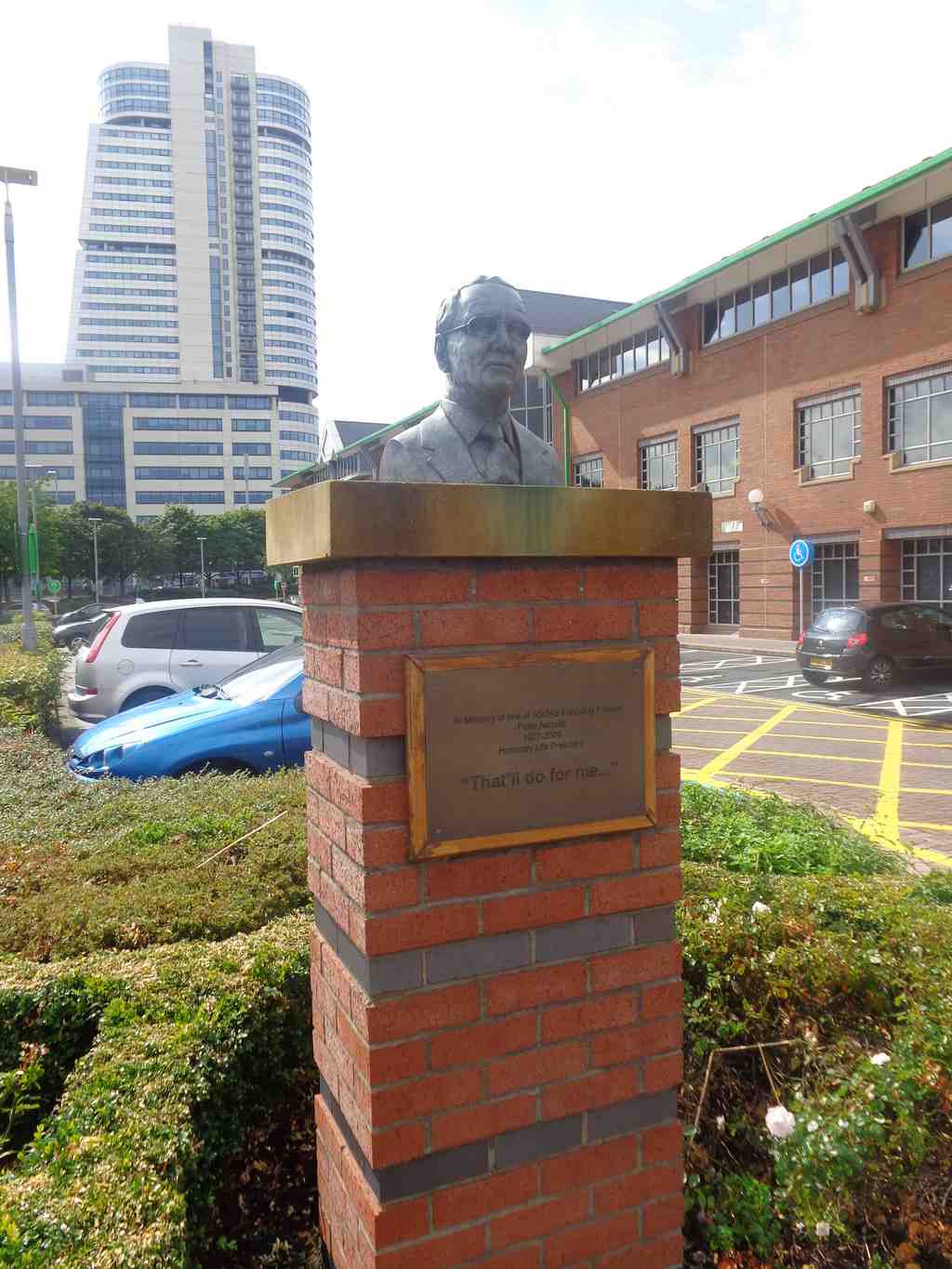
To spot Asda, look for the red-brick building with green trim just ahead, and you’ll see a statue of a man set on a brick pedestal out front, looking over the car park like he’s keeping an eye out for good deals.
Alright, welcome to Asda! Don’t worry, I won’t ask you to scan your own basket-though I might challenge you to find the cheapest biscuit in the snack aisle. As you stand here, you’re right outside the beating heart of British supermarket history, and-believe it or not-you’re also standing at the headquarters of one of the UK’s grocery giants, born and bred right here in Leeds.
The story of Asda starts almost like a family legend. Imagine the sounds and the smells of a busy Yorkshire butcher’s shop in the 1920s--the Asquith family, sleeves rolled up, passing down secret cuts and business wisdom in Knottingley. Their little butchers’ empire grew and grew, until Peter and Fred Asquith, the original meat moguls, decided to dream even bigger. Meanwhile, some ambitious dairy farmers up the road had begun pooling their efforts as J. W. Hindell Dairy Farmers Ltd. By 1949, with the smell of fresh bread, milk, and hope in the air, they transformed into Associated Dairies and Farm Stores, led by Arthur Stockdale.
Fast-forward to the swinging ‘60s. The Asquiths took over an old cinema in Castleford. Imagine it: ticket booth turned cheese counter, popcorn swapped out for pies-what a transformation! So began their adventure in “self-service supermarkets,” which meant people could actually pick their own groceries off the shelf-something that seemed almost as wild as a trolley race down aisle nine. Eventually, the Asquiths and Stockdales merged, combining their names-Asquith plus Dairies-to form Asda.
Now, you’d think running a supermarket would be straightforward. But Asda’s story zig-zags more than a trolley with a dodgy wheel. In the late ‘80s, they spent a fortune snapping up other stores and ended up with a bill so big it nearly shut the doors for good. The shelves almost went bare-Asda teetered on the edge of bankruptcy. But then, new faces and bold ideas rode in, like Allan Leighton, who cut prices, chopped management jobs, sold off underperforming shops, and somehow pulled Asda back from the brink. By the late ‘90s, it was hailed as one of the greatest retail comebacks.
The plot thickens! In 1999, the American retail giant Walmart swooped in like a hawk eyeing up a roast chicken on a Sunday, and bought Asda for £6.7 billion. New innovations followed: larger “Supercentres”, pharmacies, cafes, and even petrol stations sprouted up across England. And don’t forget “George,” the Asda clothing brand-suddenly, you could pick up socks and sausages in a single stop.
But Asda never stopped evolving. There were a few headline-grabbing bumps along the way-some overenthusiastic advertising claims here, a questionable toy card there, and even a small scandal or two involving sandwiches or beef sauces not being quite what they seemed. Still, through changing owners, including the Issa brothers and TDR Capital in 2021, Asda’s remained resilient-tougher than a stale baguette, you might say.
Today, Asda proudly boasts a new logo, a fresh slogan-“That’s More Like It”-and all sorts of store formats, from “supercentres” to “Living” shops packed full of clothes and homeware. There’s even talk of a £50 million store upgrade program in the works, so if you hear the distant echo of drills and paint rollers, you know progress is marching forward.
And right in front of you, that statue is like Asda’s very own supermarket guardian. It’s a tribute to Peter Asquith, one of the founding fathers, with a plaque that says, “That’ll do for me…”-proving sometimes, a simple Yorkshire phrase says it all. So here’s to bargains, busy aisles, and being part of an ever-evolving Leeds legend. Now, onward to the next adventure-and don’t forget to watch out for surprising bargains along your walk!
Ready to delve deeper into the store formats, brands and services or the distribution? Join me in the chat section for an enriching discussion.




