
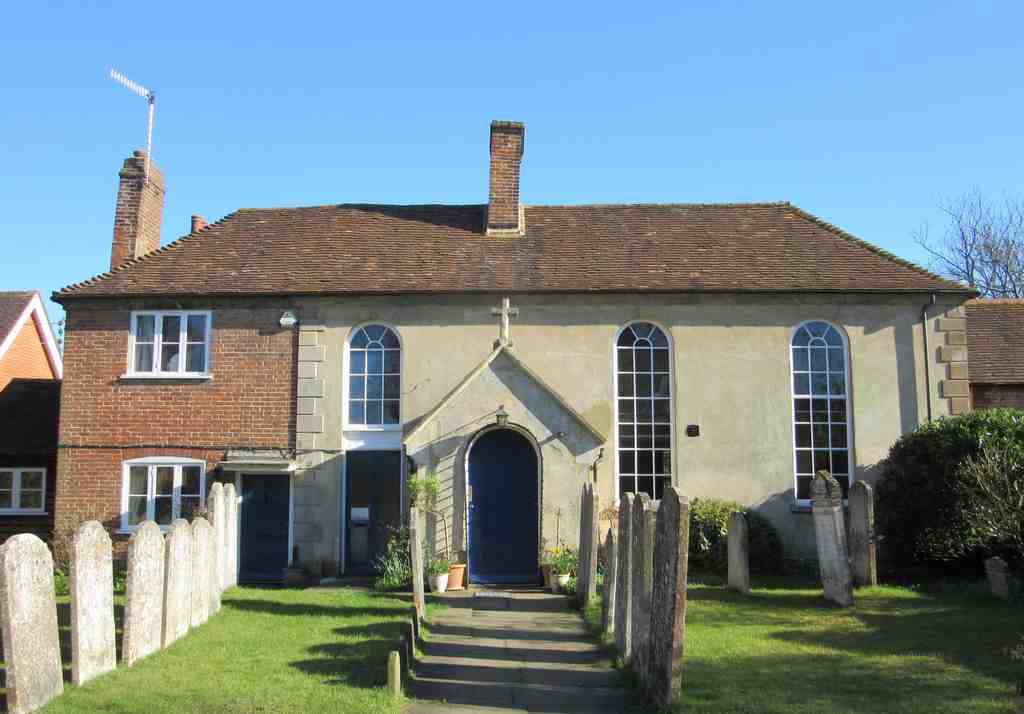
To spot the Meadrow Unitarian Chapel, look for a quaint, single-storey building with a tiled roof, a central gabled porch with a cross on top, and tall arched windows, set just behind a row of old gravestones and a neatly cut path leading to its blue double doors.
Welcome, intrepid explorer, to the Meadrow Unitarian Chapel-where stories hide in the brickwork and the air tingles with over two centuries of secrets. As you stand before its red-brown bricks (the left side sporting its original face, the rest now cloaked in cream stucco), imagine you’re stepping across not just a graveyard, but a threshold into 18th-century Farncombe, when this was a bustling town not of markets, but small factories and rumbling mills.
Back then, Godalming had a rebellious heart-a whopping one in three townsfolk refused to worship with the Church of England. Instead, they sneaked into secret gatherings in flickering candlelight, crammed into cottages or barns, where hushed voices debated faith and freedom. Out of this atmosphere grew a determined group of Baptists, often meeting at the house of William Evershed, a landowner, and a Baptist forerunner with connections stretching to Billingshurst.
Picture this: it’s June of 1783, and the group decides-over tankards of ale, perhaps-that it’s time for a proper chapel. An agreement is struck: build a new meeting house at Meadrow. Six long years later, the doors finally swing open in 1789. The chapel wasn’t fancy, but it was perfectly suited to their needs, boasting a baptistery set deep in the floor for those bracing, full-immersion ceremonies. If you pressed your ear to that old brick today, maybe you’d still hear the.
It’s not just Baptists who shaped this place. Throughout the 1800s, debates about the Holy Trinity grew louder. Eventually, this congregation and many like it shifted their beliefs towards Unitarianism, welcoming those who saw God-well, a little less by-the-book. The chapel became a haven for new ideas, unafraid to question, always looking for a better, kinder path.
Life didn’t stand still outside these walls either. By 1821, a snug red-brick cottage was built right onto the chapel-like a faithful sidekick. By 1870, there was a Sunday school bursting with little Victorian boots, and education for poor children soon followed with a bold, free "British School" near Bridge Road. You could almost imagine the chaos: desks clattering, chalk dust swirling, and the laughter of children who, just maybe, didn’t want to be there as much as their teachers hoped.
Inside, things have changed little: the pews have been pushed to the walls, creating an open, light-filled space beneath a neat gallery. There’s even a "good row of hat pegs" for bonnets and bowlers-clearly, these folks had their priorities in order!
Out front, the ancient gravestones and burial vaults provide a roll call of the past. There lie the Elphs, the Pilsleys (Thomas was first to be buried here, in 1810), the Knights, and especially the Ellises-a family whose name you’ll spot a dozen times among the weathered stones. Tradition has it that a certain John Ellis was a generous builder, so when you imagine the first bricks being laid, you might picture him all business, sleeves rolled up… and perhaps grumbling about the price of lime!
By the 1970s, the congregation briefly swapped buildings, worshipping in the old Sunday school for a spell before returning to their beloved chapel. In 1976, a new era began: weddings were held under these sturdy tiles, and laughter replaced the solemn hush.
Even the architecture has its charms: notice the way the roof stretches across cottage and chapel without missing a beat, the arched porch inviting you in beneath its cross, a chimney parked confidently above, and the three elegant windows that let sunlight flood the space. And while the last burial took place here in 1869, the chapel grounds are still alive with memory-walk quietly, and you may sense the presence of those who came before.
So here ends our journey: in front of a building that’s not just bricks and mortar, but a treasure chest of Farncombe’s dreams, debates, and deep affection for freedom and faith. Thank you for joining me, and if you listen closely-who knows? You might just hear echoes of the past on the wind.


