
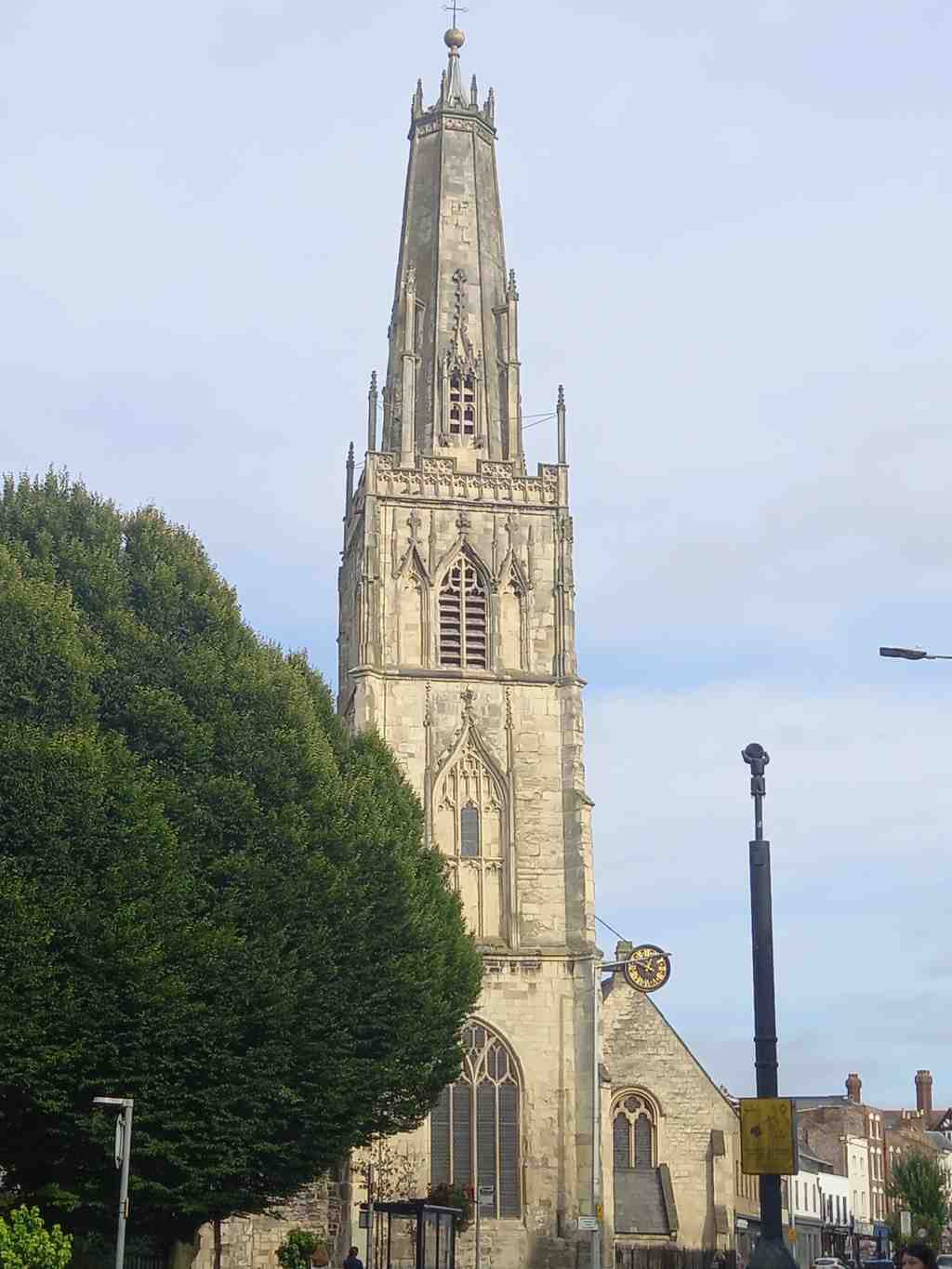
To spot St Nicholas Church, just look above the treetops for its tall, pale stone tower with a dramatic, pointed spire that's been sheared off at the top-and don’t miss the big golden clock stuck out on a metal bracket facing Westgate Street.
Alright, stand tall and prepare for a journey through time-welcome to St Nicholas Church! Right in front of you is a true survivor of Gloucester, a building that’s witnessed invasions, fire, fortune, cannonballs, and just a bit of medieval mischief. Let’s step closer and imagine Westgate Street as it would have been over 800 years ago. The air is thick with the smell of tanners’ workshops and the sharp sound of hammers.
Founded around 1190, folks here once called it “St. Nicholas of the Bridge,” and by the thirteenth century, the church had already gone through one of its many facelifts. Over the centuries, the people of Gloucester rebuilt and extended, adding a soaring spire and a two-towered porch, with limestone walls glinting in the sun and slate roofs that shrugged off the rain. In the 16th century, this church was at the heart of Gloucester’s wealthiest parish-imagine gold gleaming in the candlelight and the chatter of the city’s richest citizens, showing off their Sunday best.
Now, glance up at that tower. Can you picture it almost twice as tall? Originally, the spire shot 200 feet into the sky, challenging the clouds to a race. But time, as always, had other plans. In 1643, during the chaos of the English Civil War and the Siege of Gloucester, a thunderous explosion echoed through the city as a cannonball struck the spire. For a while, the once-proud spire was left jagged and wounded. They capped its remains with a curious little crown in 1783-so if the building looks like it’s wearing a fancy hat, now you know why!
Architecturally, St Nicholas is a patchwork of the ages. The south porch is an impressive two stories, hiding an ancient arched doorway. Step under and you’d see a carved lamb, a symbol of Christ, surrounded by leafy twists. The west end of the church boasts stunning windows with intricate Perpendicular tracery-like stone lacework letting the sun pour in. The tower itself is ringed by battlements and delicate pinnacles, and if you listen closely, you might just imagine the bells that have called out from up there since the 15th century-six of them, their oldest cast at the dawn of the Tudor era.
Inside, the church’s story continues in stone and timber. The nave’s open timber roof creaks with memory. Some of the stone arches you’d walk under are solid Norman Romanesque, others are tall and pointed, tracing the march of Gothic style through the ages. On the walls, you’d find details for medieval priests and savvy worshippers: a piscina for water, a credence table for communion, naughty little squints so you could peek at the altar from sideways.
Now, if you’d stood inside in the 17th century you’d have seen the city’s finest flock gathered, and maybe even gasped at the royal arms of Charles II hanging proudly-perhaps to remind everyone who was really in charge. There are tales written in marble, too: just imagine the colored effigies of Alderman John Walton and his wife, lying in quiet grandeur atop their chest tomb. Rumor has it that if you visited at midnight, you might hear the starched rustle of his mayoral robes drifting along the aisle.
Though fires and storms battered the old church, repairs always followed. The wooden gallery from 1621 was moved and moved again, and a grand organ played for centuries before being whisked off to a new home in St Mary de Lode nearby. And when the church finally closed its doors in 1967, it wasn’t the end-just a new chapter. Now cared for by The Churches Conservation Trust, St Nicholas stands as a silent storyteller in stone.
So as you gaze up at the truncated spire, perhaps you’ll notice how it stands proud and battered, a bit like Gloucester itself-forever looking to the future, yet holding tight to legends of the past. And don’t be surprised if, for just a moment, you swear you hear ancient bells echoing down Westgate Street. Onward to the next adventure, brave traveler!




