
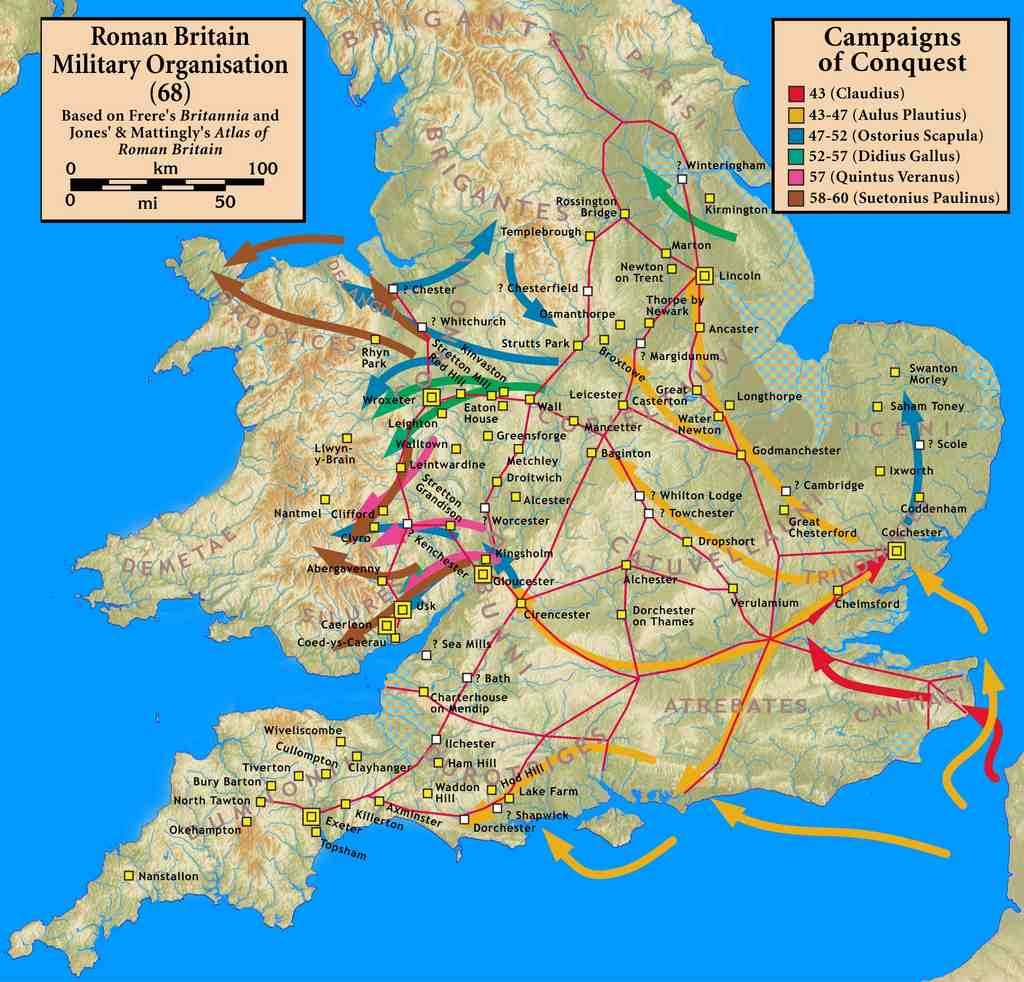
To spot the site of ancient Glevum, look ahead for signs and markers around the area where the old Roman city once lay, just where modern Gloucester now buzzes-think of standing at a crossroads where history is layered beneath your very feet.
Welcome to Glevum, where you’re walking in the footsteps of Roman soldiers, retired legionaries, and maybe even a few spirited ghosts from two thousand years ago! Imagine yourself here around AD 48-the air carries the scent of wood smoke and baked bread as Roman legionaries busily hammer at their shields and clank armor while building a fort at this key crossing of the River Severn. You might even overhear some Latin banter about the unpredictable British weather.
Not long after, the place transforms. The thundering boots of Legio XX Valeria Victrix are replaced by those of Legio II Augusta. As the legion prepares to move on, a bustling civilian town-using the perfect Roman grid plan-springs up right beneath your nose, with straight streets where carts rumble and chickens squawk. Eventually, by AD 97, the Emperor Nerva himself decides this should be a colonia, the highest honor for a Roman city-a home for tough, scarred veterans who traded their swords for plows but never gave up on a good story.
Picture a marketplace where silks, spices, and local cheese tempt shoppers, while elegant Roman houses glimmer with colored mosaics under your toes. If you close your eyes, you can almost hear the laughter from the impressive basilica and forum at the town center. The wharves by the river are busy too-crates creak and splash as ships unload cargo from across the empire, even as the city starts minting coins for its own thriving economy.
As you stand here, remember, Glevum wasn’t just a sleepy outpost-it was likely the capital of its own Roman province when Roman Britain split into four, placing this spot at the very heart of imperial power. Roman villas, some with stunning mosaic floors that would make even today’s interior designers jealous, pepper the countryside all around. Wealthy landowners enjoyed heated baths and fine wine, while their workers tended the fertile fields-living proof that Romans really knew how to mix pleasure with business.
But, like all exciting tales, Glevum’s fortunes change. The Romans may be gone, but archaeologists today find plenty of clues: battered walls, old coins, fragments of mosaics tucked under modern shops and universities. If you look down Eastgate Street or follow the lines of Northgate and Southgate, you’re tracing the very roads Roman chariots once rattled along! And just a short stroll away, the East Gate Chamber lets you glimpse those ancient stone blocks. Legend even says a new town gate was built after the famous Battle of Mons Badonicus, as the town clung to life before the Anglo-Saxons swept in-perhaps led by King Coinmail, whose name echoes like a drumbeat through lost centuries.
Even after the city became Gloucester, its Roman heritage lingered. Perhaps you’ll spot the bronze statue of Emperor Nerva greeting visitors near Southgate Street-the original “mayor” welcoming everyone, two thousand years late for his welcome party! And while the Glevum name lives on in shops, schools, and the scenic Glevum Way footpath, the real treasure is the sense that, beneath every cobblestone, ancient stories lie waiting, just daring you to discover them.
So, as you stand here now, just try to imagine the city at its height: mosaic floors gleaming, soldiers swaggering, the smell of roasting boar in the air, coins jangling in the marketplace, and the promise that somewhere beneath your feet, a little piece of Rome is still alive, right here in Gloucester.
If you're curious about the fortress, colonia or the decline, the chat section below is the perfect place to seek clarification.




