Glastonbury Audio Tour: A Sacred Tapestry Tour
Ancient stones, tangled legends, and centuries-old secrets wait just beneath Glastonbury’s surface—a town where every corner hints at something lost or legendary. Journey through its twisting lanes on a self-guided audio tour that unravels the hidden tales behind icons like Glastonbury Abbey, the Somerset Rural Life Museum, and The Tribunal. Who risked everything by defying a king within abbey walls? What mysterious relic is rumoured to have once drawn pilgrims from across Europe? And why would monks chase mice through towering barns beneath watchful carved roses? Move from wild ruins to shadowy halls, tracing forgotten battles, vanished treasures, and flickers of scandal. This tour pulls you through grass-grown legends and into candlelit histories—inviting you to see Glastonbury with new eyes. Hear the echoes beneath your feet. Your adventure into the extraordinary begins now.
Tour preview
About this tour
- scheduleDuration 30–50 minsGo at your own pace
- straighten2.1 km walking routeFollow the guided path
- location_onLocationGlastonbury, United Kingdom
- wifi_offWorks offlineDownload once, use anywhere
- all_inclusiveLifetime accessReplay anytime, forever
- location_onStarts at Glastonbury Abbey
Stops on this tour
As you walk closer, look ahead for tall stone arches rising from a lush green lawn. Towering ruins frame the open sky, and blocks of ancient rock seem almost to grow out of the…Read moreShow less
As you walk closer, look ahead for tall stone arches rising from a lush green lawn. Towering ruins frame the open sky, and blocks of ancient rock seem almost to grow out of the grass. Just follow the echo of your footsteps and the way the sunlight dances across the old stone-you can’t miss these majestic remains. Welcome to Glastonbury Abbey. Take a moment-close your eyes and picture monks bustling about in long robes, and imagine the buzzing of workmen rebuilding after a disastrous fire. This place was once one of England’s grandest monasteries, home to secrets, legends, and maybe a little bit of magic. The Abbey began way back in the 8th century, possibly even earlier. If the walls could speak, they’d recite stories of Saxon monks bravely holding on as new kings marched in. Stone by stone, dreamers and builders raised towers and halls you see before you-though, I’m afraid, the roofs are long gone! By the 14th century, this place was richer than chocolate cake at a medieval feast, controlling land for miles around. People once whispered about miracles-maybe Joseph of Arimathea bringing the Holy Grail here, or King Arthur himself sleeping beneath the grass. Whether fact or legend, the Abbey drew pilgrims who believed in both. Now, imagine the drama-King Henry VIII storming against the monks, the sound of doors being battered down echoing through the grounds. The last abbot, Richard Whiting, met a grim fate for standing up to the king. If ancient stones could shiver, I think these just might. Let your gaze sweep over the wild beauty of the ruins. Imagine Roman pottery clinking in the kitchens, or monks penning secrets by candlelight in the cold stone cloisters. Glastonbury Abbey may be missing its roof, but it’s bursting with stories-and you’re standing right in the middle of one of England’s greatest legends. Ready to wander on? There’s plenty more mystery to discover.
Open dedicated page →Right in front of you, you’ll see a huge, old stone barn-its thick, golden walls and high pitched roof stand out against the deep green of the grass. There’s a pair of massive…Read moreShow less
Right in front of you, you’ll see a huge, old stone barn-its thick, golden walls and high pitched roof stand out against the deep green of the grass. There’s a pair of massive wooden doors at the front, like something you’d expect to see on a castle or a movie set… and would you look at that! Some of those stones in the roof are the size of loaves of bread. If you’re wondering which building is the museum, just look for the structure that looks big enough to hide a giant’s lunch and has the aura of centuries of stories. Welcome to the Somerset Rural Life Museum! Imagine you’re standing where Monks once bustled about, wheat and rye sacks slung over their shoulders. This barn was built way back in the 14th century and used to belong to Glastonbury Abbey. They didn’t store boring old tithes in here-just top-notch Abbey produce, mostly wheat and rye, all stacked high and probably guarded by the sternest abbots in Somerset. Feel that rough, ‘shelly’ limestone under your fingertips and look up-those thick wooden beams once held up piles of grain, and the great doors before you now are an exact replica, hand-built using crafts passed down for generations. So, if you hear stories about monks getting their heads stuck in pigeon holes while chasing mice out of the grain, don’t be surprised! After the monks had left the building-literally, during the Dissolution of the Monasteries-the barn bounced between owners, even sitting quietly as a humble farm store. It took its turn on the big screen for a famous movie pistol duel in ‘Barry Lyndon’. Imagine gunshots echoing, tension in the cool air... You can almost picture Kubrick yelling, “Action!” Step inside (when you’re ready) and you can wander past farm machinery that’s as quirky as it is enormous, or peek into rooms showing off crafts like willow-weaving and how locals made cheese, cider, and even caught fish with just mud and a lot of hope. Did you notice the orchard outside? Don't get too close to the bees-they’re hard at work, and they don’t take kindly to daydreamers! There are chickens and rare-breed sheep out there, too-if the farm machinery doesn’t impress you, their dramatic staring contests will. The museum is full of old Somerset secrets, and they’ve even got a shop and a tea room. Yes, after a few hours in the past, you absolutely deserve a good cup of tea. Soak up the centuries-you’re standing in a piece of living, breathing Somerset history!
Open dedicated page →Look ahead for a small, weathered stone house with an almost magical charm. It's got chunky, pale stone walls that look like they’ve stood here for centuries, and there are two…Read moreShow less
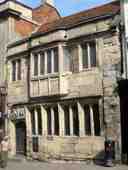
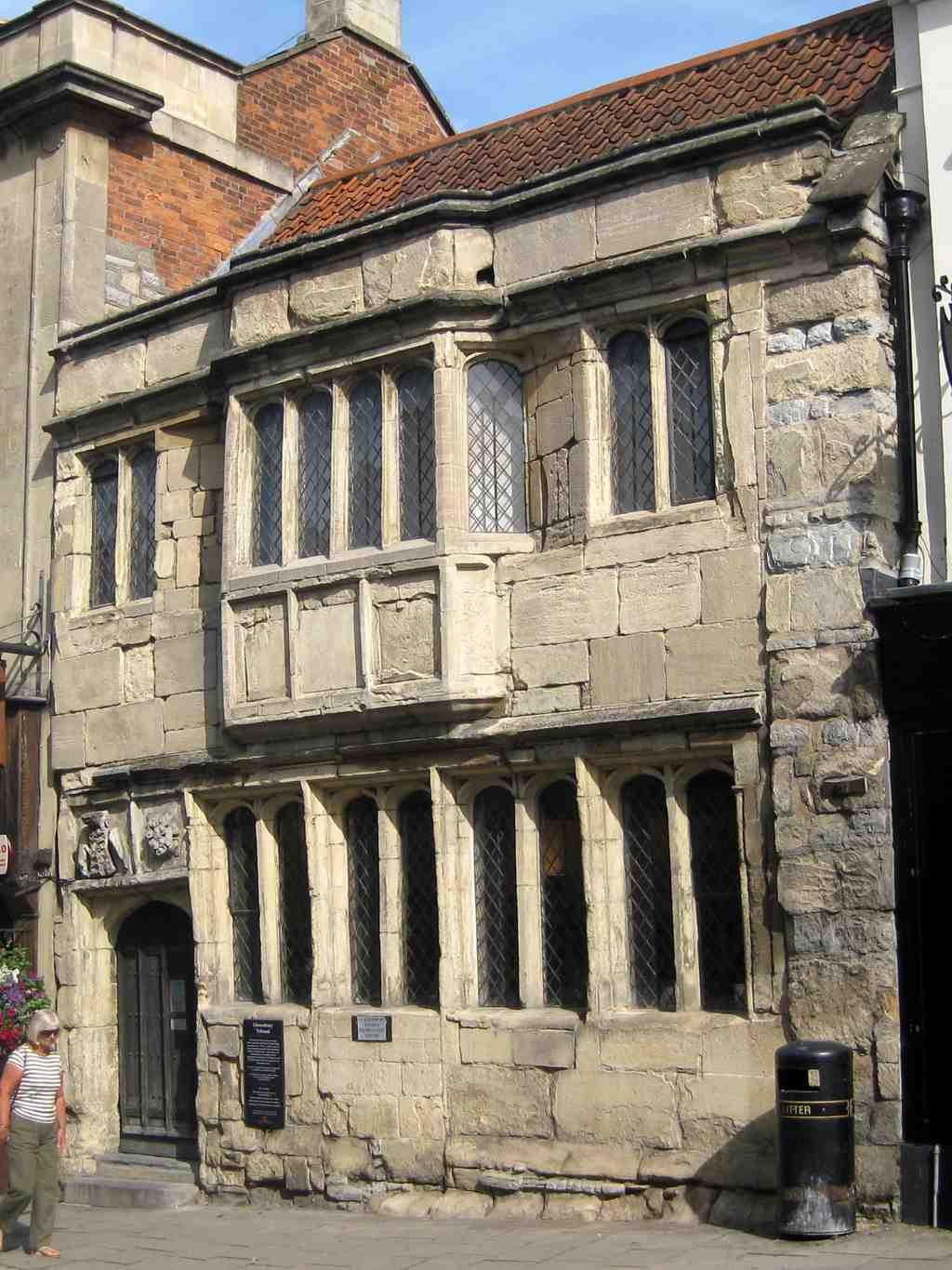
Look ahead for a small, weathered stone house with an almost magical charm. It's got chunky, pale stone walls that look like they’ve stood here for centuries, and there are two rows of tall, leaded windows with delicate criss-cross panes. The roof is low and tiled with a gentle slope, and you’ll spot the original old wooden door on your left with carvings of royal arms and a Tudor rose above it. If you see a sturdy building that seems like it’s offering secrets from the past, you’re right in front of the Tribunal! Now, while you're here, imagine the sound of medieval shoes shuffling along the cobbles. This place doesn’t just look ancient-it’s been watching Glastonbury for over 500 years! Built all the way back in the 15th century as a merchant's house, it’s picked up a few scars, secrets, and stories along the way. It even stands on the spot where a wooden house from the 1100s once sat! You might think, with a name like “The Tribunal,” this was the booming center of trials and courtroom drama. Spoiler alert: there’s no proof any big court tales actually happened here. But hey, never let the truth get in the way of a good story, right? Rumor once had it Judge Jeffreys held his Bloody Assizes here-he’d probably love the drama of the place, but it’s just a myth! Step up and peek at that door. It’s an original, the same one merchants, schoolboys, and even nuns have walked through. Picture the everyday bustle of a medieval shop, the crisp words of a teacher or maybe the gentle echoes of a nun’s prayers carrying through these stone halls. Don’t miss the upstairs room either, with its beautiful old timbered roof, or the Elizabethan ceiling panels on the ground floor-decorated to impress, and thankfully, not replaced during home renovations! Today, the Tribunal is keeping its stories alive as Glastonbury’s Museum run by the Antiquarian Society. Inside, you’ll find mysterious treasures from the Glastonbury Lake Village, famous for the perfectly-preserved “Glastonbury Bowl”-which is at least 2,000 years older than me. So enjoy the sight of this proud old house. For hundreds of years, it’s been everything from a shop to a school to a would-be courthouse. If its stones could talk, we’d probably never get them to stop! Ready to walk on before the walls start gossiping?
Open dedicated page →
Show 6 more stopsShow fewer stopsexpand_moreexpand_less
- location_on4
Glastonbury Market Cross
Buy tour to unlock all 13 tracksTo spot the Glastonbury Market Cross, look straight into the center of the small open square ahead. Rising right in front of the surrounding market stalls, you’ll see a tall,…Read moreShow less
To spot the Glastonbury Market Cross, look straight into the center of the small open square ahead. Rising right in front of the surrounding market stalls, you’ll see a tall, stone spire that’s impossible to miss. It stands much higher than anyone’s hat-and it almost pokes the sky! The stone is pale and weathered, decorated with ornate tracery and pointy details. If you’re scanning the scene and spot an octagonal stone base with a slender column shooting upwards, crowned by a spire and a small cross, congratulations-you’re looking at the Market Cross. Now, imagine yourself standing here in 1846. The market square would have been full of chatter and the clatter of hoofbeats as farmers and townsfolk gathered to trade. The brand-new Market Cross would have soared above everyone, glistening in the Somerset sun. It was designed by Benjamin Ferrey, and the locals thought it looked a bit like one of those fancy French structures, or maybe even the ancient crosses of England. Funny thing: this isn’t the first cross to stand on this spot. The old one, with clustered pillars and a roof, eventually fell down-let’s just say, time has no mercy, especially over a few centuries. Around 1806, it was gone, and the square felt a bit empty for a while. But thanks to Mr. T. Porch (great name, right?), who owned the Abbey down the road, Glastonbury finally got a replacement. When The Gentleman’s Magazine showed up to review the new cross, they didn’t hold back: “elegant,” “imposing,” and a “great ornament.” High praise indeed! The cross stands 38 feet tall, built from creamy Bath stone. Get closer and you’ll see all sorts of carved finials and lacy stonework. I have to say, for a giant spiky sculpture in the middle of a market, it’s pretty easy on the eyes. And just think-market-goers have been meeting and gossiping right here for over a century and a half. So take a moment and picture market day long ago: a swirl of smells, banter, and maybe a sheep or two on the run (hopefully not toward your picnic). The Market Cross, then as now, keeps a silent watch over all the drama and deals of Glastonbury’s bustling heart.
Open dedicated page → - location_on5
St Benedict's Church, Glastonbury
Buy tour to unlock all 13 tracksYou’re nearly there-look ahead and to your left, and you’ll spot a rather sturdy-looking old stone church just where the road bends. Notice how it sits almost like a small…Read moreShow less
You’re nearly there-look ahead and to your left, and you’ll spot a rather sturdy-looking old stone church just where the road bends. Notice how it sits almost like a small fortress, with a long nave, pointed arch windows, and a grand tower rising up at the end, like a medieval guardian keeping watch over the entrance to the town. That’s St Benedict’s Church, with its stone walls weathered by centuries of wind and rain, and its battlement-style top that’s pretending to be a little castle. The tower’s the part that really stands out, with its tall, narrow windows and chunky buttresses pressing on each side, keeping everything nice and stable. If you hear the bells ring out, you’ll know you’re in the right spot! Now, have a look around and imagine you’re standing here, maybe a little shivery from the chilly Somerset air, clutching a fresh pasty from up the road. You’re gazing at a church that got its start nearly a thousand years ago-as far back as the 11th century! People first built it as a Norman chapel, but, as you can probably tell, the church couldn’t stop growing. Over the centuries, it’s gathered extra bits and bobs-like that impressive tower added in the 1400s, and a brand new aisle and porch from an abbot who probably liked his Sunday mornings to be roomy. Don’t be fooled by the name, either. It started off being dedicated to Saint Benignus, but someone mixed up their saints, and soon enough, it became St Benedict’s instead. Classic case of mistaken identity in the medieval paperwork, really. This place is Grade I listed, meaning it’s officially got more historical charm than a pancake has syrup. Now, look up at those windows-lovely, aren’t they? The stained glass twinkles in the sunlight, but you’ll have to use your imagination for the ones that were replaced in the 1800s, after a fair bit of Victorian tinkering and tidying up. Speaking of changes, the church recently had a major facelift in 2014, so it’s looking pretty sharp for a centuries-old building! Listen closely-sometimes if it’s very quiet, you’ll catch the faint echo of one of the six bells, five of which date all the way back to 1776. That’s a lot of Sunday mornings ringing through Glastonbury. And if you peered inside, you’d spot a little stone basin, called a piscina, left from the 13th century, where priests used to wash the sacred vessels. This spot once belonged to the grand old Glastonbury Abbey, before Henry VIII sent his men marching through, dissolving monasteries like a kid crumbling biscuits into tea. Nowadays, it stands together with its sister churches, sharing stories and Sunday services, looking after the town as it always has. So give a nod to St Benedict’s-part fortress, part sanctuary, and a brilliant piece of Glastonbury’s ever-unfolding story. Now, onward to our next stop, unless you want to stay and see if you can hear those famous bells!
Open dedicated page → - location_on6
Glastonbury Town Hall
Buy tour to unlock all 13 tracksTo spot Glastonbury Town Hall, look directly ahead-across Magdalene Street-at the grand, sandy-coloured stone building with green doors and a clock perched up in the pointed bit…Read moreShow less
To spot Glastonbury Town Hall, look directly ahead-across Magdalene Street-at the grand, sandy-coloured stone building with green doors and a clock perched up in the pointed bit right at the top. The front is perfectly symmetrical, just like a ruler would’ve drawn it, with five neat windows on the first floor and three impressive arches on the ground floor. There’s even an old-fashioned red telephone box just outside, like a cherry on top for that classic British feel. Now, imagine yourself right here in front of this impressive Town Hall-a place where Glastonbury’s most important decisions have been made for over 200 years. Take a deep breath and picture the smell of polished stone, the echo of footsteps through the arches when it used to be bustling market space. If it’s quiet now, it wasn’t always! Back in 1814, crowds would’ve been haggling for bread and cheese downstairs, while up above the borough council argued about taxes-or perhaps who sits closest to the fire. This building was designed by Joseph Beard, who clearly liked things neat and grand. By the way, the clock up top has kept plenty of people from arriving late to heated council debates-so if you ever lose track of time, just blame the clock, like a true local! Once upon a time, a tiny museum here showed off fearsome fossilized ichthyosaurs-huge, toothy sea reptiles that would probably have spiced up the council meetings. Then, in 1912, they squeezed in a whole cinema, so maybe ghosts of ancient mayors still sneak down to catch a black-and-white film. Picture the Second World War: behind these green doors, the “invasion committee” met, planning what to do should enemy troops land at Lyme Bay. Let’s hope the only invasion Glastonbury gets now is from festival-goers. Today, it’s still the heart of town business and, if walls could talk, they’d have stories of squabbles, laughter, chandeliers shimmering overhead, and yes-even that day in 1987 when Sir George Trevelyan gathered folks to “heal the earth.” Only in Glastonbury, right? So, as you stand here, you’re surrounded by the echoes of history, the weight of local power, and maybe, just maybe, the faint scent of fossilized fish. And if you see a serious-looking portrait inside? That’s Lord King, looking over today’s councillors to make sure they don’t pinch too many biscuits. Ready for our next stop?
Open dedicated page →
7Abbot's Kitchen, Glastonbury
Buy tour to unlock all 13 tracksTo spot the Abbot’s Kitchen, just look ahead for a truly unique, chunky stone building with an unusual shape-almost like a big, old beehive with a tall chimney top! Its octagonal…Read moreShow less
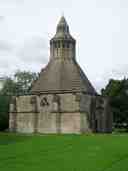
To spot the Abbot’s Kitchen, just look ahead for a truly unique, chunky stone building with an unusual shape-almost like a big, old beehive with a tall chimney top! Its octagonal base and steep, pyramidal roof set it apart from anything else around. The roof comes to a point, almost like a wizard’s hat, and you’ll notice strong, curved buttresses around the sides, plus a few mean-looking gargoyles peering down at you as you approach. Can you see it now? Welcome to the Abbot’s Kitchen, where the smell of roasting meat would once drift out into the Somerset air! Imagine the clatter of pots and the sizzle of food. This amazing stone building was the heart of all good food for the abbot and his guests, built back in the 14th century-so you’re standing in front of a kitchen that’s seen over 600 years of action! This place was no ordinary kitchen. It’s one of the best-preserved medieval kitchens in all of Europe! Inside there are four huge fireplaces, one in each corner, which means you could roast an entire wild boar in here and still have room to bake buns for dessert-talk about a chef’s dream! The clever builders made sure the kitchen didn’t become a smoke sauna; all that hot air from the fires would rush up through the clever outlets in the roof, with cool air sneaking its way in down below. The abbot’s kitchen once attached to a grand hall where feasts fit for kings were held-although, today, just a small bit of wall remains. And the best part? While much of Glastonbury Abbey vanished over the years, this tough little kitchen has stood strong through fire, weather, and wild parties (well, at least some rather enthusiastic medieval dinners). Later, it even hosted Quaker meetings-so from roasting beef to quiet reflection, this kitchen has seen it all. And don’t forget to peek up at those buttresses and the row of spooky gargoyles glaring down-maybe trying to scare away anyone thinking of pinching a snack! So, take a deep breath, picture the bustle, and maybe listen out for the ghosts of cooks past giving their best soup-stirring advice. Ready for the next stop, or feeling hungry for history?
Open dedicated page →- location_on8

Hospital of St Mary Magdalene, Glastonbury
Buy tour to unlock all 13 tracksLook straight ahead, and you’ll spot a pathway lined with neat, grassy lawns and colourful flowers guiding you towards a small, strong-looking stone building. The building stands…Read moreShow less
Look straight ahead, and you’ll spot a pathway lined with neat, grassy lawns and colourful flowers guiding you towards a small, strong-looking stone building. The building stands proudly at the end, its warm golden stones glowing under the sun. Notice the tiny bellcote perched on its roof, with just one bell still holding on after all these centuries. The old chapel stands with an inviting arched doorway-a little mysterious, as if it’s waiting to tell you a secret from long ago. Now that you're here, you’re standing before the Hospital of St Mary Magdalene, a place that’s seen more drama than a soap opera! This hospital was built over 700 years ago-just imagine Benedictine monks bustling about, their robes swishing as they cared for the poor and sick right where you’re standing. The original almshouses were for ten men, and the chapel behind you would have been their place for prayer and maybe even a sneaky nap during long services. The monks were rather good landlords until the monarchs had other plans and the big, important hall was demolished. And life definitely wasn’t easy for the next residents-lepers, the elderly, the forgotten, all found a place here from the 1400s onward. Once after the Dissolution of the Monasteries, when Henry VIII was sending monks packing, this place lost its big daddy funding and had to fend for itself, getting by on help from the Crown. If you look up, you’ll see that little bellcote on the roof. They say it once called everyone for prayers-or to dinner, whichever was more urgent. Around you, the single chapel room is all that’s left of bigger dreams; even the window had to be blocked up! Over time, the almshouses became tiny dwellings-you could say it was a medieval starter apartment. Some got so run-down that by the 1700s, the roof was more a suggestion than protection. Even today, a restored almshouse shows you how small these ‘homes’ really were. Talk about compact living! In the 1960s, part of the old building was lost, but the garden and some flats bring a bit of modern life to all this ancient stone. As you look around, close your eyes for a moment and think: centuries of footsteps have rustled the grass and echoed off these very walls-from monks to the forgotten to curious visitors like you. History doesn’t get much more real than this, and-on the bright side-there’s much less risk of catching leprosy during your visit than in the 1400s!
Open dedicated page →
9Tor Sports & Leisure
Buy tour to unlock all 13 tracksYou’re nearly there! Ahead of you, the Tor Leisure Ground opens up as a great sweep of bright green grass, almost like a lush emerald carpet. If you look straight across the…Read moreShow less
You’re nearly there! Ahead of you, the Tor Leisure Ground opens up as a great sweep of bright green grass, almost like a lush emerald carpet. If you look straight across the field, you’ll spot a cluster of white buildings-those are the pavilion and clubhouses, home to local sports and plenty of lively conversation. Off to your far left, just above the treetops, you can see the unmistakable silhouette of Glastonbury Tor rising on the hill, keeping a silent watch over everything. Now, imagine stepping back in time when this place was called the Morlands Athletic Ground. The cheers of cricket fans echo across Somerset, and on a sunny day, you might almost hear the crack of willow on leather as a nervous batsman faces a thundering bowler. For decades, this field was Somerset County Cricket Club’s battlefield, hosting some top-class cricket matches between 1952 and 1973. Did you know the highest score ever made here was a whopping 187 not out? That’s like hitting a cricket ball so far, it practically needs its passport. Alan Jones, swinging his bat for Glamorgan in 1963, must have been feeling invincible. Long before football boots ever dug up this turf, and well before festival crowds wandered through, the Glastonbury Cricket Club set up shop here in 1893. And the ground was owned by the Morlands company, right next door, where dozens of townsfolk spent their days crafting sturdy sheepskin coats and slippers. If you squint just right, you can almost see the factory whistle blowing, calling workers back from their lunch break, cricket in full swing on a warm afternoon-work and play side by side. Today, the Tor Leisure Ground is a patchwork of sports matches, dog walks, and families picnicking, but you’re standing on a piece of Glastonbury’s living history. If you listen carefully, maybe the wind will carry a ghostly “howzat!” to your ears or the laughter of cricket fans from long ago, still lingering in the Somerset air. I recommend you take a moment, feel the soft grass under your feet, and picture all the days of drama and delight this ground has seen-especially if you fancy yourself a bit of a cricketer!
Open dedicated page →
Frequently asked questions
How do I start the tour?
After purchase, download the AudaTours app and enter your redemption code. The tour will be ready to start immediately - just tap play and follow the GPS-guided route.
Do I need internet during the tour?
No! Download the tour before you start and enjoy it fully offline. Only the chat feature requires internet. We recommend downloading on WiFi to save mobile data.
Is this a guided group tour?
No - this is a self-guided audio tour. You explore independently at your own pace, with audio narration playing through your phone. No tour guide, no group, no schedule.
How long does the tour take?
Most tours take 60–90 minutes to complete, but you control the pace entirely. Pause, skip stops, or take breaks whenever you want.
What if I can't finish the tour today?
No problem! Tours have lifetime access. Pause and resume whenever you like - tomorrow, next week, or next year. Your progress is saved.
What languages are available?
All tours are available in 50+ languages. Select your preferred language when redeeming your code. Note: language cannot be changed after tour generation.
Where do I access the tour after purchase?
Download the free AudaTours app from the App Store or Google Play. Enter your redemption code (sent via email) and the tour will appear in your library, ready to download and start.
If you don't enjoy the tour, we'll refund your purchase. Contact us at [email protected]
Checkout securely with