Edinburgh Audio Tour: Echoes of Intrigue from Holyrood to Hermits
In Edinburgh, secrets linger on every cobbled corner—one moment whispers of medieval treachery, the next, coded messages echo from modern labs. Beneath these gothic spires, tales of ambition, scandal, and silent rebellion shape the city you see. This self-guided audio tour threads through back alleys and iconic halls. Uncover unexpected histories and campus secrets that many wander past without ever knowing. What drove a royal murder plot just steps from a university classroom? Which hidden passage still guards traces of student mischief that no faculty ever resolved? Why did a 19th-century discovery at the School of Informatics vanish overnight with no explanation? Trace dramatic footsteps from palace intrigue to computer revolutions. Feel history shift under your feet as you move between legendary events and overlooked mysteries. Edinburgh changes when you see it this way. Take your first step into the shadows—the city’s untold stories are waiting.
Tour preview
About this tour
- scheduleDuration 40–60 minsGo at your own pace
- straighten2.2 km walking routeFollow the guided path
- location_onLocationEdinburgh, United Kingdom
- wifi_offWorks offlineDownload once, use anywhere
- all_inclusiveLifetime accessReplay anytime, forever
- location_onStarts at King Khalid Building
Stops on this tour
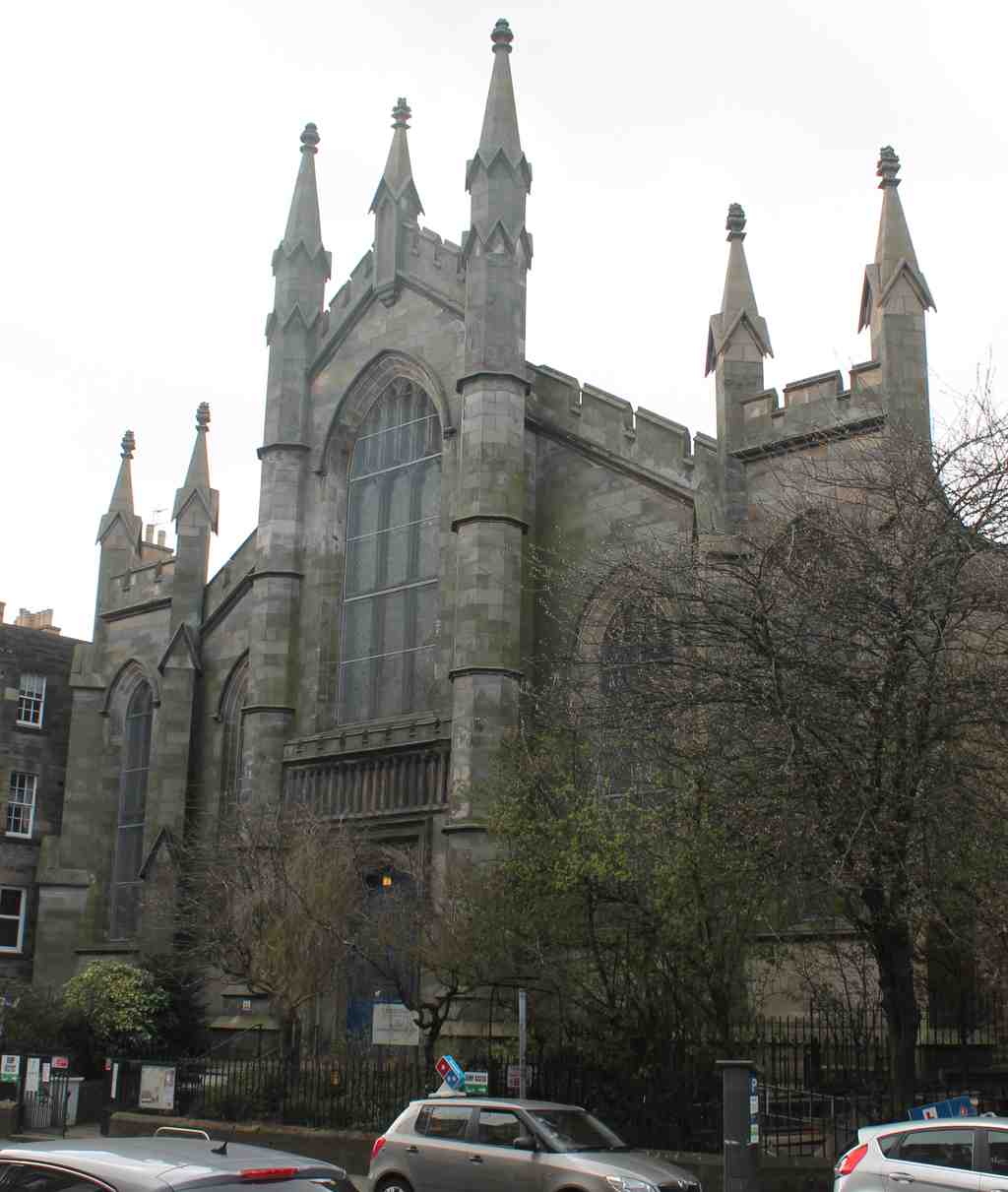
You’re looking for a solid Gothic stone building with tall pointed arches and wooden double doors-keep your eyes on the left side of Hill Square for this commanding and slightly…Read moreShow less
You’re looking for a solid Gothic stone building with tall pointed arches and wooden double doors-keep your eyes on the left side of Hill Square for this commanding and slightly mysterious structure wedged between modern buildings. Welcome to the King Khalid Building, where every stone seems to have seen more drama than an Edinburgh Fringe show! Picture yourself in 1847: the fresh scent of cut sandstone fills the air as the Roxburgh Free Church opens its doors for the very first time. Imagine the eager footsteps of the congregation, shuffling in, hoping the new location would finally be big enough to hold their ever-growing flock. At that time, the congregation was breaking the mold-they dared to install the first pipe organ in a Presbyterian church in Edinburgh! Ah, but not everyone approved. The Relief Church’s bosses tried to order that wild new instrument out, but the congregation stood their ground, causing a small-scale holy uproar. Eventually, they had to remove the organ to join the established Church of Scotland. Tough negotiations for a musical upgrade, don’t you think? As the years rolled on, this place played host to all sorts: not just churchgoers, but even rebels in the pews, following their minister during the great Disruption of 1843, when the congregation split from the official church and sought freedom in faith. By 1886, the church had united with McCrie Free, and the sturdy stone walls saw new faces and heard different prayers as it became St Michael’s Episcopal Church. If only pews had memory foam-imagine the stories they’d have soaked up as the years ticked by! Fast forward to the 1960s for a different mood entirely. With the old congregation gone and the doors closed, the building sagged into dereliction-dust motes spinning in empty beams of light, echoing with hidden stories. Just when it seemed this Gothic beauty would crumble into history, the Royal College of Surgeons of Edinburgh stepped in, armed with both mops and ambition. Enter King Khalid of Saudi Arabia, whose generous donation helped transform this haunted heap into a top-notch lecture hall, hence its full mouthful of a name: King Khalid bin Abdul Aziz of Saudi Arabia Symposium Hall. That’s one way to get your name on the door! The restoration was more than a facelift. In 1982, architects split the broad interior into two inviting storeys, creating a space that makes you feel like you’ve just walked into the Renaissance, with stone walls around and a wooden ceiling that would make any wizard’s council proud. Then, in 2005, it got another makeover: out with the old benches, in with tiered leather seats-auditorium comfort, now seating 158 future thinkers and enthusiastic note-takers! Don’t be fooled, though: this isn’t just a stuffy lecture theatre. The ground floor comes alive as a dance floor and a bar for special events. And every August, the Edinburgh Fringe transforms it into a lively performance hot spot under the name Symposium Hall-the only place in town where you might hear academic debates by day and side-splitting comedy by night. So as you stand outside, have a look at those original pointed arches, those quirky carved stone flourishes designed by Thomas Hamilton-what some call “Lumpy Gothic,” which sounds more like a cake recipe than an architectural style! Imagine the laughter, music, hymns, sermons, fierce debates, and celebratory chatter that have bounced around these walls for nearly two centuries. From unlikely innovations in church music, to the drama of religious change, to royal generosity and roaring festival crowds-this building has heard it all. And right now, it’s welcoming you in, keeping its next story ready to unfold.
Open dedicated page →You’re now standing on a spot that once shook Edinburgh to its very core-the site of the notorious murder of Lord Darnley, husband to Mary, Queen of Scots. Picture this: it’s a…Read moreShow less
You’re now standing on a spot that once shook Edinburgh to its very core-the site of the notorious murder of Lord Darnley, husband to Mary, Queen of Scots. Picture this: it’s a chilly February night in 1567. The city is dark and quiet, except for the flickering of torches and the rustle of cloaks in the corridors. Here stood the Old Provost’s House, backed against the thick Flodden Wall. All around, fields stretched away-this was once the Kirk o’ Field, surrounded by open land, outside the bustling city walls. Not a bad place if you like peace and quiet, or-as history would have it-a little bit of drama. Now, listen for the difference between a normal Edinburgh night and the mayhem that erupted here. In the early hours of 10 February 1567, a thunderous blast shattered the silence. Darnley’s lodgings were destroyed by gunpowder-so much of it, in fact, that the entire house was reduced to rubble. The Privy Council described it as being blown into the air with such force that there was “nothing left unruinated, and doung in drosse to the verie ground stane.” Imagine the shock of nearby residents like Barbara Mertine, who looked out her window in Friar’s Wynd and heard the blast-what she called the "craik"-and saw men fleeing the scene. May Crokat, who lived just across the way, ran to her door in her nightshirt, clutching her twins, yelling after the suspects-though, in true Scottish style, they kept their secrets close. Everyone who rushed to see what remained discovered a gruesome surprise: Lord Darnley and his servant weren’t killed by the explosion at all, but were found partially clothed, apparently strangled or smothered, lying cold in a nearby orchard. It seemed the gunpowder was just for show-the real work was silent, and far more sinister. Just imagine being John Petcarne, the surgeon, summoned not to save the living, but to bear witness to the dead. Now let’s add a dash of royal intrigue. Darnley had moved here with Mary, who, according to some sources, enjoyed a bit of cross-dressing and nighttime revelry-allegedly donning men’s clothing for masked dances and secret street escapades. Mary herself had visited Darnley that night, attending a wedding, then arriving at the lodgings. Rumor has it that the Queen switched out Darnley’s fancy black velvet bed for an old purple one, supposedly to keep it safe from bathwater. Was this just good housekeeping, or the first step in a murder plot? The aftermath was chaos. Suspicion immediately fell on the Queen and the charismatic Earl of Bothwell-who, plot twist, married Mary just three months later! The whispers ran wild: was Mary herself present at the murder, dressed as a man? Or was this the cunning work of ambitious Lords plotting in the shadows? Catholic, Protestant, rival heirs, and ancient grudges-it was a tangle fit for a soap opera, only with a larger budget for gunpowder. Of the accused, some paid the ultimate price. Bothwell’s own servants were arrested, tortured, and executed; their heads displayed grimly on Edinburgh’s gates. Some were possibly only bystanders, but history wasn’t taking attendance that night. Curiously, confessions differed, and the “casket letters”-supposedly incriminating Mary-complicated the story even more. Meanwhile, sketches of the blasted house, now with the infant James VI praying for vengeance, appeared as propaganda all over Scotland and in England. A placard even depicted Mary as a seductive mermaid-proof that scandals were viral long before social media. Fast forward to today, and the site of Darnley’s murder now lies within the stately Old College of the University of Edinburgh. Beneath these stones, you’re walking on history-and a mystery that’s never been solved. Who killed Lord Darnley? Was it Mary and Bothwell? Vengeful lords? The Hamiltons? Maybe an overzealous decorator who really hated that purple bed? So, as you stand here, listen for the echoes of those long-ago footsteps. The true story of what happened that cold February night has vanished into the Edinburgh mist, leaving behind questions, legends, and the distinct suspicion that, in Scottish history, nothing is ever quite as it seems. Wondering about the location, assassination or the aftermath? Feel free to discuss it further in the chat section below.
Open dedicated page →To spot the Southside Community Centre, look for a grand stone building with tall pointed pinnacles and Gothic windows, standing behind a little fence on your left side along…Read moreShow less
To spot the Southside Community Centre, look for a grand stone building with tall pointed pinnacles and Gothic windows, standing behind a little fence on your left side along Nicolson Street. Alright, you’ve arrived at the Southside Community Centre-a place that looks straight out of a wizard movie with its dramatic towers and windows, but I promise, there are no secret portals to magic kingdoms… at least none that we know about! Imagine the year is 1820, and stonemasons are hard at work assembling this sharp, Gothic façade. The whole building is full of soaring windows and spires, like it’s got its own stone crown-Edinburgh isn’t shy about castle-like architecture, even for what started as a church. Now, picture Nicolson Street bustling, horse-drawn carts rattling by, people in coats and bonnets streaming along the street. The story of this place actually begins further back, in 1747, during a massive church argument-today’s version of a very dramatic family dinner. Adam Gib, a fiery minister, leads his flock away from the Secession Church at Bristo because of something called the Burgher Oath. The split caused so much drama that the two groups held services in the same building but each insisted on separate collection plates-now that’s commitment to a grudge! After being expelled, Gib and company were forced to worship outside in winter under a tent-imagine freezing toes and soggy hymn sheets, quite the spiritual test! Eventually, they built a plain wooden church nearby, and in 1820, ready to shine, they went full Gothic with the building you see now. When the first stones went up, local newspapers poked fun by calling it “Babylonish”-Edinburgh wit hasn’t changed much. During its early years, this church was packed-over 2,000 people sometimes squeezed in to hear firebrand sermons. Later, under minister John Jamieson, the church became a community hub, creating schools, lending libraries, even starting a savings bank. Education and charity were at the core, and there weren’t many dull moments-the congregation once raised money to abolish slavery and supported distant missions. But this was a church always in motion, changing names and denominations more often than some people change their socks. Over the years, it was the United Secession Church, the United Presbyterian, then United Free. Eventually, it became part of the Church of Scotland in 1929, rejoining the fold after nearly two centuries apart. The 20th century brought its own excitement. In 1932, a devastating fire ripped through the church, flames lighting up the Southside sky. The inside was rebuilt from scratch, this time with a fancy carved gallery and a pipe organ sweet enough to make angels jealous. But as decades rolled by, city life shifted and membership declined-until 1969 when the congregation merged with two others. The church went quiet, its doors closing for regular worship. Not one to vanish quietly, the building was snapped up by the city and-after moonlighting as a rather dramatic furniture showroom-reborn in 1986 as the Southside Community Centre. Locals fought to have their meeting spot, and now you’ll find laughter, music, classes, and events spilling out from its halls. During the hectic magic of the Edinburgh Fringe, this place transforms again, becoming the Zoo Southside venue; you never know whether you’ll discover a new comedian or an avant-garde theatre piece behind those blue doors. Don’t forget to look up at the spires-a little like stone rockets ready for takeoff-replaced after they’d been removed decades ago. And inside, if you happen to wander in, imagine the wild musical chaos when Bill Bailey performed here. These days, there are community groups, a bright café, and plenty of reasons for all kinds of folk to gather-no collection plates needed! Alright, onward to our next stop. But if you ever need a dramatic backdrop for your superhero landing, you know where to come.
Open dedicated page →
Show 10 more stopsShow fewer stopsexpand_moreexpand_less
4St Andrew's Orthodox Church, Edinburgh
Buy tour to unlock all 17 tracksLook across the street for a sturdy stone church with pale brown, rugged walls, pointed arched windows, and a small tower topped with a spire set just behind a low stone wall. As…Read moreShow less
Look across the street for a sturdy stone church with pale brown, rugged walls, pointed arched windows, and a small tower topped with a spire set just behind a low stone wall. As you stand here, take in the sight of St Andrew’s Orthodox Church-looks pretty peaceful from the outside, right? But this place is packed with stories, drama, and even a bit of architectural makeover rivalry! Let’s spin the clock back to the busy days of 18th-century Edinburgh. Picture muddy streets, clusters of new Georgian houses springing up, and a crowded parish desperate for more space to fit the growing flock. This church began as St Cuthbert’s Chapel of Ease in 1756, one of Scotland’s very first “overflow” chapels. Wealthier residents in the area competed to donate enough money so they could pick the church’s minister-talk about high-stakes fundraising. Now, at the time this was just a “plain genteel building”-nothing too glamorous. Imagine worshippers stepping up to the little porch at the front, bells ringing overhead, all surrounded by rural green space and grainy city air. As Edinburgh’s Southside blossomed, the chapel filled up with the city’s movers and shakers, including Lord Cockburn, who might have greeted you with a stern Victorian stare. But things didn’t always go smoothly. Congregations swelled and shrank with the tides of history. After a rocky spell when it was almost closed for good, the church sprang back, expanded northward, and added a sweeping gallery for new worshippers. In 1866, a local architect named Daniel MacGibbon gave the church its Gothic glow-up-pointed windows, a short (but charming) spire on the northeast, and a spruce-up for its porch with a granite datestone still visible up there. It says ERECTED 1755: RESTORED 1866, so you know exactly when the magic happened. Fast-forward to the 20th century and picture the halls echoing with mothers’ groups, university theatre productions, and even wild plans for a roller skating rink among the gravestones. No kidding, folks wrote angry letters when parish leaders floated the idea of letting kids skate over the dead-clearly, Edinburgh wasn’t ready for holy roller disco. The tides of the city kept shifting. By 1969, dwindling numbers and new church unions led to the building’s sale. For a while, the University of Edinburgh used it as a furniture store-imagine pews traded for piles of chairs and dusty wardrobes! Then, along came a new chapter: the Orthodox community, with roots tracing back to 1948, purchased the building in 2013. Their story started with Russian and Polish ex-servicemen, grew by way of services in Slavonic and English, and finally settled here. Today, worship mixes English, Greek, Slavonic, and Romanian-a true international community under gothic arches. Look closer at the churchyard and these old stones: they cradle the remains of all sorts, from poets like Thomas Blacklock to the infamous Deacon Brodie, cabinetmaker by day, criminal by night. The windmill that used to pump Edinburgh’s water gave its name to the streets here-a detail most people stroll past without a clue. Even the plaque for Alison Cockburn, lyricist to “Flowers of the Forest,” graces the boundary. Inside, there are stained glass windows honoring ancestors of Scottish nobility, and an organ that’s watched the Eastside yawn, roar, and drift through centuries. Pipes, woodwork, gold lettering from centuries past-they all tell their own quiet stories. Standing here, you’re part of the living heartbeat of a place that’s switched roles almost as often as it’s changed its locks. So next time someone tells you churches are boring, just remind them some churchyards nearly turned into roller skating tracks-though, lucky for the ghosts, common sense prevailed. Shall we roll on to our next stop? For a more comprehensive understanding of the buccleuch parish church, st andrew's orthodox church or the building, engage with me in the chat section below.
Open dedicated page →- location_on5
Word Power Books
Buy tour to unlock all 17 tracksHere you are, standing at the doorway of Word Power Books-a place where books don’t whisper, they shout, sing, and spark revolutions! Imagine it’s 1994: the Scottish air outside…Read moreShow less
Here you are, standing at the doorway of Word Power Books-a place where books don’t whisper, they shout, sing, and spark revolutions! Imagine it’s 1994: the Scottish air outside is brisk, but inside, warmth radiates from overflowing bookshelves and the low hum of literary excitement. Elaine Henry, who once fueled Edinburgh’s feminist book dreams at ‘Womanzone’, knew the city needed a home for radical voices-a safe haven for anyone whose ideas didn’t fit the mainstream mold. After Womanzone closed its doors in 1986, Elaine made it her mission to bring Word Power Books to life. She pulled it off with style, getting the legendary James Kelman-Booker Prize winner and champion of the underdog-to cut the ribbon that December. Since then, Word Power hasn’t just sold books-it’s published writers like Kelman and Tom Leonard, broadcasting Scottish voices that refuse to be silenced. Every August, while the rest of the city buzzes with the festival crowd, Word Power’s Book Fringe stirs up its own brand of creative mischief. And every October, the Radical Book Fair opens the stage to independent presses from near and far, making sure even the smallest stories get their time in the spotlight. As you stand here now, remember: a real revolution can begin with something as simple, and as powerful, as a book. And yes, don’t judge a bookshop by its cover-judge it by its rebellions!
Open dedicated page →
6Edinburgh Central Mosque
Buy tour to unlock all 17 tracksTo spot the Edinburgh Central Mosque, just look for the tall, sandy-colored tower with a dome and a crescent moon perched on top, right across Potterrow-a striking blend of…Read moreShow less
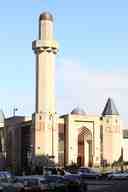
To spot the Edinburgh Central Mosque, just look for the tall, sandy-colored tower with a dome and a crescent moon perched on top, right across Potterrow-a striking blend of Islamic design and Scottish flair. Imagine yourself standing here decades ago, gazing at this very spot, but instead of domes and minarets, you’d see no large place for the city’s growing Muslim community to gather. Edinburgh’s Muslims needed a grand home-a place for prayer, festivals, learning, and coming together-not an easy wish given the busy buzz of the city center. For years, all hope pointed to this patch of land, but there were many twists and turns before a single stone was laid. The City Council finally agreed to let them build, but with a catch: a protected listed building would have to stay and become part of the new vision. Picture heated late-night meetings, stacks of paperwork, and a little suspense over where the money would come from. Just as things were looking a bit grim for the future mosque, a dramatic solution came from Saudi Arabia-King Fahd himself swooped in and donated 90% of all the funds needed, more than £3.5 million! Suddenly, plans leapt into action, designs were drawn, and stone by stone, Edinburgh’s new landmark began to rise. Dr. Basil Al Bayati, the creative mind behind the mosque, dreamed up an inspiring blend of tradition and modern flair: you can see the sharp pointed roof on one side like a Scottish baronial tower, and elegant arches above the entrance that feel straight out of Istanbul. Step closer, and you’ll spot square kufic Arabic calligraphy reading “Allah,” decorated across stonework-ancient words set in modern lines, bringing together centuries of faith and artistry. And then there’s the inside! The main prayer hall isn’t just big-it’s colossal, able to hold over a thousand people. Worshippers gather for Friday prayers and daily rituals, some up above on the balcony reserved for women, all under the glow of beautiful chandeliers reflecting off a vast, soft carpet below. The hall is almost totally free of furniture except for a few chairs for the elderly or disabled-perfect for those who want to pray without worrying about creaky knees. In the background, the community hums quietly, with lectures, warm conversations, and the soft shuffle as people prepare for prayer. If you listen carefully, you might even catch the delicious sizzle from the legendary Mosque Kitchen-the heart of comfort food in Southside. Imagine the aroma of spicy curries and freshly baked naan, drifting through the open air as festivalgoers and hungry students flock for a taste. During Ramadan, everyone crowds in for Iftar, sharing laughter and stories as the sun goes down. The Mosque Kitchen was even ranked the best festival food by The Scotsman-now that’s some spicy competition! But it’s not all prayer and naan. Every summer, the mosque transforms during the Islam Festival Edinburgh. The doors fling wide open and the city is invited in for a whirlwind of Arabic calligraphy, art, talks, and debates-sometimes even MPs and famous faces drop by. Here, someone might be learning to write their first Arabic letter, while another listens to a passionate debate about women and Islam. And behind the scenes, important work is done too. Health fairs with MEHIP, for example, helping build trust and care between communities-imagine a bustling hub of advice and friendly faces, proving a mosque can be more than just a spiritual home, but a lifeline, a school, a festival hall, and a kitchen all rolled into one. So next time you see those sandstone walls and the tall minaret against an Edinburgh sky, remember the stories layered inside-faith, food, festivals, and that Scottish twist on an ancient tradition. Muslims once dreamed about a place like this. Now it’s here, and you’re standing right in front of it-so don’t be shy, maybe pop in for a curry! Curious about the architecture, islam festival edinburgh or the minority ethnic health inclusion project (mehip)? Don't hesitate to reach out in the chat section for additional details.
Open dedicated page →
7McEwan Hall
Buy tour to unlock all 17 tracksLook ahead for a grand, circular sandstone building with a domed roof and ornate details, dominating Bristo Square-yep, that’s McEwan Hall! Take a moment to admire this…Read moreShow less
Look ahead for a grand, circular sandstone building with a domed roof and ornate details, dominating Bristo Square-yep, that’s McEwan Hall! Take a moment to admire this architectural marvel: McEwan Hall, the crown jewel of the University of Edinburgh’s celebrations. Picture yourself in the Edinburgh of the late 1800s, where students had to accept their diplomas in cramped classrooms or borrowed halls-hardly the stage for grand parental applause or a sneaky airhorn. The university had grown so fast thanks to the Universities (Scotland) Act of 1858 that the old ways just didn’t cut it anymore. Enter an unlikely hero: William McEwan, not just a politician but the proud owner of Fountain Brewery, your friendly neighborhood beer magnate with a serious soft spot for education. He swooped in and offered more than £100,000-imagine the amount of pints you could buy with that! All the university had to do was snag the land, which they did in 1887. Grateful scholars named the hall after him and even handed him an honorary doctorate-talk about a win-win. When the building started taking shape, it wasn’t just any old hall. Architect Sir Robert Rowand Anderson led the design, and by 1894 the D-shaped sandstone masterpiece started wowing people. Outside, over the main door, is a panel showing a graduation: the real “Instagram before Instagram.” There are also empty niches meant for statues, but rumor has it the statues missed their graduation ceremony and never showed up. But step inside (in your imagination, for now)-what a sight! The interior shimmers with Italian Renaissance flair and a dazzling dome painted by William Mainwaring Palin. Up on the dome, Arts and Sciences dance together, and in the heart of it all, the goddesses of Science, Art, and Literature preside over a spectacle called "The Temple of Fame.” Palin slipped William McEwan himself into the decor as a wise old man, probably keeping a watchful eye to ensure graduates don’t trip over their robes. An organ, built by the famous Robert Hope-Jones, belts out music that’s so grand you’ll wish every lecture had its own soundtrack. A major refurbishment in 2015 gave the Hall a fresh lease on life: new tech, access for everyone, and secret seminar rooms hidden underground like something out of a spy movie. Today, McEwan Hall hosts graduations, concerts, festival shows, and more. It remains the university’s beating heart, carrying the echoes of celebration, nerves, laughter, and maybe the occasional lost cap.
Open dedicated page →- location_on8
Nursing Studies, University of Edinburgh
Buy tour to unlock all 17 tracksAs you look at the Nursing Studies building in front of you, imagine a chilly Edinburgh morning in the mid-1950s. The city smells faintly of coal fires and you can almost picture…Read moreShow less
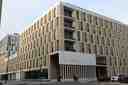
As you look at the Nursing Studies building in front of you, imagine a chilly Edinburgh morning in the mid-1950s. The city smells faintly of coal fires and you can almost picture eager students clutching notepads, excitement in their voices as they stride up these very steps. But this isn’t just any academic building. This is where the future of nursing education in Britain was shaped-and not with a simple bandage and a “there, there.” We're talking world-firsts, pioneering research, and ambitious dreams. Picture 1956: the post-war world is still catching its breath, but inside this university, a revolution is already brewing. All over Britain, nurses are still mostly trained in hospital wards, learning by following orders. But here in Edinburgh, something different is happening-thanks in no small part to a remarkable economist and nurse, Gladys Beaumont Carter. After a spell in Canada, Gladys returns determined to raise the bar for nurses, poring over teaching methods and making recommendations that ruffle more feathers than a startled flock of seagulls on Princes Street. Then, in 1955, a meeting buzzes with anticipation. The Rockefeller Foundation announces a hefty grant-£30,000-to help launch something truly new: a special unit for nurse education right within the university walls. It’s a landmark moment. By June 1956, Elsie Stephenson, a formidable force in a crisply starched uniform, becomes director, and the very first Nurse Teaching Unit springs to life inside the Faculty of Arts. Just a year later, the title “Nursing Studies Unit” is adopted, and the first set of graduates-thirteen intrepid nurses-collect their diplomas in 1958, ready to shape the national conversation. Fast forward to 1960, and the mood is electric-Edinburgh is about to offer the UK’s first integrated nursing degree, combining hands-on patient care with rigorous social science. Students embarking on this five-year odyssey are whisked straight into four weeks of hospital work, so their first introduction to university is less about late-night essays and more about late-night bedpans. And honestly, if you can survive the basic nursing tasks, you’re ready for anything academia throws at you. Support floods in from international heavyweights: both the World Health Organization and the Royal College of Nursing throw their weight behind this bold experiment. In 1962, Edinburgh launches an international school of advanced nursing studies, attracting students, teachers, and curious onlookers from around the globe. By the late 1960s, amidst a sea of hospital-based nurse training programs, this remains the only department of nursing in a UK university, with 63 students ambitious enough to sign up. Let’s add a touch of academic drama: in 1971, Margaret Scott-Wright takes the newly created Chair of Nursing Studies-Europe’s first ever such position. Suddenly, nursing holds the same clout as any other subject. Around the same time, Edinburgh opens the UK’s first Nursing Research Unit in two humble flats on Buccleuch Place. Under the direction of Lisbeth Hockey, research buzzes from morning to night, generating new ways to care and teach, right up until 1994. Throughout the decades, shifts and changes send ripples through academic structures. By the nineties, masters education is under review-more layers and standards added to keep the field sharp. In 2002, Edinburgh re-shuffles, and Nursing Studies lands proudly within the School of Health in Social Science. The fun doesn’t stop there. In 2012, even creative writing sneaks in, with author Nicola White appointed Writer in Residence. And in 2016, the 60th anniversary is marked with royal flair-a plaque is unveiled by none other than the Princess Royal, and a captivating exhibition showcases decades of excellence. Today, the journey continues. With just 35 new students joining each year, every nurse here is part of a distinguished line tracing back over sixty years. Edinburgh’s program is consistently top-ranked and the department continues to lead in education, research, and a surprisingly high number of empty coffee mugs. So the next time someone jokes that nurses just give out plasters, remember: right here, they built an empire of innovation, one starched collar and clever mind at a time. To delve deeper into the nursing research unit, chair of nursing studies or the ranking, simply drop your query in the chat section and I'll provide more information.
Open dedicated page → - location_on9
Edinburgh University Students' Association
Buy tour to unlock all 17 tracksPicture the buzz in 1884: the city shrouded in Victorian fog, horses clopping along the cobblestones, and a crowd of eager young students huddled in smoky rooms, plotting the…Read moreShow less
Picture the buzz in 1884: the city shrouded in Victorian fog, horses clopping along the cobblestones, and a crowd of eager young students huddled in smoky rooms, plotting the birth of their own representative council. Led by the determined Robert Fitzroy Bell, their goal was simple but radical: make student voices impossible to ignore. They pooled together their pennies (and quite a few pounds, to be fair) and launched a massive fundraising campaign. Imagine energetic shouts and laughter echoing through Waverly Market as a “fancy fair” drew people from all walks of life, raising a whopping £10,000. By 1889, with contributions from the Town Council and the university, they had enough for an architect-Sydney Mitchell-and built Teviot Row House, the oldest purpose-built student union in the world. Edinburgh’s students finally had their own kingdom. But let’s be honest-this was a boys’ club at first. Women had to wait until 1905 to form their own union, which eventually moved to posh chambers on Chambers Street, long before gender equality became a university buzzword. It wasn't actually until 1971 (yes, you heard that right-1971!) that women were finally admitted to the main union. Better late than never, right? Back in the day, the Student Representative Council and various splinter unions ran lots of far-flung outposts: there was the King’s Buildings Union, a Women's Union, and even huts recycled from the Geology department, where spirited debates no doubt reverberated off the old timbers. Through the decades, these unions merged in fits and starts-sometimes very reluctantly-culminating in 1973’s creation of the Edinburgh University Students’ Association. Even the mighty King’s Buildings Union tried to resist the merger, but university admin proved better at arm-twisting than a champion tug-of-war team. From its earliest days, EUSA wasn’t just about warm pints and cold pies (though, let’s be honest, both were served in Teviot). It’s been the source of momentous campaigns: for same-sex marriage, against tuition fees, and for better tenancy rights. And let’s not forget its role in pushing the university to revoke Robert Mugabe’s honorary degree. It does seem that over the years, if there was a cause, there was a EUSA placard for it. But student life isn’t all protests and policies. EUSA oversees more than 280 societies-think wild drama performances (Bedlam Theatre claims the title as the UK's oldest student-run theatre), swing bands, medical operas, LGBTQ+ groups, radio stations (Fresh Air, now online-only since 2008), and even a student newspaper, The Student, famous for its fiery editors and even, once, for having to physically tear out news pages to avoid legal trouble after a particularly spicy controversy. Did you know that some pretty notable figures once held sway here? Gordon Brown, future Prime Minister, was elected Rector while still a student; broadcasters, MPs, activists, and campaigners all cut their teeth in these very halls-sometimes over a tense debate, sometimes over a foamy pint. Today, the Association is led by five sabbatical officers, with Ash Scholz as the latest President-just elected in 2025 (so remember that name if you see them at the bar!). All students here are automatic members when they enroll-though you can opt out if you’re feeling especially rebellious. Between Teviot’s bars, Potterrow’s futuristic dome nightclub, and the bouncy debates still shaking the Student Council every last Thursday of term, EUSA is where Edinburgh student life is at its most vibrant. So, next time you hear distant chanting, the beat of a band night echoed across Bristo Square, or the unmistakable sound of debate from Teviot’s windows, you’re hearing history in the making-and, who knows, maybe one day you’ll see your own name in the Association’s hall of fame. If you listen carefully, you might just catch the ghosts of students past, plotting the next campaign or the punchline of the next great university joke. For further insights on the activities, structure or the notable people, feel free to navigate to the chat section below and inquire.
Open dedicated page →
10School of Informatics, University of Edinburgh
Buy tour to unlock all 17 tracksTo spot the School of Informatics, look ahead for a modern, light-colored building with tall vertical windows and a sign over the main entrance reading “INFORMATICS…Read moreShow less
To spot the School of Informatics, look ahead for a modern, light-colored building with tall vertical windows and a sign over the main entrance reading “INFORMATICS FORUM.” Welcome to the School of Informatics - where minds come together to unravel the mysteries of the digital universe! The building may look calm today, but don’t let that fool you - inside is a hive of thinkers, dreamers, and computers that work harder than a student finishing an essay at 3 a.m. Back in 1998, the University of Edinburgh decided to pull off a great academic magic trick: it brought together brilliant folks from computer science, artificial intelligence, cognitive science, and the study of how people and machines communicate, blending them all into one powerhouse - the School of Informatics. The result? A place where computers learn to think, talk, even understand jokes… well, they try, anyway. Over the years, this school has become a giant on the world stage. Ranked in the global top 20 and dubbed the UK’s number one for informatics, it’s home to research in AI, systems biology, language processing, and computer science that pushes the boundaries of what we thought was possible. In fact, it’s the very best in the world for natural language processing - so if you ever wanted to build a chatbot that actually gets sarcasm, this is the place! There’s a reason for the buzz - the school has top minds like Alan Bundy, Gordon Plotkin, and Jane Hillston, with alumni like Turing Award winner Geoffrey Hinton (yes, a real-life AI legend!). But beneath all these achievements, there’s a story of resilience too. In 2002, the devastating Cowgate fire destroyed a quarter of the school’s original buildings and its prized AI library. Yet the community rallied, and by the next year, staff and students were up and running again, this time in Appleton Tower. Today, the School of Informatics is made up of cutting-edge research groups with epic names like the Artificial Intelligence and its Applications Institute, Institute for Neural Computation, and the Laboratory for Foundations of Computer Science. Picture a scene of whiteboards covered in equations, robots rolling through corridors, and coffee-fueled debates about the future of humanity… or whether AI will ever appreciate a good pun. So as you stand here, surrounded by some of the brightest lights in tech, just remember: this is where tomorrow’s world is being imagined, coded, debugged, and occasionally, rebooted after an unexpected crash.
Open dedicated page →- location_on11
University of Edinburgh School of Literatures, Languages and Cultures
Buy tour to unlock all 17 tracksJust ahead of you is the University of Edinburgh School of Literatures, Languages and Cultures-whew, try saying that five times fast! Think of this place as Edinburgh’s own…Read moreShow less
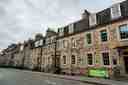
Just ahead of you is the University of Edinburgh School of Literatures, Languages and Cultures-whew, try saying that five times fast! Think of this place as Edinburgh’s own Hogwarts for stories, words, and ideas. But instead of magic wands, you’ll find students armed with piles of books, scripts, and highlighters, diving into everything from ancient Sanskrit and Japanese to the poetry of Robert Burns. Here’s a little secret: the English Literature department started way back in 1762. That’s when King George III-not exactly a guy known for page-turners-appointed Reverend Hugh Blair as the very first Regius Professor of Rhetoric and Belles-Lettres. Fancy words for a fancy job! This makes it the oldest department of its kind in the whole UK, and one of the oldest in the entire world. Imagine the layers of stories trapped in these old stones-epic debates about Shakespeare echoing out into the rainy air. The School today is a whirlwind of languages, from Scottish Gaelic to Swedish, where students might one moment debate James Joyce, and the next analyze films or translate poetry. And if you wander inside, you may bump into aspiring playwrights, film experts, and even future translators decoding the mysteries of language-sounds like a plot twist, doesn’t it? If books had a home address, this would be it!
Open dedicated page →
12George Square Gardens
Buy tour to unlock all 17 tracksLook for a row of beautiful Georgian townhouses with symmetrical stonework, high chimneys, and tall windows all lined up along a cobbled street - you can’t miss their sandy color…Read moreShow less
Look for a row of beautiful Georgian townhouses with symmetrical stonework, high chimneys, and tall windows all lined up along a cobbled street - you can’t miss their sandy color and classic elegance right in front of you. Ah, you’ve arrived at George Square! Take a deep breath and let your imagination transport you back to 1766, when this very spot was a brand-new oasis for Edinburgh’s well-to-do. The Old Town was bursting at the seams, so George Square became an escape for those with a bit of gold in their pockets and dreams of more elbow room. Picture smartly dressed lawyers and nobles strolling across these stones, children skipping, horse-drawn carriages rattling by, and crisp Scottish air swirling around those chimneys up above. At first, the square was a neat arrangement of dignified Georgian houses-modest by today’s standards, but the absolute envy of Edinburgh at the time! You’d need a snappy wig and a good reputation to move in. Sir Walter Scott once lived here, as did the indomitable Lord Braxfield-a judge so stern, people say he could out-frown a Scottish winter! Over at Number 23, a young Arthur Conan Doyle scribbled notes as he studied medicine, years before Sherlock Holmes ever put on his deerstalker hat. But it wasn’t all tea and tranquility. In 1792, the square was the starting line for the fiery Dundas Riots. Angry crowds gathered right here, with the home of the Lord Advocate, Robert Dundas, their target. You can almost hear the rumble of voices echoing off the stone, the tension heavy in the summer night as the city’s heartbeat pulsed just out of sight. Of course, change is the only constant, and George Square wears its story like a patchwork quilt. In the late 1800s, some of the houses on the east side weren’t just homes-they transformed into George Watson’s Ladies College, bustling with the laughter and chatter of bright-eyed students. By the 1960s, the world was changing fast, and so was the square. Out went the southern side’s graceful Georgian rows, in came the bold, new University of Edinburgh buildings-think Gordon Aikman Lecture Theatre and the imposing Appleton Tower. There were protests, tempers flared, and history buff groups like the Cockburn Association campaigned to save every last crumb of Georgian charm. The Dominican priory, stubborn as a Highland thistle, simply refused to sell their slice of the square to the university. If buildings could throw up a “Do Not Disturb” sign, that priory certainly did! Today, George Square is the academic heart of Edinburgh. During the summer, it transforms in the most magical way-Edinburgh’s world-famous Fringe Festival turns the square into a buzzing hive of creativity and laughter. Pop-up bars and food stalls appear overnight. The scent of coffee, curry, and ambition hangs in the air, and actors dash past in wild costumes, ready to transform a classroom into a stage at a moment’s notice. The central gardens, a patch of green mystery, still retain a hint of exclusivity-but, whisper it, you can usually wander in from the south, brushing past “Baillie lamps,” charming little lanterns that once lit up the homes of Edinburgh’s city councillors. There’s even a whimsical monument called “The Dreamer,” a tribute to Winifred Rushforth, perfect for anyone needing extra inspiration-perhaps for writing the next great detective novel. So, as you stand here, feel the layers of time: judges and writers, rebels and students, even the ghosts of worried architects hoping their efforts would last. And if you’re lucky, you might catch a performer practicing their lines under the shade of those storied trees, keeping George Square’s lively, ever-changing story alive all over again. Interested in knowing more about the georgian square, gardens or the famous residents
Open dedicated page →- location_on13
Edinburgh University Library
Buy tour to unlock all 17 tracksYou’ve made it to our grand finale: Edinburgh University Library! Go on, take a good look at this striking eight-storey building ahead of you-the Main Library of the University of…Read moreShow less
You’ve made it to our grand finale: Edinburgh University Library! Go on, take a good look at this striking eight-storey building ahead of you-the Main Library of the University of Edinburgh, and, believe it or not, once the largest university library in the entire UK. You might notice it looks a bit like an enormous bookcase. That’s not a coincidence. When architects J.M. Marshall and Andrew Merrylees designed it in the swinging sixties, they wanted its exterior to mimic the very thing it houses: row upon row of stories and knowledge. And at one acre per floor, this place holds more paper than the world’s untidiest office. But let’s rewind-for a dramatic plot twist-because the story of Edinburgh’s library began even before the university itself, back in 1580. Picture the city of Edinburgh shrouded in mist, and out comes Clement Littill, an advocate who left behind 276 theological books. For these, the University would always owe him a debt-although, luckily, they never tried to pay him overdue fines. The university officially opened three years later, with Littill’s bequest already forming its precious first collection. In those early days, the faculty was only five: the Principal and four regents, galloping students through a curriculum of Aristotle, logic, metaphysics and all sorts of topics that would make coffee a necessity. By 1637, the collection had already grown to over 2,400 books. But it wasn’t until 1827 that William Playfair’s ‘Upper Library’ at Old College became its next home, and then, in 1967, the current Main Library arrived in George Square-this very spot, chosen for being, they claimed, “the quietest place in the square.” For a library, location is everything. Near coffee, but not too near the party. The library’s collections are like a treasure chest for book lovers and historians. There are 1,200 incunabula-those are books printed before 1501-plus 9,000 from the 1500s, and remarkable tracts from the German Reformation. Special Collections include two troves from legendary Shakespeare scholar James Halliwell-Phillipps: drama, intrigue, rare finds-everything but a lost play! And there’s a modern twist, too. Today, the library holds digital research projects like “The Making of the Queen’s Manuscript,” dedicated to medieval writer Christine de Pizan, run right here-partly by the French section and by the Special Collections department. So here you stand, in the presence of millions of stories, surrounded by some of the richest knowledge in all of Scotland. Remember, every page inside has its own adventure... and hopefully, not too many overdue fines. Thanks for joining me on this tour-now, are you ready to dive in and lose yourself in a good book? Or at least find the café? If you're curious about the collections, main library building or the librarians of the university of edinburgh, the chat section below is the perfect place to seek clarification.
Open dedicated page →
Frequently asked questions
How do I start the tour?
After purchase, download the AudaTours app and enter your redemption code. The tour will be ready to start immediately - just tap play and follow the GPS-guided route.
Do I need internet during the tour?
No! Download the tour before you start and enjoy it fully offline. Only the chat feature requires internet. We recommend downloading on WiFi to save mobile data.
Is this a guided group tour?
No - this is a self-guided audio tour. You explore independently at your own pace, with audio narration playing through your phone. No tour guide, no group, no schedule.
How long does the tour take?
Most tours take 60–90 minutes to complete, but you control the pace entirely. Pause, skip stops, or take breaks whenever you want.
What if I can't finish the tour today?
No problem! Tours have lifetime access. Pause and resume whenever you like - tomorrow, next week, or next year. Your progress is saved.
What languages are available?
All tours are available in 50+ languages. Select your preferred language when redeeming your code. Note: language cannot be changed after tour generation.
Where do I access the tour after purchase?
Download the free AudaTours app from the App Store or Google Play. Enter your redemption code (sent via email) and the tour will appear in your library, ready to download and start.
If you don't enjoy the tour, we'll refund your purchase. Contact us at [email protected]
Checkout securely with 


