AudaTours logoAudaTours

Edinburgh Audio Tour: Monuments, Myths & Mysteries of the Old Town

Audio guide10 stops

A spire pierces the Edinburgh sky, blackened by centuries of secrets and storms. The city below shudders with history both whispered and shouted. Uncover a side of Edinburgh most never see on this self-guided audio tour. Move from the looming Scott Monument to the timeworn stones of Greyfriars Kirk, through the halls of New College and beyond, chasing the tales that haunt every step. Why did a silent midnight duel near the kirk change the fate of a nation? Which monument conceals the scars of a forgotten rebellion? What odd ritual once echoed through New College’s secluded courtyards? Wander ancient closes and grand crescents. Trace the city’s shadows and scandals in corners tourists rush past. Every moment here tilts between awe and revelation, promising fresh eyes on a living legend. Take the first step into Edinburgh’s tangled heart and let its true story unfold.

Tour preview

map

About this tour

  • schedule
    Duration 60–80 minsGo at your own pace
  • straighten
    1.9 km walking routeFollow the guided path
  • location_on
  • wifi_off
    Works offlineDownload once, use anywhere
  • all_inclusive
    Lifetime accessReplay anytime, forever
  • location_on
    Starts at Scott Monument

Stops on this tour

lock_open 3 free previews · 7 unlock with purchase

  1. Scott Monument
    1
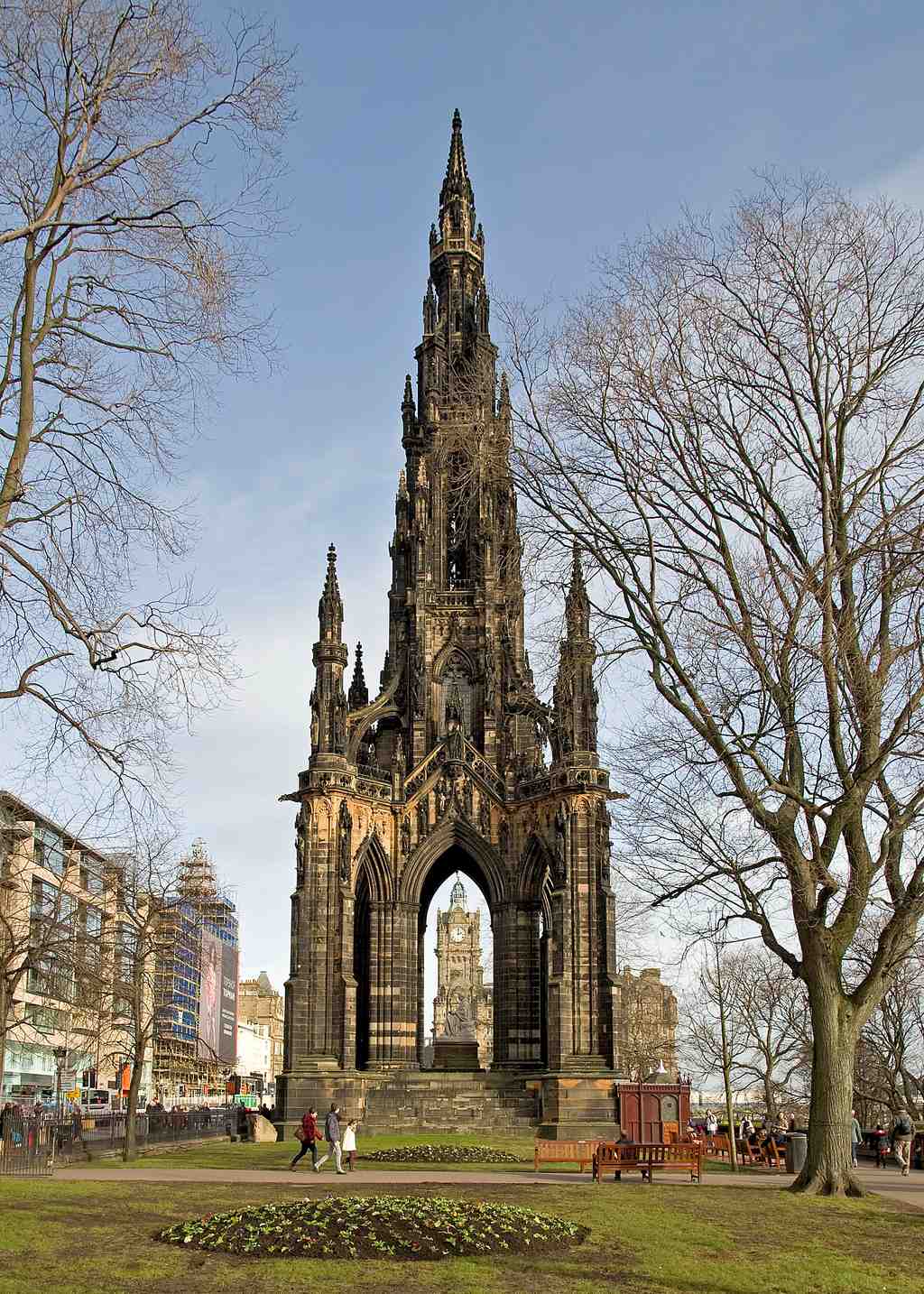
    If you’re looking for a giant, dark Gothic rocket shooting up from the heart of Princes Street Gardens, just opposite the former Jenners building, you’ve spotted the Scott…Read moreShow less

    If you’re looking for a giant, dark Gothic rocket shooting up from the heart of Princes Street Gardens, just opposite the former Jenners building, you’ve spotted the Scott Monument! Stop for a moment and take in the towering, spiky silhouette looming above the trees-it’s nearly impossible to miss, unless you’re walking with your eyes closed (but please don’t, I don’t want to be responsible for any park bench collisions). Now, let me pull you into the story… Imagine the year is 1832, Edinburgh is wrapped in the cool mist, and news has spread that Sir Walter Scott, Scotland’s beloved novelist, has died. He left an enormous mark on the country-not just with his Waverley novels, but with his spirit. His stories were so popular, even the city’s train station got named after them! So, naturally, the city decided to honor him with something grand-a monument as mighty as his imagination. There was a contest for the design, and in walks-or rather, sneaks-a “John Morvo.” Spoiler: it’s a fake name. The real man is George Meikle Kemp, a joiner and draftsman who feared his lack of bigwig architect credentials would see him laughed out the door. Instead, his elegant, towering vision stunned the judges and he bagged the contract to build what you see before you. Now picture the sound of hammers and chisels ringing through the air as the monument rises from the sandstone dug up near Ecclesmachan. The great Gothic tower grows, with everyone in Edinburgh and beyond watching. Over four years, masons sweat and labor-especially the ‘hewing masons’ who carved the hundreds of decorative details and statues-but in tragic twist, many of them fall terribly ill from the stone dust swirling in their sheds. Imagine 23 of Edinburgh’s finest hewers losing their lives, and as some would say, “one half of the masons employed” dying from what they called phthisis, now known as silicosis. It was a heartbreaking price for such beauty. By 1844, almost every penny of the £16,154 budget had been spent. The city buzzed as the monument neared completion. Kemp’s own son placed the very top finial, but in a cruel stroke of fate, Kemp himself was not there to see his dream finished. On a foggy evening, he fell into the Union Canal and drowned while walking home from the site. His absence at the monument’s 1846 grand unveiling added a bittersweet note to the celebration. Now, tilt your head back (careful of the pigeon above!) and you’ll see not just one man’s tribute, but 68 statues peering down at you. That’s right, nearly every character and poet from Scott’s stories is up there-figures sculpted by Scotland’s top sculptors, and even a marble Sir Walter Scott himself, sitting under those vast Gothic arches with his loyal dog Maida by his side, quill in hand, as if paused after an epic story. Down at the lower faces, sixteen heads of Scotland’s greatest poets and writers-Burns, Fergusson, Mary Queen of Scots, and even King James-add their presence. If you ever find yourself on the spiral staircases here, count them: 287 steps to the very top viewing gallery! The city sprawls beneath you, a view worth every gasp for breath. In recent years the city chose not to clean the monument, fearing damage, so you’ll see a patchwork of old, smoke-darkened stone and fresh, pale blocks from the original Binny quarry. At night, modern LEDs bathe it in a gentle glow, making the monument look almost magical-a fitting beacon for a man of stories, and for anyone who loves a touch of drama with their skyline. So, as you stand before this soaring tribute, remember the passion, the struggle, and a dash of Scottish stubbornness it took to bring one writer’s monument to life. Now, shall we wander on to the next chapter of Edinburgh’s tale? Curious about the design and concept, the stone masons and the scott monument or the foundation stone? Don't hesitate to reach out in the chat section for additional details.

    Open dedicated page →
  2. To spot the Scottish National Gallery, look ahead for a grand, rectangular, stone building with huge columns at the entrance-it sits proudly at the edge of Princes Street Gardens,…Read moreShow less

    To spot the Scottish National Gallery, look ahead for a grand, rectangular, stone building with huge columns at the entrance-it sits proudly at the edge of Princes Street Gardens, just below the castle ridge. Now, let’s step into the story of this magnificent gallery, an icon of Scotland’s devotion to art and a landmark that has seen over a century and a half of change-almost as many changes as the Scottish weather, if you can believe it! Imagine you’re back in 1859, the air thick with excitement as Edinburgh’s citizens gather for the grand opening of William Henry Playfair’s latest masterpiece-a temple-like structure on The Mound, inspired by the beauty of ancient Greece, but with a twist of Scottish stoicism. Picture yourself on opening day: the brand-new gallery’s Ionic columns shining in the pale Scottish sun, sharp against the brooding sky, as Playfair’s building rises like a titan from the grass of Princes Street Gardens. People are craning their necks, men twirling moustaches, ladies tipping feathered hats, all awestruck by the sheer scale of this stone monument-not to mention the neighbors, the Royal Scottish Academy, who are just across the lane, also putting on their best “ancient temple” impression. In fact, their buildings looked so alike that, even today, more than a few lost tourists have ended up asking for Monet and accidentally getting modern sculpture! If these walls could talk, they’d recount a tale of friendly rivalry: the Royal Institution, founded in 1819, and the breakaway artists who started the Scottish Academy in 1826. These creative souls wanted their own space, and by 1838, they’d become the Royal Scottish Academy. But old grudges die hard-in the 1840s, both groups were vying for the best spots to showcase art, with paintings hopping from one wall to another like nervous cats. The city called upon William Henry Playfair-whose name sounds like he could build you anything from a palace to a playground! He was tasked to design two monumental spaces, and started with an inspiration from ancient Greece, erecting the National Gallery here with Ionic pillars and classic symmetry. His budget, mind you, was tight, so the building's restraint only adds to its grandeur. Playfair even planned towers at the corners, but sadly, these never appeared-perhaps he ran out of pennies, or patience! For decades, the gallery’s inside was divided, with half the space for the Academy and half for the national collection. Only in 1912 did the Academy move out, allowing what is now the National Gallery to fully embrace its purpose: to show off Scotland’s artistic treasures to the world. And what treasures! Inside you’ll find everything from dramatic Scottish landscapes by Alexander Nasmyth to masterpieces by Van Dyck and Titian. You’ll get the chance to say hello to “The Skating Minister” by Raeburn-a painting as famous in Scotland as haggis and slightly less controversial-and feast your eyes on “The Monarch of the Glen,” which shows off the highland’s most majestic stag in all its glory. Of course, the building itself has kept up with the times. In the 2000s, a huge project dug out a new entrance beneath the gardens and connected the gallery to its neighbor-the only time in Edinburgh history that going underground led to even more art! Today, the gallery’s research room is packed with 30,000 prints and a library of rare tomes: the only place in town where you can get lost in art history and never need an umbrella. So as you stand before this stone-fronted wonder, imagine all the artists, eager crowds, and rumbling renovations that have shaped its halls. And remember-if you ever get lost and wander into the wrong building, just say you’re “exploring the full artistic experience!” Curious about the building, research or the collection? Don't hesitate to reach out in the chat section for additional details.

    Open dedicated page →
  3. Take a look around, because you’re now standing in front of the heart and soul of Scotland’s spiritual life-the Church of Scotland itself! Or, as many Scots lovingly call it, “the…Read moreShow less

    Take a look around, because you’re now standing in front of the heart and soul of Scotland’s spiritual life-the Church of Scotland itself! Or, as many Scots lovingly call it, “the Kirk.” Funny thing, though: unlike the Church of England down south, there’s not a single king, queen, bishop, or even a head honcho running this show. The Kirk is stubbornly Presbyterian. That means nobody here gets to boss everyone else around-well, except, maybe, the Lord God. You could say it’s run more like a committee meeting than a royal court. That’s right: democracy with extra hymn-singing! Now, let’s imagine the scene back around 1560. You’re walking these Edinburgh streets and suddenly, there’s a wild buzz-people are breaking away from the Catholic Church. The man at the centre of it all? John Knox, a firebrand preacher who brought the big ideas of John Calvin from Geneva. Knox and his friends set about reforming, well, almost everything: how people worshipped, what they believed, even how decisions were made. They even tried to get all the riches and lands of the old church passed to their new cause-though unsurprisingly, that didn’t go down well with the crown or the Queen, Mary I. She refused to rubber-stamp their changes, and for a while, the Kirk was a bit like a rebellious teenager: loud, untidy, passionate, sometimes a little bit out of control. By the time King James VI took charge-yes, the very same fellow who later became James I of England-the church was swinging between Presbyterian elders and bishops like a pendulum, with the king grumbling, “No bishop, no king!” Eventually, what held was a Presbyterian structure that put God-and only God-at the top. Fast forward to the 1630s, and the tension really cranks up. Imagine, if you will, King Charles I and his Archbishop of Canterbury trying to sneak in an English-style prayer book. They wanted the Scots to use it, but forgot to ask the Scots what they thought! When the new book landed at St Giles’ Cathedral, the city went full riot mode. Legend has it, a lady named Jenny Geddes lobbed her stool at the minister’s head, giving Scottish protest a whole new meaning. The revolt spread quickly, leading to the signing of the National Covenant, where thousands vowed to protect their way of worship-a proper Scottish uprising, with bagpipes no doubt blaring in the background. After more battles, alliances, and heated debates (including with the English Parliament, no less!), the Scottish church won itself a unique form of independence. In 1921, an act of Parliament finally recognised the Kirk as truly free in spiritual matters-the ministers could preach and argue all they liked, no king or court could stop them. Even today, when the monarch comes to church in Scotland, they just sit in the pews like everyone else. Sorry, Your Majesty: not even a reserved seat up front! Now, you might think the Kirk is all ancient tradition-but there’s been a fair bit of change and drama over the years. The Church of Scotland has championed universal education-because everyone should be able to read the Bible, naturally-and welcomed women and, more recently, openly LGBTQ ministers into its ranks. They’ve had their share of scandals and tough choices, and membership has dropped over the decades, from over a million in the 1980s to around 245,000 today. Still, even as attendance changes, in every Scottish village you’ll find a Kirk at the centre, with the spirit of Presbyterian democracy alive and well. Oh, and the motto? Nec tamen consumebatur-“Yet it was not consumed.” Like the burning bush in Exodus: plenty of heat and drama, but the Kirk just keeps on standing. I suppose you could say, if you want a church that really knows how to survive a storm-or a flying stool-then the Kirk of Scotland is the place to be! Wondering about the theology and practice, social and political issues or the position in scottish society? Feel free to discuss it further in the chat section below.

    Open dedicated page →
Show 7 more stopsShow fewer stopsexpand_moreexpand_less
  1. Standing in front of you, you can spot New College by its impressive, castle-like sandstone façade, with tall neo-gothic towers reaching skyward right on The Mound-just look for…Read moreShow less

    Standing in front of you, you can spot New College by its impressive, castle-like sandstone façade, with tall neo-gothic towers reaching skyward right on The Mound-just look for those dramatic spires above the street and you’re in the right place. Alright, here you are in front of New College-don’t worry, there’s no exam at the end of this stop! Picture yourself on a chilly Edinburgh morning back in the 1840s. The city is buzzing with whispers and debate, smoke from chimneys coils into the air, and the cobblestones are trodden by people wearing everything from top hats to threadbare shoes. Suddenly, the tension in the air crackles louder than a bagpipe rehearsal: the “Disruption of 1843” has ripped the Church of Scotland in two, and a determined group has decided they need a new centre for learning and faith. Enter New College! Right where you stand, Reverend Thomas Chalmers-the college’s very first principal-stares across a nearly empty patch of The Mound and dreams of a place that would inspire generations. By November 1843, 168 eager, nervous students shuffle into their makeshift classrooms, ready to be trained as future leaders. Imagine the clatter of boots, the shuffling of notes, and the thrill of new ideas bouncing off the stone walls. But this building didn’t just arrive fully-formed. In 1844, they held a dramatic contest-a kind of “Britain’s Next Top Architect”-to design the future of Scottish theology education. The winner? Well, not really the winner, but certainly the surprise underdog: William Henry Playfair. His neo-gothic vision went from blueprint to solid stone between 1845 and 1850, and suddenly New College became a gothic landmark high above Princes Street Gardens, rivaling any castle for grandeur. So if you feel a sudden urge to break into medieval poetry, that’s just Playfair’s magic at work. This spot wasn’t just for the Free Church for long-history, as it tends to do, had other plans. Churches merged, ideas evolved, and by 1935 New College became the official home for the University of Edinburgh’s School of Divinity, where world-class theologians gather today. But here’s a twist: for a while, students training for the United Free Church squeezed into these rooms, while the Church of Scotland hopefuls were just up the road-rivalry in every hymn and homework assignment, you could bet. Flip through the years and you’ll find a treasure trove of moments: annual debates and assemblies in the grand General Assembly Hall (which even played temporary host to the Scottish Parliament a few years back-just imagine politicians trying to argue quietly in a place designed for preaching). Peek inside and you’ll find more than just classrooms. There’s Rainy Hall, the gothic diner where students swap ideas over haggis. Don’t miss the massive New College Library-founded the same year as the college and now the largest theological library in the UK, with manuscripts that could make Indiana Jones jealous. And a fun fact-Martin Luther King Jr. once considered studying here in the 1950s before heading off to Boston-Edinburgh nearly had a touch of Civil Rights history before it hit the States! Today, bright minds come from over thirty countries to earn degrees in everything from Christian origins to world religions, taught by a team of almost forty scholars. Not just for future ministers, plenty of graduates end up as teachers, TV producers, librarians, and even civil servants. Maybe one of them will be standing here with a group someday, talking over the drone of bagpipes from Princes Street below. And did you spot that coat of arms above the door? It’s newer than you might think, granted as part of New College’s 175th birthday bash. Beneath it, the college motto reads: “Quaerite et Invenietis”-“Seek and You Shall Find.” Not a bad mission for a place that’s survived everything from feisty religious debates to very opinionated architects. So, next time you see those spires against the Edinburgh sky, picture the generations of thinkers, dreamers, and maybe a few pranksters who’ve walked through these doors. And try not to get too lost in thought-there’s still more of our tour left! Eager to learn more about the academics, facilities or the people? Simply drop your inquiries in the chat section and I'll provide the details you need.

    Open dedicated page →
  2. In front of you, the Mercat Cross stands on a cobbled section of Parliament Square-look for the stone octagonal drum with a tall pillar topped by a white, golden-maned unicorn,…Read moreShow less

    In front of you, the Mercat Cross stands on a cobbled section of Parliament Square-look for the stone octagonal drum with a tall pillar topped by a white, golden-maned unicorn, peering proudly over the bustling High Street. Now, as you stand beside this storied chunk of Scottish history, let’s imagine the centuries stacked right here like layers of a triple-decker sandwich. Merchants and monarchs, rioters and revelers, they all gathered at this very spot, the Mercat Cross, to hear news, celebrate royal declarations-or sometimes meet a much gloomier fate. It’s a Victorian structure now, built in 1885, but the heart of its story goes right back to the 1300s, when the cross stood just a stone’s throw away from here. Imagine the ground humming underfoot with carts, horse hooves, and the shouts of traders-this was always the beating heart of medieval Edinburgh. But don’t let the fancy unicorn on top fool you-this cross saw more than market deals. It marked out news of kings and queens, royal births, and the deaths of monarchs proclaimed by trumpeters and heralds in their bright regalia. In fact, proclamations are still read here today, just as they’ve been for centuries. If a king died or Parliament was disbanded, it was always here, beneath the watching eyes of the townsfolk and, I imagine, a few suspicious-looking crows. Now, if you feel a chill down your spine, that’s just the ghosts of the 1500s saying hello. The Mercat Cross was the place of trials and punishments too. Picture Sir James Tarbet in 1565, tied to the cross and pelted by eggs-clearly, Edinburgh folks couldn’t resist a bit of egg-cellent entertainment for anyone who annoyed them. Sometimes, though, it got very grim: in 1584, a baker’s young son played with fire and was burnt alive here for his crime. Other dramatic moments included thieves and traitors being hanged, and-perhaps most memorably-execution by wheel, the sort of thing you’d expect to find in a horror film and not in the middle of a city square. But that’s Edinburgh for you-one minute it’s pageantry, the next it’s bedlam! The cross was always ready for big history: on this spot in 1649, after King Charles I lost his head, his son Charles II was proclaimed king-defying the English Parliament and causing uproar on the cobbles. Ringleaders, rebels, poets-like the bold Alasdair Mac Mhaighstir Alasdair-saw their writings burnt here as the crowd spat and jeered. Sometimes, the ladies would lean from upper windows, waving handkerchiefs (and maybe gossiping about the best place for a hot pie afterward). And, of course, the Mercat Cross wasn’t always as you see it now. Some earlier fragments are hidden away-five of the old cross’s carved heads were rescued by the novelist Sir Walter Scott and built into his garden at Abbotsford. Talk about taking home a souvenir! Over the years, it’s been moved, broken, restored, and reshaped. Its unicorn is a sturdy Victorian imitation of a much older carving, and during a 1970s restoration, experts even found two ancient stone fragments secreted in the shaft. If you peek at the coats of arms around its base, you’ll spot symbols for Britain, Scotland, England, Ireland, Edinburgh, Leith, and the Canongate-each one a reminder of this city’s tangled tapestry. And above the door, Gladstone’s Latin inscription thanks God and the great men who rebuilt what was lost. Stand here long enough, and you might almost hear the swirl of trumpets, the rattle of a noose, and the shouting of the crowd-or was that just someone arguing over whose turn it is to buy the coffee? Ah, the Mercat Cross-where Edinburgh’s history leaps to life and never quite stands still!

    Open dedicated page →
  3. You'll spot St Giles' Cathedral ahead by its grand Gothic windows, soaring spires, and the distinctive crown-shaped steeple rising above the roof-just look for the dramatic stone…Read moreShow less

    You'll spot St Giles' Cathedral ahead by its grand Gothic windows, soaring spires, and the distinctive crown-shaped steeple rising above the roof-just look for the dramatic stone monument at the square’s center and that crown of stone up on top. Now, stand here and soak in the grandeur, because you’re looking at the very heart of the Old Town-St Giles' Cathedral, a living patchwork of history, legend, and Scottish drama. Imagine the bustling medieval market stalls and the buzz of chatter as townsfolk hurried beneath these walls. The very first church here was built in the 12th century, a simple Romanesque structure dedicated to St Giles, patron saint of lepers. Over the centuries, it grew and transformed, eventually becoming this Gothic wonder with its crown-shaped tower. If these stones could talk, oh, the stories they’d tell! During the Wars of Independence, English troops set fires and even today, some say you could once see the scorch marks left by the flames. Fast forward to the 14th and 15th centuries, fancy popes and powerful kings argued over who should run the place. By the 1460s, the church had enough canons and choristers to form a small army-plus it boasted the precious arm bone of Saint Giles himself, brought all the way from France, which was paraded around proudly once a year. The 16th century? Absolute chaos! St Giles’ was right in the thick of the Scottish Reformation. Picture the crowds as John Knox-fiery preacher and leader of the Reformation-stood right inside these walls in 1559, stirring the people to throw out the old ways and embrace the new Protestant faith. In fact, one famous riot here supposedly started when a woman named Jenny Geddes hurled her stool at the dean for reading from the English-style prayer book... well, talk about making a seat of yourself in history! But St Giles’ was never just a church. At times, it was partitioned off inside so they could cram in not one, not two, but up to four different congregations-plus a courtroom, and even a prison perched over the north door. The Maiden, an early Scottish guillotine, was stored here. For hundreds of years, the square around you was packed with shops called the Luckenbooths, the smelly “Stinkand Style” lane running alongside the church, and the old kirkyard stretching way downhill-the final resting place for generations of Edinburgers, long before Greyfriars took up the job. Kings and queens, rebels and reformers-everyone passed through these doors. Charles I made St Giles’ a cathedral in 1633, sparking riots and rebellions that echoed across the land. After the Reformation, the pulpit was installed, stone altars smashed, and the walls were painted green-believe me, it was a bold look. The building itself survived fire, war, Victorian restoration (some of it controversial-Robert Louis Stevenson wasn’t a fan), and the onslaught of time. By the late 19th century, Lord Provost William Chambers had a dream: make St Giles’ the “Westminster Abbey of Scotland” and fill it with memorials to legendary Scots. This cathedral isn’t just a historic relic-it remains the spiritual heart of Scotland. The knights of the Order of the Thistle hold their royal services here in the exquisite Thistle Chapel. In recent years, millions have streamed in for concerts, coronations, and even to pay their respects as Queen Elizabeth II lay in state here-her coffin flanked by silent guards as people filed past in reverence. So here you stand, where saints, rebels, and rulers have all left their mark-Edinburgh’s true crossroads, more than 800 years of stories swirling in the stone at your feet. To expand your understanding of the name and dedication, location or the architecture, feel free to engage with me in the chat section below.

    Open dedicated page →
  4. To spot the Thistle Chapel, look for a small, grand Gothic-style chamber tucked into the south-east corner of St Giles’ Cathedral, ringed with intricate stone carving, medieval…Read moreShow less

    To spot the Thistle Chapel, look for a small, grand Gothic-style chamber tucked into the south-east corner of St Giles’ Cathedral, ringed with intricate stone carving, medieval tracery windows, and crowned with a golden, star-studded ceiling above a cluster of dark wooden stalls decorated with heraldic crests and painted shields. Now, as you stand outside this jewel-like chapel, let’s step back through time, dust off a bit of mystery, and peek into the world of Scotland’s most secretive knights’ club. The Thistle Chapel you see today started with a royal dream-and a bit of bad luck. In 1687, King James VII declared that the Knights of the Order of the Thistle, Scotland’s highest order of chivalry, needed their very own chapel at Holyrood Abbey. No sooner had mosaics been laid and London stalls shipped north than, wham, the king was deposed and a mob stormed in to smash the place up before any knights could even rehearse a dramatic secret handshake. For nearly two centuries, suggestions for a new home for the Order floated around, from the ruins of St Rule’s Church to the soaring space inside St Giles’ Cathedral. But it wasn’t until the early 20th century, with a generous splash of cash from the Leslie-Melville family and a royal order from Edward VII, that things finally got swinging. Pip-pip, cue grand designs-on a very tiny plot! The architect Sir Robert Lorimer was handed the nearly impossible challenge: create something that would dazzle and inspire, but please don’t block the windows or interrupt church service. What he delivered instead was a miniature Gothic rocket-just 18 feet wide, 36 long, but a whopping 42 tall! The outside is all sturdy sandstone and bold buttresses, blending with St Giles’ but sporting its own ambitious personality. Look for gabletted stonework and little heraldic angels peeking out, Saint Andrew standing proud above, and that odd little turret with a spiral staircase like something out of a castle. Step inside-imagine the hush and flicker of sunlight catching the colored shields and polished wood. The place is alive with the handiwork of the Scottish Arts and Crafts movement: there are over 98 stone bosses in the ceiling (some heavier than a small car!), each one lovingly carved by Joseph Hayes and his team, including “the Greek”, the most mysterious stonemason of them all. Over 1000 tons of stone made their journey here by horse and cart, clopping slowly through Edinburgh’s cobbled streets. Local brothers William and Alexander Clow got busy with the woodwork, crowning each stall with wild animals, twisting canopies, and cheeky angels each boasting its own personality. If you look up, you’ll see musical angels inspired by Melrose Abbey, and flowers for every nation of the United Kingdom sculpted among the ceiling’s web. The true stars, though, are the Knights' crests atop each stall-every time a knight shuffles off this mortal coil, their shield stays, and a new one is added nearby, turning the chapel into a living history book in wood and enamel. The earliest shields shimmer with the jewel-like enamelwork of Phoebe Anna Traquair-local legend and arts superstar. Even the lamps are fancy, with angels holding torches above pelicans, making the lighting seem just a bit magical. But it’s not all grandeur and pageantry; there’s a dash of real Scottish humor here too. The original Chapel opening in 1911 was overshadowed by police hiding in the boiler room to guard against suffragette attacks-think of it as the original “security detail in the basement.” Meanwhile, the Knights, including royalty, turn up every June dressed in velvet and feathers to install new members and keep ancient traditions alive, at least once a year. And while the chapel can seem like a slice of the past frozen in stone and oak, it’s a living monument: stall plates, banners, and crests keep getting added as Scotland’s story marches on. So, while the outside of the Thistle Chapel looks modest, step inside and you’ll find a treasure box stuffed with symbols, stories, and a fair bit of Scottish flair-a meeting place where the past still has a seat at the table. Now, shall we go imagine what it’s like to wear a velvet hat with a feather the size of a cockerel? Only at the Thistle Chapel! Curious about the architecture, stonework or the woodwork? Don't hesitate to reach out in the chat section for additional details.

    Open dedicated page →
  5. To spot the National Library of Scotland, look ahead for a large, sand-coloured stone building with crisp, symmetrical lines and tall, rectangular windows; you’ll know you’ve…Read moreShow less

    To spot the National Library of Scotland, look ahead for a large, sand-coloured stone building with crisp, symmetrical lines and tall, rectangular windows; you’ll know you’ve found it by the Scottish flags waving at the corners and the colourful banners hanging out front. Welcome to the mighty vault of Scotland’s memory-the National Library of Scotland! Right now, you’re standing outside one of the greatest collections of stories, secrets, and surprises to be found anywhere in the UK, or dare I say, the universe. Take a second to imagine that, behind these grand, stone walls with their chiseled detail, more than 24 million items are tucked away: everything from rare books handwritten by candlelight, to manuscripts nervously scribbled by Charles Darwin, original Shakespeare folios, telegrams from famous explorers, and even the last letter penned by Mary Queen of Scots before she faced her tragic fate. Nothing like a bit of drama to go with your Dewey Decimal, eh? This building is the main public home of the Library, proudly perched on George IV Bridge, right between Edinburgh’s lively Old Town and the palace of university knowledge. But it wasn’t always here. Back in the 17th century, Scotland’s literary treasure was kept in the Advocates Library-not far away, but in more exclusive company. Thanks to a very generous biscuit maker named Alexander Grant (the head of McVitie & Price-yes, the man who helped bring digestive biscuits to the world), the collection was gifted to the nation, and this building was raised up in the 20th century, replacing the old Sheriff Court. Imagine workers dodging rain showers and stopping to debate whether a sculpture should look more heroic or more philosophical as they finished the job-all delayed, of course, by a little thing called World War II. Now, the Library didn’t stop growing there. As book after book and map after map piled in thanks to Scotland’s legal deposit right (meaning they get a copy of every book published in Britain!), the Library needed more space. So they added a second, modern building over in Causewayside, and even opened a public centre in Kelvin Hall, Glasgow, where you can watch over 46,000 Scottish films and videos from their Moving Image Archive. And for those of you with a nose for adventure, the National Library holds one of the world’s biggest map collections - literally millions of them, from ancient military maps of Highland routes used in the days of the Jacobites, to wild and wonderful creations by Scottish cartographers like John Bartholomew. There’s even a reading room there just for maps. Bet you didn’t know that “getting lost in a good book” could be taken so literally! Inside, there are rooms dedicated to all manners of curiosity. Want to read newspapers as old as the hills? Head to the General Reading Room. Fascinated by old manuscripts, rare books, or ancient Gaelic poetry? The Special Collections Reading Room awaits. Fancy peering at microfilm or photographs? Off to the Multimedia Room with you. And of course, the Library isn’t just for books-don’t forget about the Cheviot, the Stag, and the Black, Black Oil set, the world’s largest pop-up book (seriously, it’s four meters long!)-you’ll have to visit V&A Dundee for that one, since it’s on loan, but you can explore it virtually too. If buildings had personalities, this one would be the wise yet playful uncle at a family gathering: a bit serious from the outside, but full of curious tales, family histories, mountaineering exploits, playbills from long ago theatres, and even detailed records of legal squabbles that shaped a nation. From dodging a burst water pipe on the twelfth floor (don’t worry, firefighters saved the day) to leading the way in sustainability and even employing a “Wikipedian in residence” (maybe the only job where you’re required to know your memes and your medieval texts), this library is constantly adapting, just like the stories it keeps safe. So, while some people collect stamps or coins or, let’s face it, embarrassing family photos, the National Library of Scotland collects the spirit of an entire country-and keeps it ready for you to explore. Fancy yourself a detective, a dreamer, or simply someone who loves the scent of old books? Take a wander inside, and who knows what tale you might stumble across. For further insights on the buildings, national library of scotland employees or the archives and collections, feel free to navigate to the chat section below and inquire.

    Open dedicated page →
  6. Look ahead and down into the valley-like street with tall, rugged buildings closing in on either side-Cowgate runs below street level, so here it’s the bustling, winding road…Read moreShow less

    Look ahead and down into the valley-like street with tall, rugged buildings closing in on either side-Cowgate runs below street level, so here it’s the bustling, winding road shaded by the stone cliffs of Edinburgh’s Old Town. Welcome to the Cowgate-Edinburgh’s famous timeworn thoroughfare, though don’t worry, you’re unlikely to bump into any runaway cattle these days! Take a moment and listen: can you hear the echoes? For almost 700 years, this street has been the city’s underpass, cutting below the grand bridges above, alive with stories from every layer of Edinburgh’s history. Back in the 14th century, the only thing clattering along these cobbles were muddy hooves and the cheerful complaints of market drovers herding cows toward Grassmarket. The name “Cowgate” doesn’t come from a farmyard fence, but from the Scots word “gate,” meaning “way” or “road”-so you’re actually walking along the original “cow way.” Picture that: It’s market day in the 1400s. The north side of the street is a muddy burn, the air is thick with the scent of livestock, and locals jostle for the best price on fresh milk. It’s noisy, smelly, and not a place to wear your finest shoes. As time marched on, this humble street was transformed. By the late 1500s, elegant townhouses and grand residences lined Cowgate-noble families, city councillors, and a handful of “princely houses” mentioned in ancient atlases all called Cowgate home. Even Mary, Queen of Scots, stayed here for a spell in 1566, with banquets so lavish the Exchequer Rolls recorded the wine, meat, fish, and even the napkins. Some say her meetings with the scandalous Earl of Bothwell happened just a stone’s throw from where you’re standing, with secret passages and whispered conspiracies lingering in the shadows. Move forward a few centuries and it all changed. From the mid-1700s right up to the 20th century, Cowgate became a maze of cramped slums-the street echoed with a different kind of life. Irish immigrants filled the tenements, giving Cowgate the nickname “Little Ireland.” Music floated from St Patrick’s Church and from St Cecilia’s Hall-the oldest purpose-built concert hall in Scotland-where toe-tapping tunes once kept the cold at bay. And if you look closely as you walk, you’ll find a gold plaque to James Connolly, the Irish revolutionary born at 107 Cowgate-a small memory among the stone and stories. The buildings here have seen it all. There’s the Magdalen Chapel, tucked away at the west end, its gothic spire peeking from the crowd of rooftops-a 16th-century almshouse for the city’s poor, built thanks to local generosity and the determination of Michael MacQueen’s widow, Janet Rynd. Over the years, the Cowgatehead Free Church, with its striking octagonal entrance, became a spiritual home, while the University’s School of Informatics would house cutting-edge artificial intelligence research…until it vanished one terrible December night in 2002. That fire was something Edinburgh will never forget. Flames burst from the Belle Angele nightclub, leaping building to building through labyrinthine alleys, while firefighters described the scene as a “rabbit warren.” The blaze consumed priceless research, beloved Fringe venues, and forced 150 people to flee into the freezing night, but-miraculously-not a single life was lost. Cowgate isn’t free of drama even now. In 2016, locals and activists camped in protest against yet another luxury hotel development, fearing for homeless neighbours and the sun-starved library next door. And would you believe it? Just this year, police descended when a rather grisly discovery-well, let’s just say Cowgate’s knack for making headlines hasn’t faded. So as you explore, look up at Mossy stone, faded shopfronts and glass glinting between the shadows. Imagine the clatter of hooves, the laughter and hardship, the music, the conspiracies, and every layer of Edinburgh’s past beneath your feet. The Cowgate-ancient, ragged, and very much alive.

    Open dedicated page →
  7. To find Greyfriars Kirk, just look ahead for the large, pale stone church with pointed arch windows and a distinctive triangular pediment at the roofline, nestled among old…Read moreShow less

    To find Greyfriars Kirk, just look ahead for the large, pale stone church with pointed arch windows and a distinctive triangular pediment at the roofline, nestled among old gravestones and surrounded by weathered trees. Now, let’s step into the past together-right where you stand, history practically seeps up from the ground. Picture it: a chilly morning in the early 1600s. The Kirk’s stone walls are freshly built, and the scent of cut timber lingers in the cold air. This spot, surrounded by Greyfriars Kirkyard, was once the heart of Edinburgh’s bustling life and even more so, its drama. But let’s rewind even further! Before the Kirk, Catholic friars known as the Observantine Franciscans-nicknamed the “Grey Friars” for their robes-arrived from the Netherlands in the 15th century. They built a friary here, tending to the poor and housing kings in exile. If you listen closely, you might almost hear the hum of prayer and the distant toll of a chapel bell. Of course, no spot in Edinburgh’s Old Town comes without a bit of chaos. After the Scottish Reformation, the friary was abandoned, ransacked by an angry mob, and even the stones were carted off to patch up other buildings! Eventually, Queen Mary gave the ground to the city for a cemetery, and in 1602 construction of the Kirk began using those very stones-recycling, 17th-century style. When the Kirk finally opened in 1620, its aisled nave soared above the graves, promising hope and peace-except that peace was often in short supply. In 1638, the very air in Greyfriars crackled with tension as nobles and ministers gathered to sign the National Covenant. Imagine the hurried whispers, the nervous scratching of pens, and the thunder of resolve as Scotland vowed to stand firm against royal interference in the church. It was a real blockbuster moment in Scottish history that changed the future of the nation. But drama followed drama! In true Edinburgh fashion, the Kirk’s west tower became a gunpowder store (what could go wrong?). Well, in 1718 the powder exploded in the dead of night, shattering windows and sending slates flying. The congregation found itself without a church and spent months squeezed into school halls and lecture theatres while repairs chugged along-thank goodness for that local tax on ale to cover the costs. I suppose they raised their glasses with extra gusto that year. Greyfriars has been burned, battered, and rebuilt over the centuries. In 1845, a fiery accident nearly gutted it again. But from that disaster rose the so-called “Greyfriars Revolution,” with a bold minister introducing stained glass and organ music-the very first since the Reformation. Old-timers were scandalized, but today the oldest stained glass in a Scottish parish church is here, catching the sunlight on bright mornings just like this one. All around you, the Kirk’s architecture tells stories: Gothic shapes from the old world, Baroque flourishes from the new, and those tough stone buttresses capped with quirky ball-shaped finials. Step inside and you’ll see memorials to famous Scots, beautiful woodwork, and-listen for it-the mighty organ, with pipes decorated with Scottish plants and even a nod to the loyal pup, Greyfriars Bobby. Even now, the Kirk brings people together. There are weekly services in Gaelic, echoing traditions that stretch back centuries, and the church still leads community projects and charity work. So, whether you’re here to soak up the spirit of the Covenanters, chase ghostly whispers among the gravestones, or just enjoy the peace, remember-this simple stone church has witnessed joy, drama, rebellion, and resurrection more times than you can count. Quite the grand finale for our Edinburgh adventure, don’t you think? Eager to learn more about the setting and kirkyard, architecture or the features? Simply drop your inquiries in the chat section and I'll provide the details you need.

    Open dedicated page →

Frequently asked questions

How do I start the tour?

After purchase, download the AudaTours app and enter your redemption code. The tour will be ready to start immediately - just tap play and follow the GPS-guided route.

Do I need internet during the tour?

No! Download the tour before you start and enjoy it fully offline. Only the chat feature requires internet. We recommend downloading on WiFi to save mobile data.

Is this a guided group tour?

No - this is a self-guided audio tour. You explore independently at your own pace, with audio narration playing through your phone. No tour guide, no group, no schedule.

How long does the tour take?

Most tours take 60–90 minutes to complete, but you control the pace entirely. Pause, skip stops, or take breaks whenever you want.

What if I can't finish the tour today?

No problem! Tours have lifetime access. Pause and resume whenever you like - tomorrow, next week, or next year. Your progress is saved.

What languages are available?

All tours are available in 50+ languages. Select your preferred language when redeeming your code. Note: language cannot be changed after tour generation.

Where do I access the tour after purchase?

Download the free AudaTours app from the App Store or Google Play. Enter your redemption code (sent via email) and the tour will appear in your library, ready to download and start.

verified_user
Satisfaction guaranteed

If you don't enjoy the tour, we'll refund your purchase. Contact us at [email protected]

Checkout securely with

Apple PayGoogle PayVisaMastercardPayPal
Loved by travellers

Thousands of tours started.
Plenty of opinions.

4.8 across the App Store and Google Play. Here's a few we keep coming back to.

starstarstarstarstar
This was a solid way to get to know Brighton without feeling like a tourist. The narration had depth and context, but didn't overdo it.
Christoph
Christoph
Brighton Tour
starstarstarstarstar
Started this tour with a croissant in one hand and zero expectations. The app just vibes with you, no pressure, just you, your headphones, and some cool stories.
download Get the app

Pop your headphones in.
Step outside.

Free to download. Tours in every city. Start in 60 seconds — no account, no card.

Download on the App StoreGet it on Google Play
starstarstarstarstar_half
4.8
AudaTours app icon
headphones
~ 4 min until your first tour starts
public
1,000+ cities worldwide
all_inclusive
AudaTours
Unlimited

Every tour. Every city. One subscription.

3101 tours2271 cities138 countries50+ languages

