
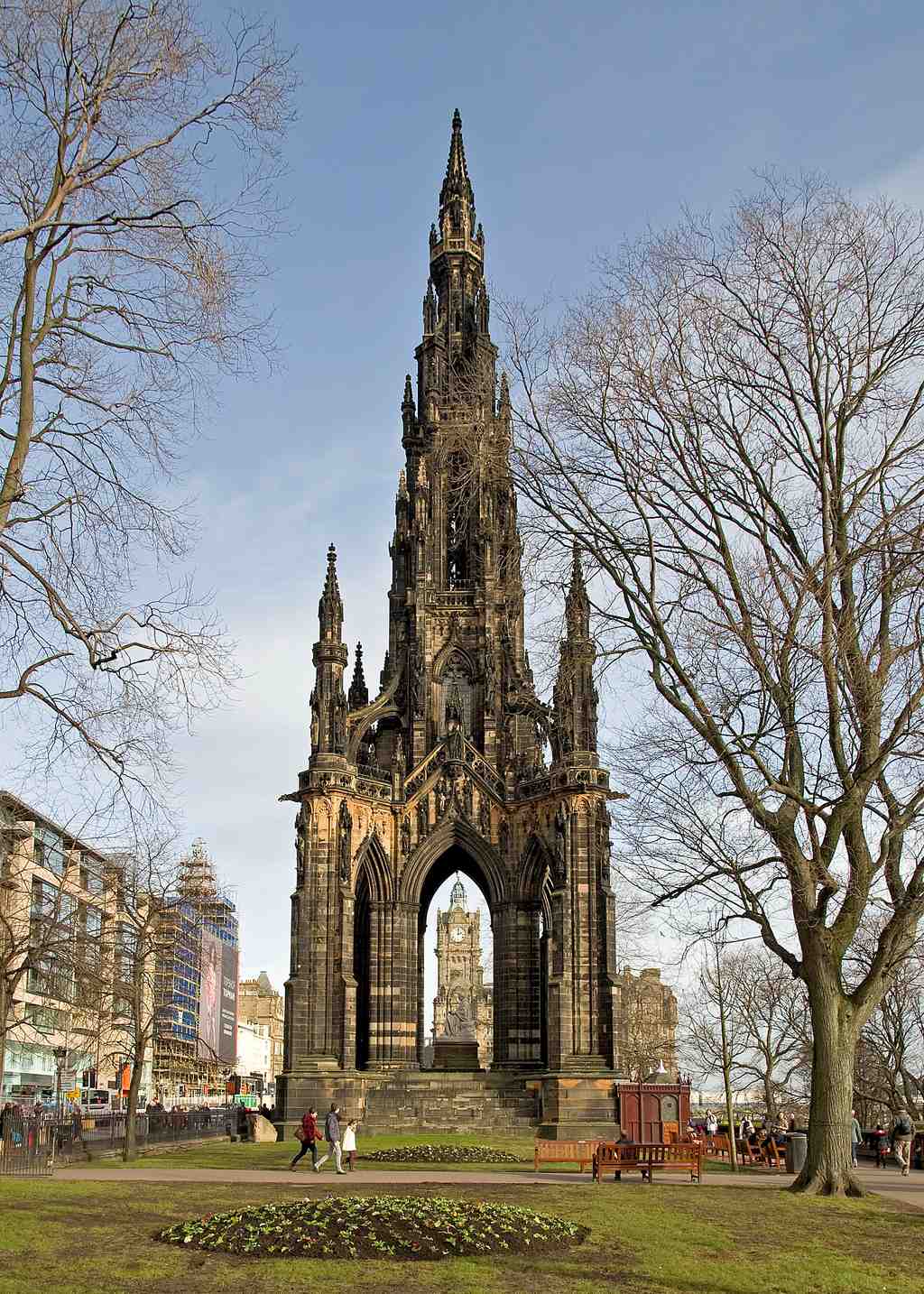
Rising above Princes Street Gardens, the Scott Monument looks like a dramatic, spiky, blackened Gothic rocket-if you look up and see a towering structure covered in pointed arches and statues, you’ve found it!
Now, as you stand in its long shadow, imagine the sound of boots crunching on gravel and tools clinking in the dawn air. In the heart of Victorian Edinburgh, workers gathered to build something enormous, their cheeks stung by wind swirling through open gardens. The year is 1840 and there’s a buzz of anticipation-across the city, word has spread that the foundations are going down for a monument unlike any other.
Sir Walter Scott, Scotland’s beloved storyteller, had only recently died and Edinburgh was determined to honour him as only the Scots could: with grandeur, literature, and the tallest Gothic tower the city would ever see. But the competition to design this monument took a curious turn. The chosen entry came from someone calling himself "John Morvo"-except, that was a riddle. The real man behind the pen was George Meikle Kemp, a joiner and self-taught architect who worried no one would trust a person of humble background with such a colossal job. Thankfully, his secret identity and bold design won the judges’ hearts, and soon Kemp was overseeing a mammoth tower, one that would eventually challenge the city’s skyline and eclipse all but Havana’s tribute to José Martí.
With every block of tough Binny sandstone quarried from West Lothian, with every figure sculpted by Scotland’s greatest carvers, the Scott Monument grew. The risk was real-those masons prepping the ornate details and characters from Scott’s novels weren’t just battling exhaustion, but also deadly clouds of stone dust. Many never saw the finished monument, felled by silicosis, which the Victorians called phthisis. It’s said that twenty-three of Edinburgh’s finest hewers died, making these stones bear silent witness to a hard sacrifice.
As the monument soared upward-over 200 feet!-it became the city’s focal point, perfectly lined up with South St. David Street. Edinburgh’s Old Town could hide no longer, peeking from behind its tall, smoky silhouette. The drama didn’t end there: just before the monument opened in 1846, tragedy struck. Kemp, the unlikely hero, fell into the Union Canal in a fog and never returned. Yet his work stood triumphant, completed by his own son, a bittersweet ending.
Peer through the lacework arches today and your eyes will fall on Sir Walter Scott himself, calmly seated in white Carrara marble, with his loyal dog Maida at his feet. Around him cluster 64 sculpted figures from his novels, so don’t be shy-play a little game of “spot the character” while you’re here! Look up again and see heads of Scotland’s most famous poets and even royalty staring down at you, from Robert Burns to Mary, Queen of Scots.
It’s a dark, brooding tower, but in the evenings, warm LED lights now wash over its sharply carved faces, picking out every fantastical figure, every weather-worn nook. In films and paintings this Gothic spire represents not just Scott’s genius, but Scotland’s wild spirit-restless, enduring, imaginative. And whether rain streaks the stone or the sun glints off its pinnacles, you’re standing at a place where fiction and history meet high above the Edinburgh streets, a monument as grand and improbable as the stories that inspired it.
So, ready to imagine climbing those 287 stairs to the very top? Don’t worry-I won’t ask for a doctor’s note! You might just get the best view in the whole city.
Wondering about the design and concept, the stone masons and the scott monument or the foundation stone? Feel free to discuss it further in the chat section below.


