
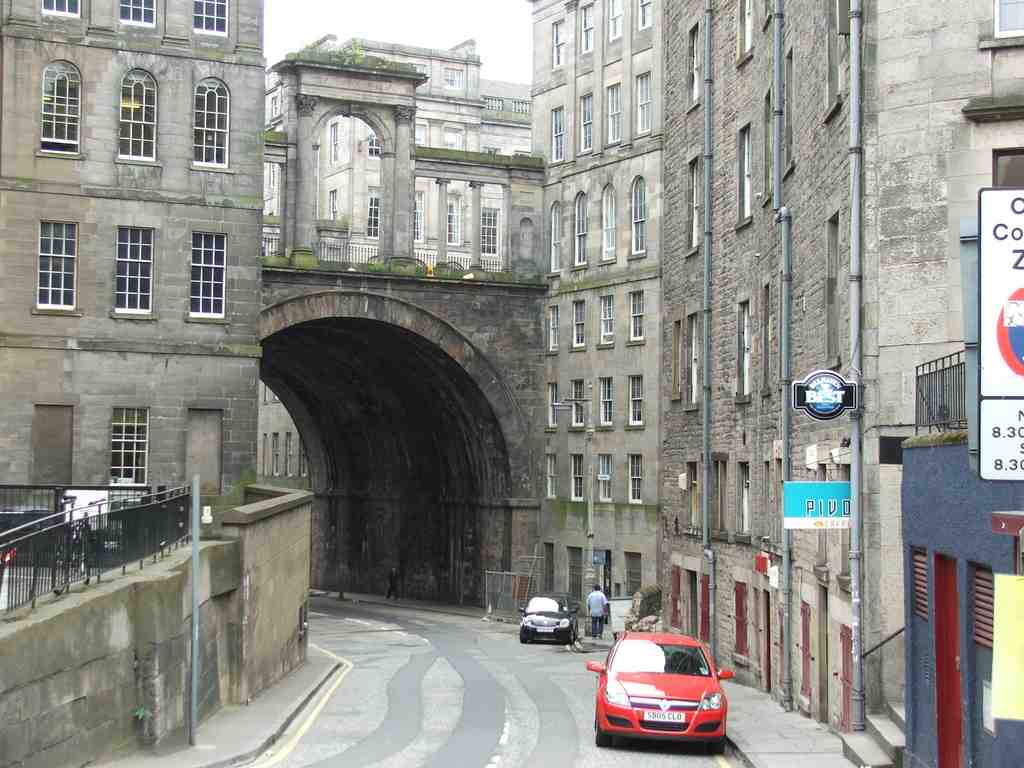
Look ahead and slightly up-you’ll spot Regent Bridge as a grand, stone archway stretching across the road, framing the sky between tall buildings, with elegant neoclassical columns right above the dark, tunnel-like passage.
Alright, stand right there for a second and imagine this-Edinburgh two hundred years ago was a bit of a city with two personalities. You had all the sweeping, genteel avenues up north in the New Town, handsome and sophisticated as a ballroom, but the primary entrance into the city from the south-the main London road, no less-was like squeezing through the world’s most awkward corridor. Carriages would creak and groan down cramped, zigzaggy lanes, rattling past sagging tenements and, frankly, their fair share of smells. Hardly the royal welcome for such a beautiful city!
Then came the grand plan. In 1814, city leaders, including Sir John Marjoribanks (that’s right, say it fast and try not to giggle), decided enough was enough. Their idea was bold: cut straight through the jumbled streets and rock of Low Calton, knock down the tired old buildings, and toss an arch over the gap-a real showstopper as you entered Edinburgh. The answer was Regent Bridge, which you’re standing by now-a proper neoclassical masterpiece that shouts “Welcome to Edinburgh!” and not “Mind your head!”
Imagine the drama: to build this, they had to relocate bits of the old Calton burial ground (not your everyday moving job), blast through solid rock, and demolish whatever dared stand in their way. The ravine was fifty feet deep-nearly as deep as a double-decker bus is long! The finished bridge itself is no slouch, either: majestic Greek Revival arches, trailing triumphal entryways held up by those Corinthian columns, all rising higher on the south side because the ground dips away so sharply.
The construction kicked off in 1816 with the engineering maestro Robert Stevenson at the helm, and by 1819, Regent Bridge was ready and waiting. They opened it with flair while Prince Leopold of Saxe Coburg was in town; you can just imagine the carriages rolling in and the crowds craning for a look at the modern marvel. And the cherry on top? They named the gleaming new street above it Waterloo Place, in honor of the famous victory that same year.
So next time you walk over it, picture horses’ hooves echoing on the arches, society’s finest taking in the grand view, and the whole city breathing just a little easier thanks to a bridge that truly changed Edinburgh’s fortunes. And all for a cool £20,000-plus, perhaps, the occasional lost ghost from the repurposed burial ground, so tread softly!


