
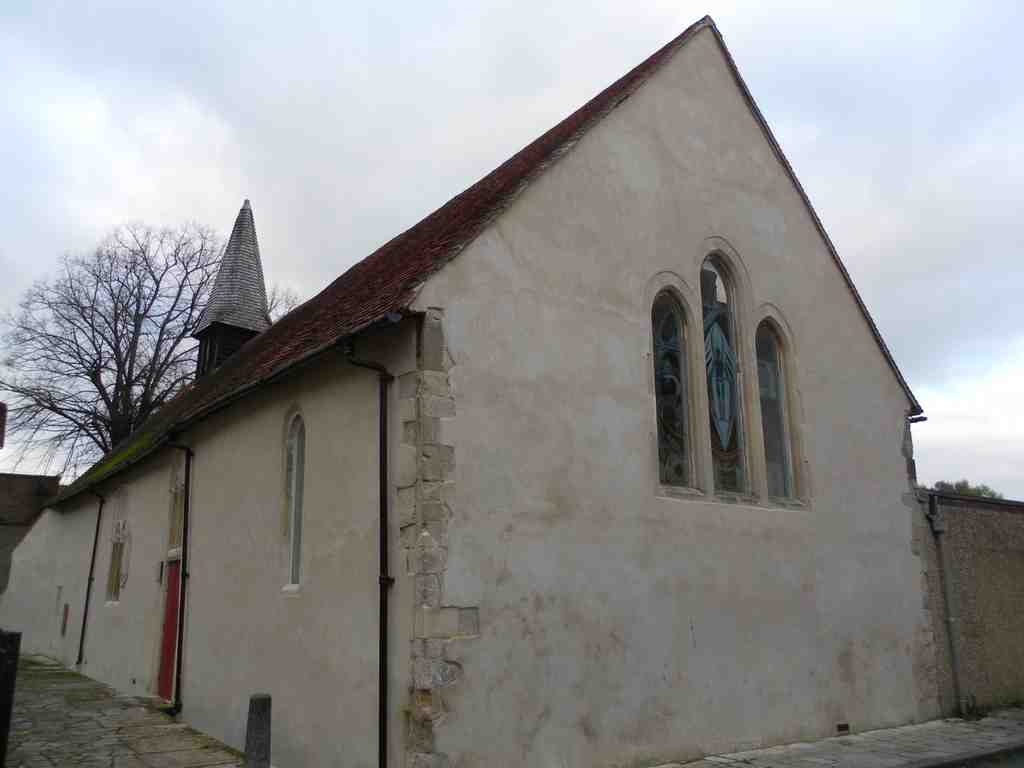
To spot St Andrew-in-the-Oxmarket Church, look for a simple, small stone building with creamy, rendered walls, narrow arched windows, and a steep roof topped by a quaint wooden bell-cot and a pointed spire, nestled down a quiet alley off East Street.
Welcome to St Andrew-in-the-Oxmarket Church, a place with more lives than a cat that’s spent too much time in Chichester’s back alleys! Take a moment to imagine you’re standing here about 800 years ago-no cars, just the clip-clop of horses on cobblestones. The year is somewhere in the 1200s, and this little church isn’t so different from what you see now-built for the people of Chichester, with its solid stonework and flint walls, and windows that have watched over centuries of laughter, sermons, and probably a few pranks from local kids.
Getting here might’ve felt a bit like a treasure hunt, since the church hides itself away down two old alleys-the sort of place you’d expect to stumble upon a riddle from a medieval monk. If you look closely at the east end, you’ll spot carefully dressed stone, a clue to its long story. The west wall leans firmly on its medieval buttresses, and if stones could talk, these ones could tell you tales all the way back to the city’s Roman walls-bits of which were recycled right into this building when the Romans had packed up and left.
Inside, there’s no fancy separation between the nave and chancel-it’s just open, cozy, and full of wobbly wooden charm. Once, this was the territory of the Dean of Chichester, and the church was even richer than your average bishop-until the Reformers rethought those arrangements.
Over the centuries, the church got new features like a north window with Saint Cecilia, patron of musicians-so if you suddenly feel inspired to hum a tune, blame her-and a south window that honors the poet William Collins, now resting nearby. There used to be a portrait of William Cawley here, but it moved up in the world, making its way to Chichester Cathedral. Not to brag, but this church has had some seriously artistic houseguests.
By the late 1800s, it absorbed the congregation from All Saints-in-the-Pallant, another ancient church that closed its doors. But then, the Second World War swept through. In 1943, bomb blasts damaged the building so badly the congregation had to move out, and the little church fell eerily quiet, echoing only with the ghosts of old hymns. For decades, it stood empty-deconsecrated and forgotten.
In the swinging ’60s, someone had a bright idea: why not turn this old church into something new-a hub for art, color, and imagination? Restoration began, and in 1976, the doors swung open as the Chichester Centre of Arts-later renamed the Oxmarket Centre of Arts. Artists and visitors have filled its spaces ever since, and even the 1989 extension kept its unique character, adding light and life without stealing its ancient soul.
Today, it’s a Grade II* listed building, and artwork fills the space where prayers once echoed. If you listen carefully, you might just hear the gentle patter of modern footsteps mingling with the sounds of centuries past. The perfect place to experience Chichester’s layered history-where stone, art, and stories come together, and the only thing missing, perhaps, is you composing your own masterpiece!




