
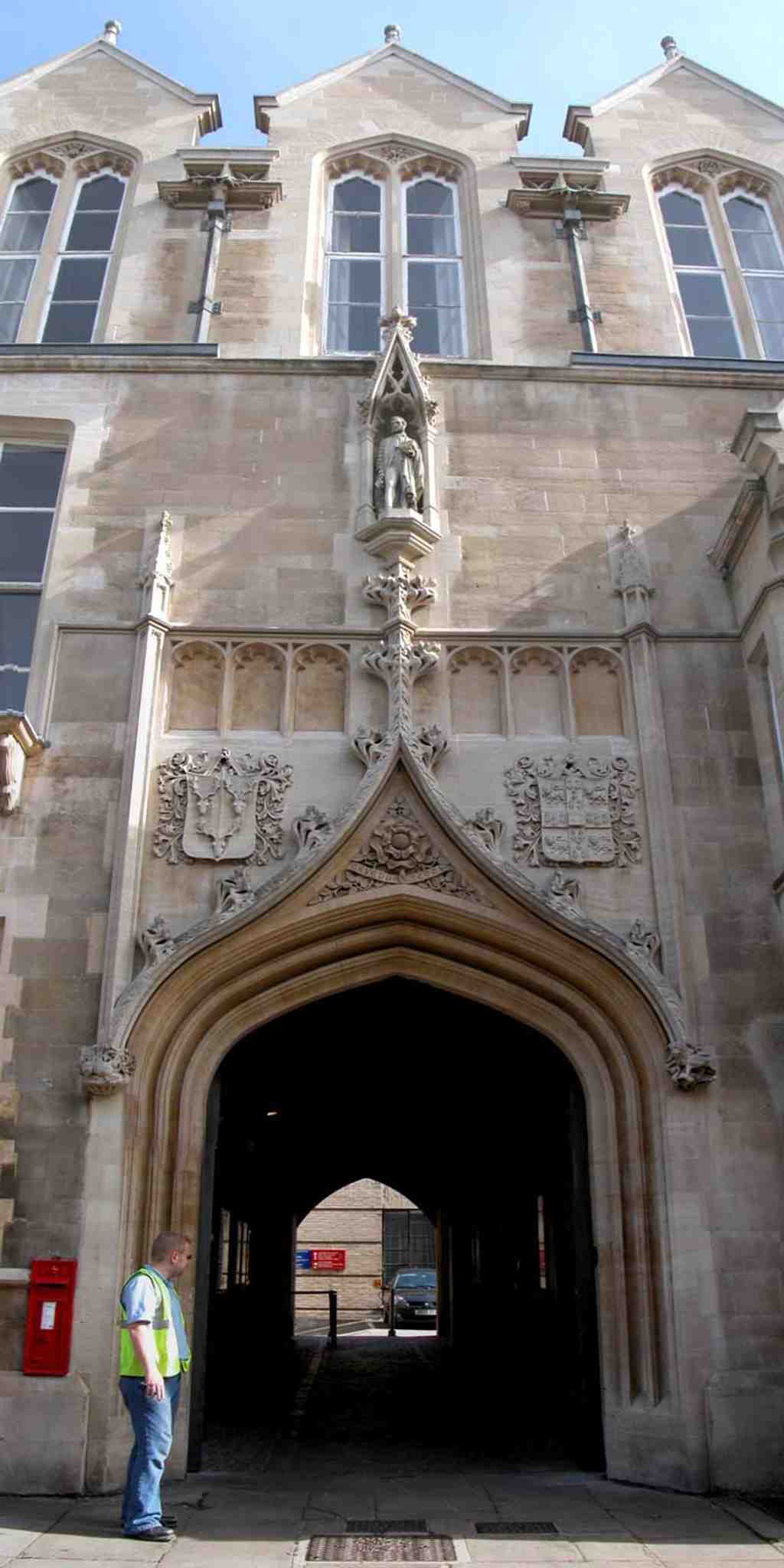
Ahead of you stands a grand, pale stone gateway reaching upward, with tall windows framed in elegant gothic arches. Look for the detailed carvings above the archway-crests, leafy designs, and a statue watching quietly from a niche above, as if it’s overseeing all who enter. Sunlight glancing off the smooth stone gives the whole building a gentle, golden glow. There’s a red post box on the left and a dark tunnel stretching through, leading you deeper into Cambridge’s secret heart.
Pause for a moment and picture the computers humming quietly behind these dignified walls, a strange contrast to the old stone and gothic spires. Once, in this very spot, the buzz wasn’t just the pigeons fluttering overhead, but minds spinning with new ideas.
The University of Cambridge Computing Service, right where you’re standing, was the nerve centre of Cambridge’s digital world from the 1970s until 2014. Imagine, not that long ago, the excitement and nervous tension: sparkling-eyed students and deep-thinking professors gathered here, puzzling over problems in computing when computers filled entire rooms and needed whole teams just to run. Close your eyes and hear the faint clacking of early keyboards, the whir of tapes spinning, the scent of coffee as dusk fell-nobody wanted to leave when deadlines loomed.
Out of this unassuming building came machines so clever, so ahead of their time, that people from around the world took notice. The EDSAC, the Titan, and the mysterious-sounding Phoenix computer-they weren’t characters from a sci-fi novel, but real computers that helped launch the digital era. Once upon a time, someone working right here helped create the Exim mail system, a little bit of Cambridge that now quietly delivers emails for millions every day.
This place holds secrets. It’s played its part in the digital age, from massive, clunky machines with flickering lights to web-based magic that lets Cambridge folk sign in from all across the world with just one password-Raven. Stand a moment longer and imagine the generations of students, heads bent in concentration, faces glowing in the light of their screens, quietly shaping the future from behind these ancient walls.
It’s a simple stone arch, but for decades, it was the doorway to an invisible labyrinth of information, buzzing and rippling beneath your feet. And who knows-maybe the next wave of computing legends are just passing by.


