
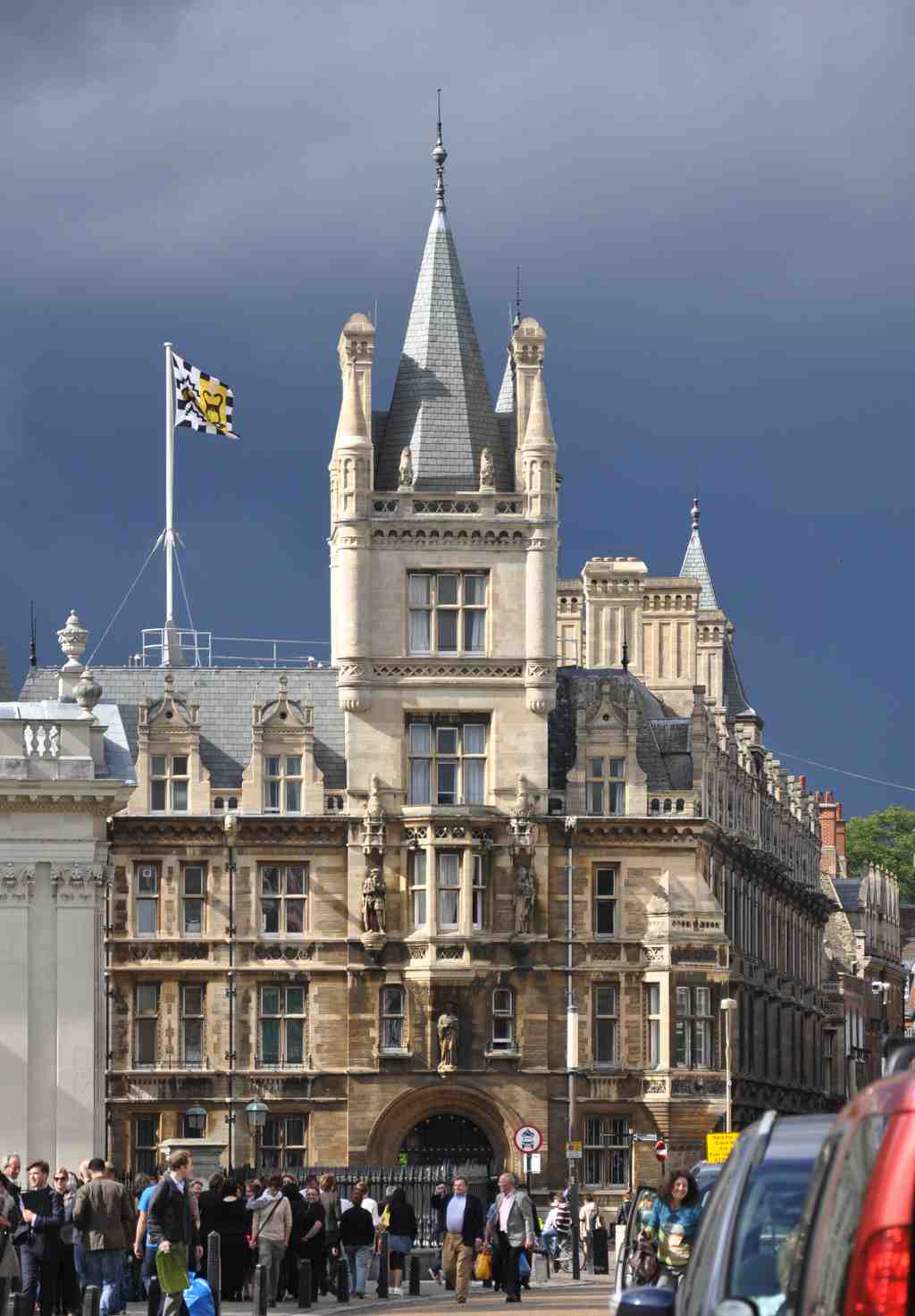
Right ahead of you stands an incredible building that looks like something plucked out of a fairytale-this is Gonville and Caius College. To spot it, look for an impressive stone gateway rising above the street, with tall, pointed blue-grey rooftops and a castle-like tower. The college proudly flies a flag from its rooftop turret, and if you look closely, you’ll see statues peeking down from the walls. The grand archway entrance always seems to be buzzing-students, visitors, and possibly someone dreaming about winning a Nobel Prize, just like fifteen people from this college have done before.
Now, take a breath and try to imagine this street in 1348. Instead of cars and smartphones, you’d hear the clop of horses, the distant toll of church bells, and perhaps the whispers of students clutching their books. It all started with a determined clergyman, Edmund Gonville, who poured his fortune into founding a college for just twenty scholars. The world was about to change-by the time he’d set his plans in motion, the Black Death was sweeping across England. Cambridge barely escaped the first wave, but even so, the college almost didn’t survive. It was only rescued by powerful friends, and shifted to its current grand spot off Trinity Street.
A couple centuries later, the college had faded a bit and was in need of a miracle. Then along came John Caius-a scholar who’d wandered all the way to Italy, learned the healing arts, and returned as one of the finest doctors in the land. He treated royalty, refilled the college’s empty coffers, and rebuilt its halls, insisting on rules as curious as “no one limping, sick, or-believe it or not-a Welshman!” He believed the air in the courtyards should never be allowed to go stale, so he built a court with only three sides, the better for fresh breezes.
Caius’s hand still shapes this place, and today, stories seem to drift from every stone. Here, you’re standing where generations of thinkers, scientists, and even mystery-makers have passed-where ideas have kept racing, just as they did during plague years and times of kings. Soak in the energy, and remember: you’re at the steps of a college that not only survived storms and plagues, but somehow helped change the world.
Exploring the realm of the buildings and grounds, traditions or the student life? Feel free to consult the chat section for additional information.


