
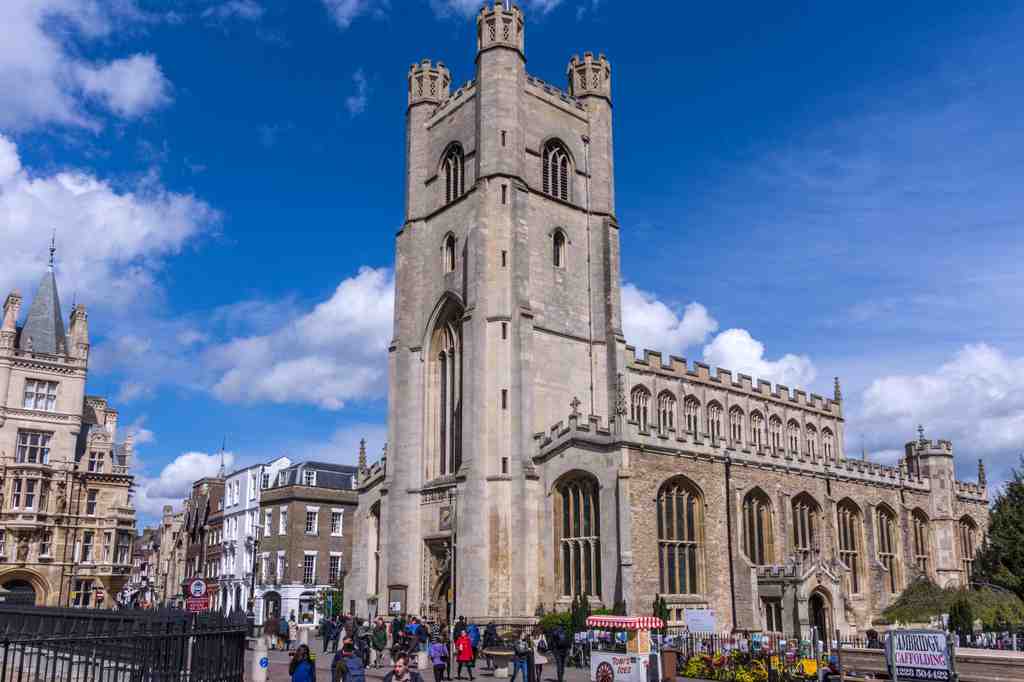
Ahead of you stands a tall and dignified stone church, its thick tower rising confidently into the sky. Look for the pale, creamy stone walls and the battlement-style edges running along the roof. The tower has four corner turrets, and you’ll see tall, narrow windows that give it a sense of ancient strength. The main entrance sits beneath a grand archway, and, if you look up, you might catch sight of the intricate stonework of the bell openings.
As you stand in front of Great St Mary’s, let your imagination drift back through the centuries. This church is no ordinary parish building. It is the heart of both Cambridge’s soul and its university life. Its very stones have seen scholars hurry past in gowns, and anxious undergraduates glancing up at the clock, which controls their fate by chiming the famous Cambridge Quarters.
Long ago, in 1290, flames swept through the city and all that remained was ash. The townspeople pointed fingers, disaster weighed heavy, and the air was thick with suspicion and fear. But from those blackened stones, the church rose again, rebuilt stronger, a symbol of the city’s hope. Its walls have heard fiery sermons from voices like Erasmus, who spoke words that changed lives and caused whispers to sweep across the chilly pews.
With every bell that rings, you hear the echo of history. These bells, handled by the oldest youth ringing society in Britain, have marked great triumphs, royal arrivals, and desperate escapes. Imagine the tension during the Peasants’ Revolt, when an angry crowd burst inside and ancient papers-university treasure-were tossed into the air, some burned, some lost.
Now, take a moment. The same clock melody that fills Westminster with sound began right here. As the bells toll, imagine the persistence and spirit of Cambridge, a city always rebuilding, always beginning again-under these very stones.
Fascinated by the bells, organs or the architecture and features? Let's chat about it




