
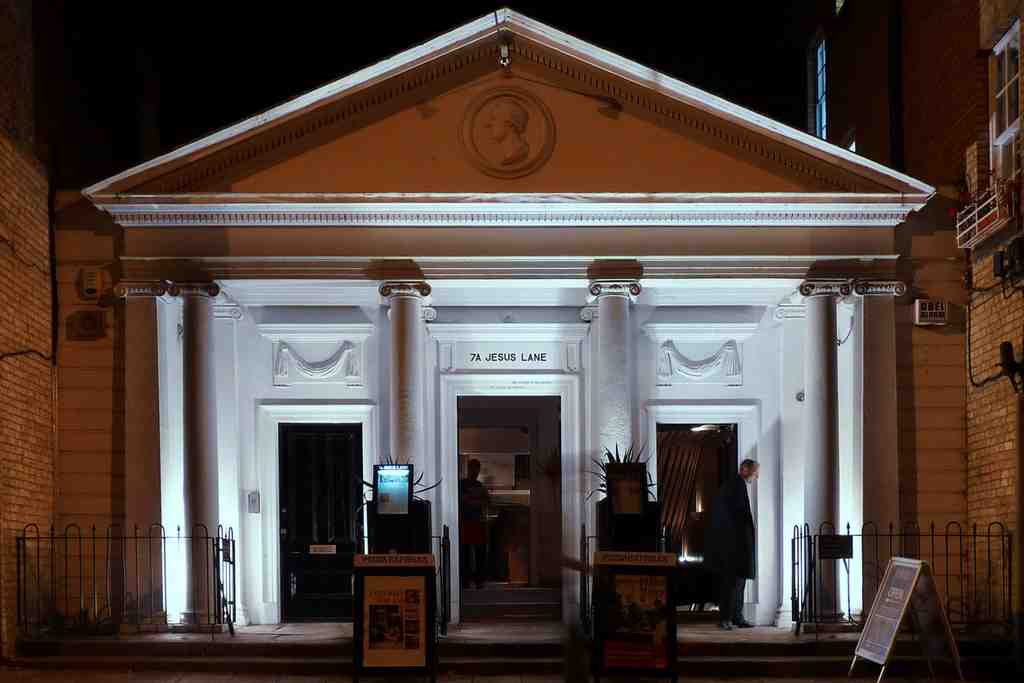
In front of you is a striking white building with tall, grand pillars and a triangular pediment above, featuring a round plaque-just look for the bold, classical shape and the address “7A Jesus Lane” to spot the University Pitt Club.
Welcome to the mysterious and storied University Pitt Club, where the echoes of history are almost as thick as the walls! Imagine yourself here in the early 1800s, as a group of ambitious young men gathered by candlelight, not just to socialise, but to toast to the great William Pitt the Younger-a local Pembroke graduate who happened to become Prime Minister. At its birth in 1835, this club’s mission was anything but a secret: its founders set out to uphold Pitt’s political ideas and make sure the “right sort” got elected in Cambridge. You could almost hear the clinking of glasses, and rousing toasts erupting into thunderous applause.
Now, not all students were here solely for politics. Even back then, club members combined their fiery debates with equally spirited dinners-sometimes dining in flashy party uniforms. In those early decades, the wild energy of political passion soon gave way to socialising for socialising’s sake. By the time 1868 rolled around, they’d dropped the politics altogether; now, it was all about enjoying the club’s exclusive atmosphere and traditions. Rumor has it, some members may have been more skilled at lifting forks than passing political motions!
But let’s talk about the home of the Pitt Club. This neo-classical building you see wasn’t originally meant for secret meetings or grand dinners. It opened in 1863 as, wait for it, “Roman (improved Turkish) Baths”-a short-lived, steamy venture that closed in less than a year. After auctions and drama, the club moved in, sharing half the building with a billiards room, as if the spirits of billiards and bathrobes lingered in the air. A fire in 1907-don’t worry, it’s been fully renovated since-gave way to yet another transformation. Walk through those doors today, and you’d stand on polished floors that have seen renovations, whispers of secret conversations, and perhaps a dramatic exit or two.
Of course, the Pitt Club’s story is full of unexpected twists. During World War I the club nearly vanished-members rushed off to war, leaving whisky in shorter supply than good company. By World War II, the club was forced to hand over its rooms to the local “British Restaurant.” Can you imagine the ghostly echo of a clubman’s complaint as the grand Pitt Club was replaced by the sizzle and clatter of public diners?
After the wars, the club bobbed back to life, regaining its spot as an undergraduate haven. Its rank of former members includes a who’s who of royalty (from Edward VII to Charles III), legendary comedians (yes, John Cleese once crossed this threshold), Olympic champions, authors, politicians, and even one “real” James Bond (the ornithologist, not the super-spy-though you might imagine both sipping a cocktail behind these columns).
But it wasn’t always open to all; for almost two centuries, women were forbidden from joining. Only in 2017 did the clublings vote-amid much grumbling and controversy-to finally admit women as full members. Day and night restrictions vanished, and the club’s sense of tradition found itself facing the fresh winds of change.
Oh, and see that plaque of Pitt gazing sternly down from above? That was a special gift in the 1930s, brought from Pitt’s last home-and possibly keeping an eye out for any pizza sneaking past the door, since the ground floor was leased to a restaurant for years, and now plays host to Japanese cuisine. So don’t be surprised if you smell soy sauce drifting through the pillars-this club has survived fires, wars, and even new culinary neighbours.
It’s a building, a legend, and a living story in stone and laughter. As you stand here, picture not only the famous debates and secret meetings, but the echoes of every clinking glass, every cheer, and every cautious step into bold new traditions.


