
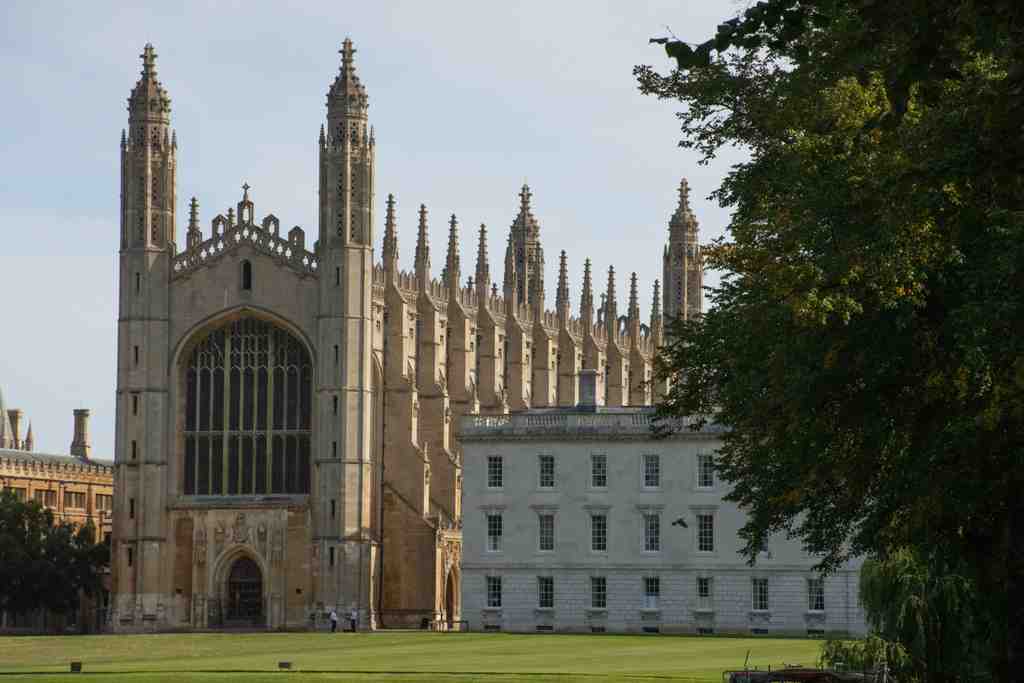
To spot King's College, just look for the enormous, intricate Gothic chapel with tall spires and massive stained-glass windows, towering to your left as you come along King's Parade-it's impossible to miss those dramatic stone pinnacles rising above the green lawns.
Imagine, if you will, the year is 1441. The air is thick with the suspense of royal ambitions and medieval dreams. King Henry VI, a young king with more enthusiasm than experience, decides to found a college so grand it would outshine all others-a real “crowning” achievement, you might say. He named it after Our Lady and Saint Nicholas, and even laid the first stone himself, right on land that once belonged to Trinity Hall. The plan? A community of seventy scholars, lorded over by a provost, who would all receive their education, shelter, and maybe the occasional roast dinner-if the budget allowed.
But history loves a good plot twist. Just when Henry started building, the Wars of the Roses erupted, emptying not only the royal treasury but also the college’s construction fund. For a while, the only thing rising here was everyone’s anxiety, not the college walls! Imagine stonemasons pacing about, shaking their heads, and muttering about unfinished business-at least they had good company, since the only building that truly took off was the glorious chapel before you.
Now, take a deep breath-because if you’re close enough, you might almost smell old stone and feel a hint of incense drifting out from under the wooden doors. This is no ordinary chapel. Over nearly a century, three different Henrys-VI, VII, and VIII-left their mark upon it. By the time the shell was finished in 1508, any notion of a “quick project” was out the stained-glass window!
The outside is a textbook lesson in late English Gothic: soaring spires, lacework stone, and the world’s largest fan-vaulted ceiling, which, if you step inside on a quiet day, makes even your own footsteps sound like whispers. When the sun catches those stained-glass windows-oh, it’s like the walls are draped in rainbows. Listen closely during December, and you might just hear the ethereal voices of the world-famous choir rehearsing for the Festival of Nine Lessons and Carols-a tradition broadcast every Christmas Eve for millions to enjoy. Yes, you’re standing at ground zero for the magic of a British Christmas soundtrack.
For centuries, students here were admitted almost exclusively from Eton College, chosen one by one by a tiny army of provosts and fellows, who probably liked having the power-to say nothing of the perks of Founder's Feast, where each year a grand dinner is held in memory of Henry VI, complete with ale and joy. There’s even a secret bit of oxidation on the chapel walls, marking how high they’d managed to build before politics interrupted work-like a geological timeline for architects.
But not everything here is high drama and royal squabbles. Over the years, King’s became a home for all sorts, welcoming scholars from beyond Eton and opening its doors to women in the 1970s. It has produced everything from Nobel laureates to poets, from economic wizards like John Maynard Keynes to creative giants like Alan Turing-folks who probably once paced this very lawn, solving puzzles in their heads or, perhaps, wondering how best to survive another Cambridge winter.
Walk around Front Court and you’ll see the blend of Gothic and Neoclassical designs-a result of centuries of growth, some plans abandoned, some completed, like the beautiful Gibbs’ Building on your right. Peek up at the turrets and try to imagine the day in 1941 when volunteers quietly removed those priceless windows to protect them from the bombs of World War II, a clatter of crates filling the cloisters.
And, oh-should you hear music tonight, it’s likely drifting from the famous choir, their harmonies swirling through fan vaults and centuries. King’s isn’t just a place; it’s a living symphony of history, ambition, and the warmth of countless scholars. Isn’t it funny to think some of the most extraordinary stories began with a stone, a song, and a king’s stubborn dream?
To expand your understanding of the buildings and grounds, academic profile or the intake and access profile, feel free to engage with me in the chat section below.


