
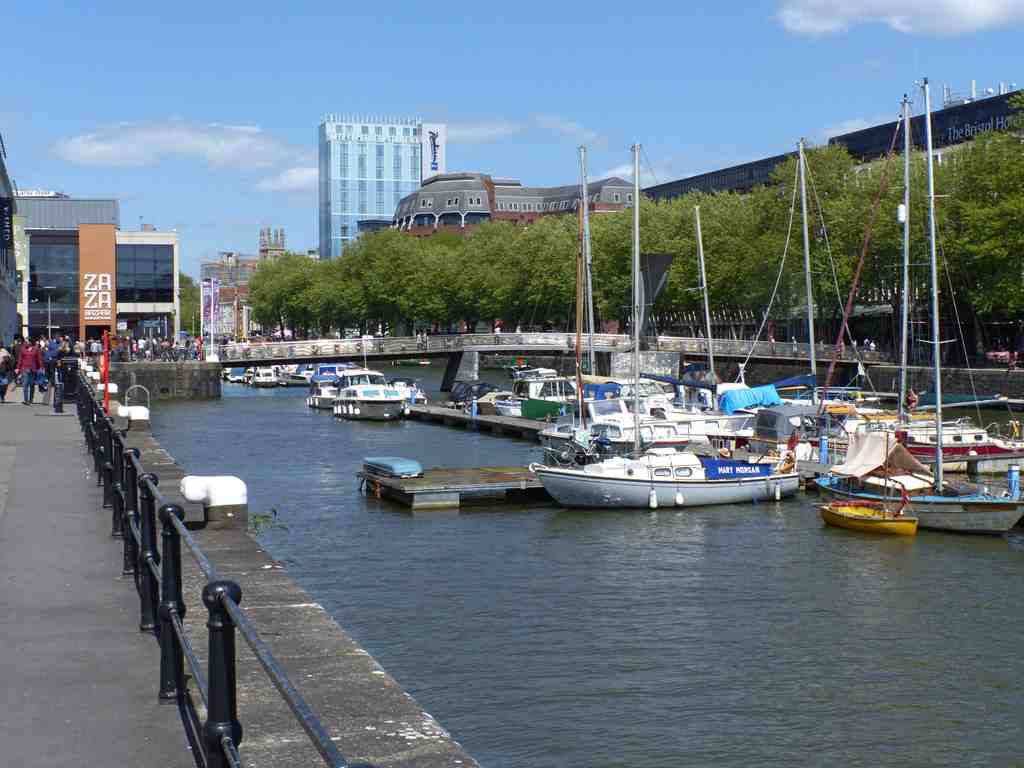
You're now approaching the splendid Bristol Harbour, and it's just a slight-left turn away! To help you spot it, look for a serene expanse of water lined with boats bobbing at their moorings. You'll notice a bustling quay lined with modern buildings to your left, and the water framed by trees and pathways. There are likely to be people strolling along and enjoying the vibrant atmosphere as well.
Now, let me paint a picture with words about this enchanting spot!
Bristol Harbour, the beating heart of Bristol. Covering a generous 70 acres (that’s 28 hectares if you're keeping track), it’s the watery playground where the River Avon once flowed freely but has since been tamed into a permanent feature since 1809, thanks to some clever engineering to keep those tides in check.
Imagine, back in the day, this was a bustling hub for ships and sailors. Ships would navigate through the "Floating Harbour" as it’s often called because the water level stays constant, considerate enough not to be moody like the tides. To do this, a nifty bypass, the "New Cut," was dug through Bedminster's fields, letting the tidal river get on with its business without bothering the harbour.
Netham Lock stands as the gatekeeper at the east end of the Feeder Canal, marking the upstream limit of the harbour. Beyond it lie two waterways: the navigable River Avon stretching upstream to Bath and the tidal natural River Avon, pursuing its own adventures.
The first mile downstream from Netham Lock takes you through the Feeder Canal until you reach Totterdown Basin, where the harbour reclaims the River Avon’s original route. The "New Cut" takes over for the tidal river, keeping our boats here safe and buoyant, even at low tide-no muddy mishaps here thanks to reduced currents and silting!
Historically, this haven was the Port of Bristol, but as the ships grew larger and heavier, Avonmouth and Portbury, which are 7 miles downstream, stepped up to handle the bigger loads. Yet, Bristol Harbour holds a treasure trove of history. In the 13th century, river modifications began shaping this port, with Saint Augustine’s Reach becoming the pulsating core of Bristol’s docks.
The dramatic tides of the River Avon fluctuated a whopping 47 feet (14 meters), transforming navigable channels into muddy traps. Ships had to be "shipshape and Bristol fashion" to handle these strandings, a phrase borne right here.
Oh, the tales these waters could tell! From the 1420s expeditions to Iceland to the storied journeys to the Americas, even before Columbus. John Cabot himself set sail from here on a scheme to reach Asia in a revolutionary westward route across the North Atlantic. The Society of Merchant Venturers, the brainy merchants of Bristol, sponsored such explorations, leading to the port’s Royal Charter in 1552 by Edward VI. Tobacco imports and the notorious slave trade shaped the shipping legacy further by the late 17th century.
So, as you gaze upon Bristol Harbour, remember it’s not just water and boats-it’s centuries of adventure, innovation, and stories waiting to be discovered!


