
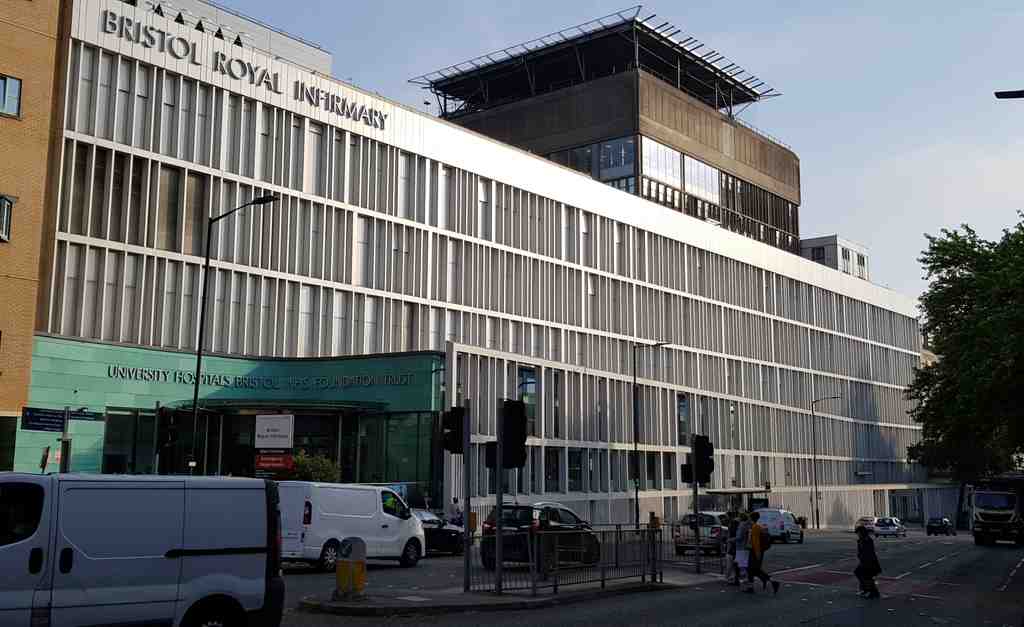
As you approach the Bristol Royal Infirmary, look to your left. You'll spot a large, modern building prominently labeled "Bristol Royal Infirmary" at the top. It has a sleek, contemporary design with vertical lines running down its facade, and a distinct two-tone look with the bottom section in green and the top section in white and metallic colors. The main entrance is situated below the large sign and features glass doors, perfect for a grand entrance or, in a pinch, a quick escape!
Now, let's dive into a bit of history and fun facts about this impressive place!
The Bristol Royal Infirmary (BRI) is not just another hospital; it's a veritable institution in Bristol, part of the fabric of the city since 1735. Back in the day, it was founded through public donations, making it one of the oldest infirmaries in the United Kingdom. It's a major teaching hospital with strong ties to both the University of Bristol and the University of the West of England.
Picture this: In December 1737, the infirmary opened its doors on Maudlin Lane (now known as Lower Maudlin Street) to 17 male and 17 female patients. Fast forward to 1904, and Sir George White, a Bristol legend who gave the city its first electric tramway, helped pull the hospital out of a financial black hole. His ingenious fundraising carnival at Bristol Zoo raised a whopping £4,000. Combined with generous donations from Sir George and his brother Samuel, they managed to release the hospital from debts of over £15,500.
In 1912, the Edward VII Memorial Wing was completed, designed by the renowned architect Charles Holden. During World War I, parts of the infirmary were requisitioned to treat military casualties, turning it into a pivotal medical center.
However, not all was smooth sailing. The hospital was at the center of the Bristol heart scandal in the late 20th century, which led to significant changes in clinical governance and transparency within the NHS following the Kennedy Report in 2001.
Over the years, the BRI has continued to evolve and expand, with major redevelopments approved and completed in the 21st century, ensuring it remains at the cutting edge of medical science and patient care.
So, as you stand here outside the BRI, you’re looking at a place brimming with history, resilience, and a touch of Bristolian ingenuity! Now, on to the next stop!


