
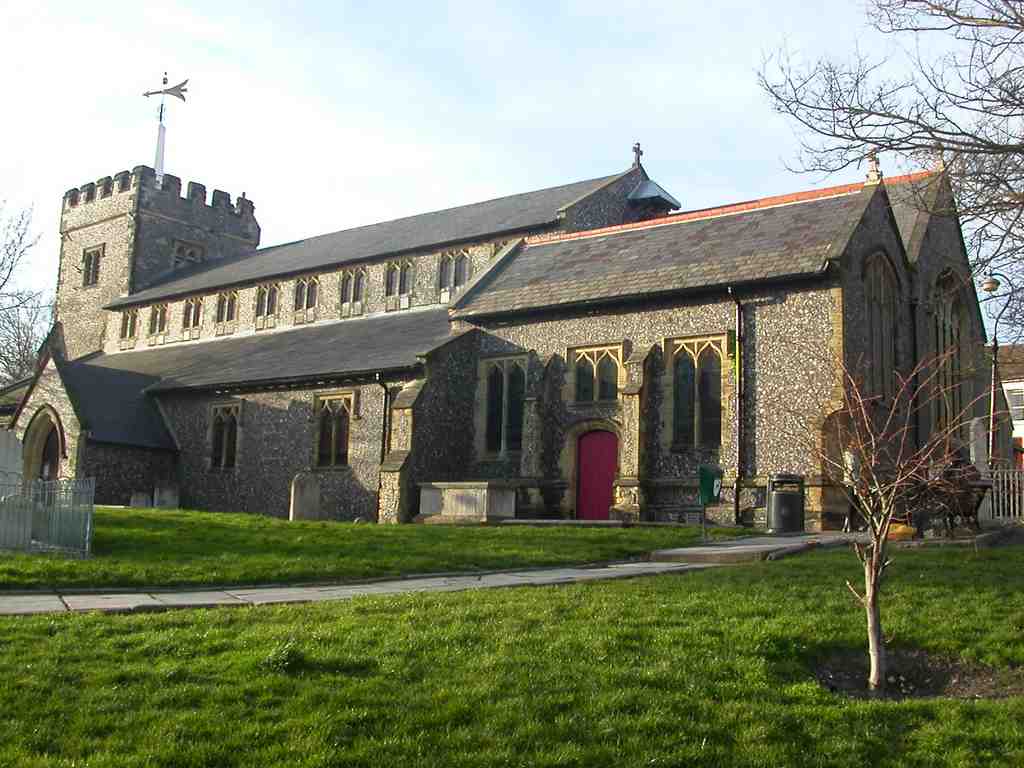
Straight ahead is St Nicholas Church, standing tall and a little proud on its own patch of green. You’ll spot its rugged, grey-stone walls first-a bit like they’ve been pieced together from hundreds of ancient pebbles and flint. Look out for the sturdy square tower at the far end, topped with a weather vane spinning in the breeze. There’s a gentle slope leading up to the church and, right now, the sunlight glints off its red door and those arched windows, giving it a hint of magic against the sky.
Welcome to St Nicholas Church, Brighton’s oldest friend. Imagine standing here almost a thousand years ago: instead of city sounds, you’d hear the distant shouts of fishermen and the wind whistling across the old, marshy coastline. This church is truly the heart of Brighton. Back in the days when the town was a scruffy little fishing village called Bristelmestune, there was already a church here-or at least somewhere nearby-watching over everyone from its safe, high hill.
It’s survived wild weather and stony centuries that would’ve toppled lesser buildings. Picture a night in November 1703: the sky goes dark, thunder cracks, and fierce winds start tearing the lead right off the roof. Imagine the thud and clatter as pieces fly through the air. A storm two years later finished the job, and the villagers must have thought their luck had run out! But they patched her up, and St Nicholas stood strong, even while the rest of the lower town washed out to sea.
The church itself is like a survivor in an epic adventure-once, French raiders stormed the coast and burned down the entire village, but the church, perched up here like a wise old guardian, was the only thing to remain. Inside, there’s a battered font carved all the way back in 1170, which has been shuffled around the building more times than a nervous wedding guest.
Over the years, as Brighton got fancy and people flocked to its beaches for healing dips, St Nicholas grew crowded. People squeezed onto wooden pews that fanned out from the center like spokes on a wheel, and even climbed up steep staircases to galleries swinging above the congregation-imagine sitting up there, hoping your legs didn’t fall asleep and you didn’t sneeze at the wrong moment.
After changing hands from monks to kings, queens, and a bishop or two-Thomas Cromwell even owned the place, briefly, before, well, losing his head over politics-the church has always kept its doors open.
So as you stand here now, maybe in the hush of the afternoon, you’re part of a story that stretches all the way back through storms, invaders, and centuries of weddings, whispers, and wandering souls. And just think-this spot has seen it all, and she’s still standing, with a few cracks but a lot of pride.
Intrigued by the early history, construction of the present church or the patron of the church? Make your way to the chat section and I'll be happy to provide further details.




