
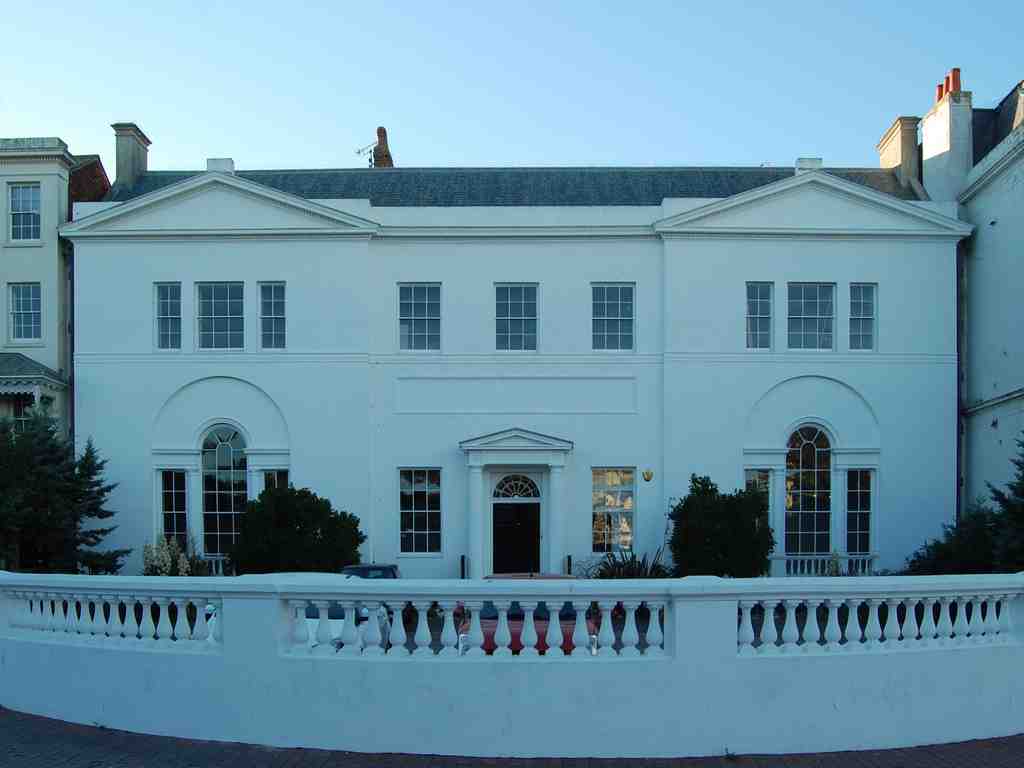
Take a good look to your left as you stroll up Old Steine-you can’t miss Marlborough House standing tall and proud in bright white. This grand mansion almost glows on a sunny day, with its perfectly symmetrical face, high arched windows on either side, and a balustrade fence that looks like it’s guarding something precious. You’re looking for a building that seems to have borrowed its style from ancient temples, with triangle-shaped gables above both wings and a central doorway set just a step back from the street. If you see a house that looks too posh to host a humble dinner party, that’s the one.
If these walls could talk, I bet they’d have plenty of juicy secrets! Marlborough House was built way back in the 1760s for a man named Samuel Shergold. Rumor has it he was hoping to impress the neighbours-and probably did. After a few changes of hands, along came the 4th Duke of Marlborough, and then William G. Hamilton snapped it up, calling in the famous architect Robert Adam. Adam didn’t mess around-he gave the house a serious neoclassical facelift, making it fit for royalty.
This place has played host to more VIPs than your average red carpet. The Prince of Wales popped by-yes, he’d later become King George IV-sometimes with his new wife in tow, sometimes dodging building work at his own Royal Pavilion. Imagine the sound of laughter echoing through these rooms as they threw parties fit for a prince, the clink of glasses, maybe even a scandal or two.
But all good things must come to an end. Over the years, the house changed hands faster than a hot potato. Lady Anne Murray, known for her charity and wild social ‘season’ gatherings, once made this place buzz with excitement. After a long string of owners, it ended up as council offices and even doubled up as a school board meeting spot. Quite a fall from royal parties to paperwork!
Now, the paint might be peeling and the original fireplaces sadly lost in a London warehouse fire, but this building still stands as Brighton’s second most important historic home-just a step behind the famous Royal Pavilion. It’s been empty for years, apart from the occasional daring squatter, and it sits on the at-risk list-a bit like an old movie star waiting for the right comeback role.
So as you stand here, listen to the silent stories all around. Maybe you can imagine the rustle of silk dresses, or the distant laughter of Brighton’s high society drifting from these empty halls. If these old bricks could shout, they’d probably say, "Oh, the parties I’ve seen-and the paperwork too!"




