
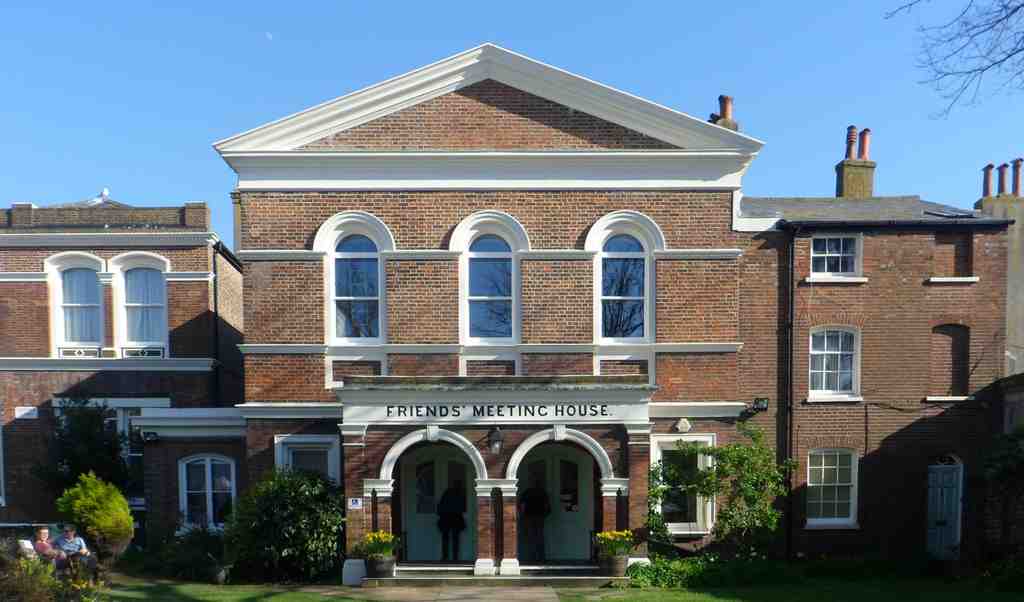
If you’re looking for the Brighton Friends Meeting House, pause right here and look for a dignified red brick building straight ahead, with a triangular roofline right above the center. It’s got tall arched windows gleaming back at you, a bit like eyebrows raised in curiosity-and see that porch with two big arched doorways? Above the doors, you’ll spot simple white letters spelling out “Friends’ Meeting House.” The garden outside tends to be peaceful, but don’t worry, you won’t need an invitation to peek in from here. Just find those gentle curves and the inviting porch, and you’re in the right spot.
Now, let’s step into a different century for a moment. Back in 1805, Brighton was hardly the bustling seaside town you know today-more like a humble fishing village, with a hint of salty air and seaweed clinging everywhere. The Quakers, known for their calm and modest ways, built this meeting house longing for a place to gather in peace. Can you imagine it? Maybe a horse trotting by, a few local fishermen casting suspicious glances at the new neighbours, and a quiet group slipping inside to worship.
But history wasn’t always this peaceful. The Quakers here had to wait until an ancient law, the Conventicle Act-a bit like a no-gatherings-allowed party pooper-was finally lifted, and only after that were they able to worship in public. The first Quaker meeting house was in a malt house, but when the Prince Regent wanted a new pleasure garden (and, evidently, didn’t mind evicting some Friends), the Quakers sold up and moved here with the grand sum of £1,800 in their pockets. Not a bad deal for the 1790s!
The building you see today grew over time, a bit like a friendly patchwork blanket. There’s the original three-storey section on your right, with its solitary bricked-up windows glancing at you with a touch of mystery-what secrets do they keep hidden? The centre section was added in 1850: you can’t miss it, with its classical lines and those proud twin arches. Off to the left, another extension was added in the 1870s for education and now, fittingly, hosts community events.
Imagine the stories these bricks have heard: whispered prayers, laughter from children in the classrooms, and perhaps a ghost or two wondering where the old graveyard has gone. Prince Albert Street took over the original burial ground in 1838; the graveyard, like the city, just kept moving.
And despite all that change, the Friends’ Meeting House remains a gentle anchor, licensed for worship and still a safe harbour. Today, it’s protected as a Grade II listed building by English Heritage-and there are only so many of those, even in a city as full of history as Brighton.
So take a deep breath and listen. The peace here is strong enough to be heard over the city’s buzz. Who knows, you might even leave with a sense of calm that lasts all the way to your next stop. Ready to wander onward? Brighton’s history is just getting started.




