
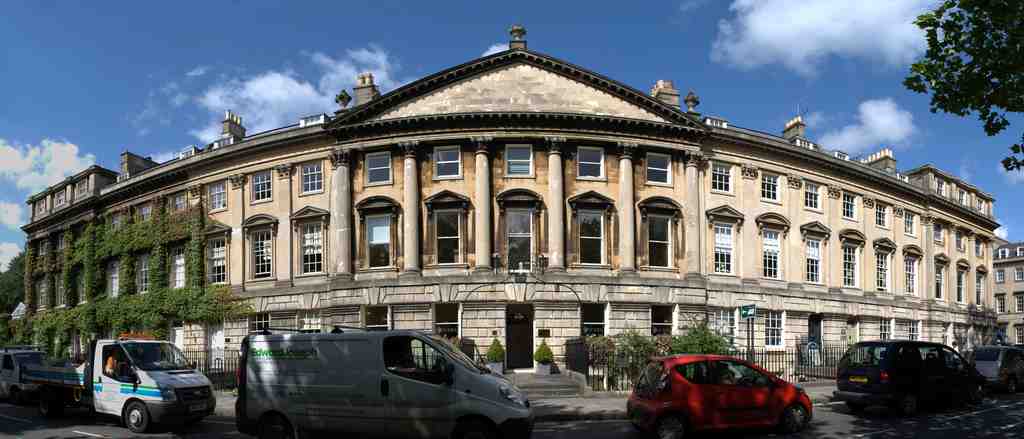
Now, let me tell you a little bit about the history of this place. Queen Square was originally developed by the talented architect John Wood, the Elder, back in the early 18th century. He had this brilliant idea of designing the building frontages in Palladian style and then letting other builders finish the rest of the buildings. Talk about teamwork, right?
In the center of the square, you'll find an impressive obelisk that was erected by a man named Beau Nash in 1738. It was dedicated to Frederick, Prince of Wales. I guess you could say they really wanted to make a point about their appreciation for royalty!
During World War II, this square didn't have the best luck. The south side of the square got hit by bombs during the Bath Blitz. But fear not, my friend! After restoration work, many of the buildings are now offices. Isn't that a great way to turn adversity into opportunity?
Now, if you're wondering why it's called Queen Square, it's because it was named in honor of Queen Caroline, the wife of George II. They wanted this square to look like a fancy palace, complete with wings and a splendid forecourt. It's like they were aiming to win an award for the most regal square ever!
So take a stroll around and admire Wood's architectural masterpiece. Look at the north side, with its stunning Palladian composition. It's so impressive that our friend Nikolaus Pevsner called it "one of the finest Palladian compositions in England before 1730." And the west side, designed by John Pinch, has its own unique Neo-Grecian style. It's like Wood's creativity inspired others to add their own personal touch.
And don't forget to explore the lovely garden in the center. Wood knew that people love to gather and parade, so he made sure to provide wide streets and raised pavements. The garden itself was originally enclosed by a stone balustrade, but the current railings are replicas from 1978. Fun fact, the garden area within the railings is exactly one acre! That's like having a giant green carpet in the heart of the square.
With Queen Square, John Wood really raised the bar for urban development. He set fresh standards in scale, boldness, and social consequence. The elegant townhouses along the north side, especially the central house, will leave you in awe. But let's not forget about the other three wings - they were intentionally designed to complement the grandeur of the central palace front. It's all about balance and harmony, my friend.
As you walk through this historic square, imagine the hustle and bustle of builders trying to complete their houses within the two-year deadline set by Wood. It was like a race against time! Thankfully, Bath was booming, and most plots were spoken for in no time. Can you imagine buying a house before the walls were even up? Talk about being ahead of the game!
So there you have it, Queen Square. A key component of John Wood's grand vision for Bath. Now, let's continue our adventure and head over to our final stop, the iconic Pulteney Bridge. It's just a short stroll away!


