
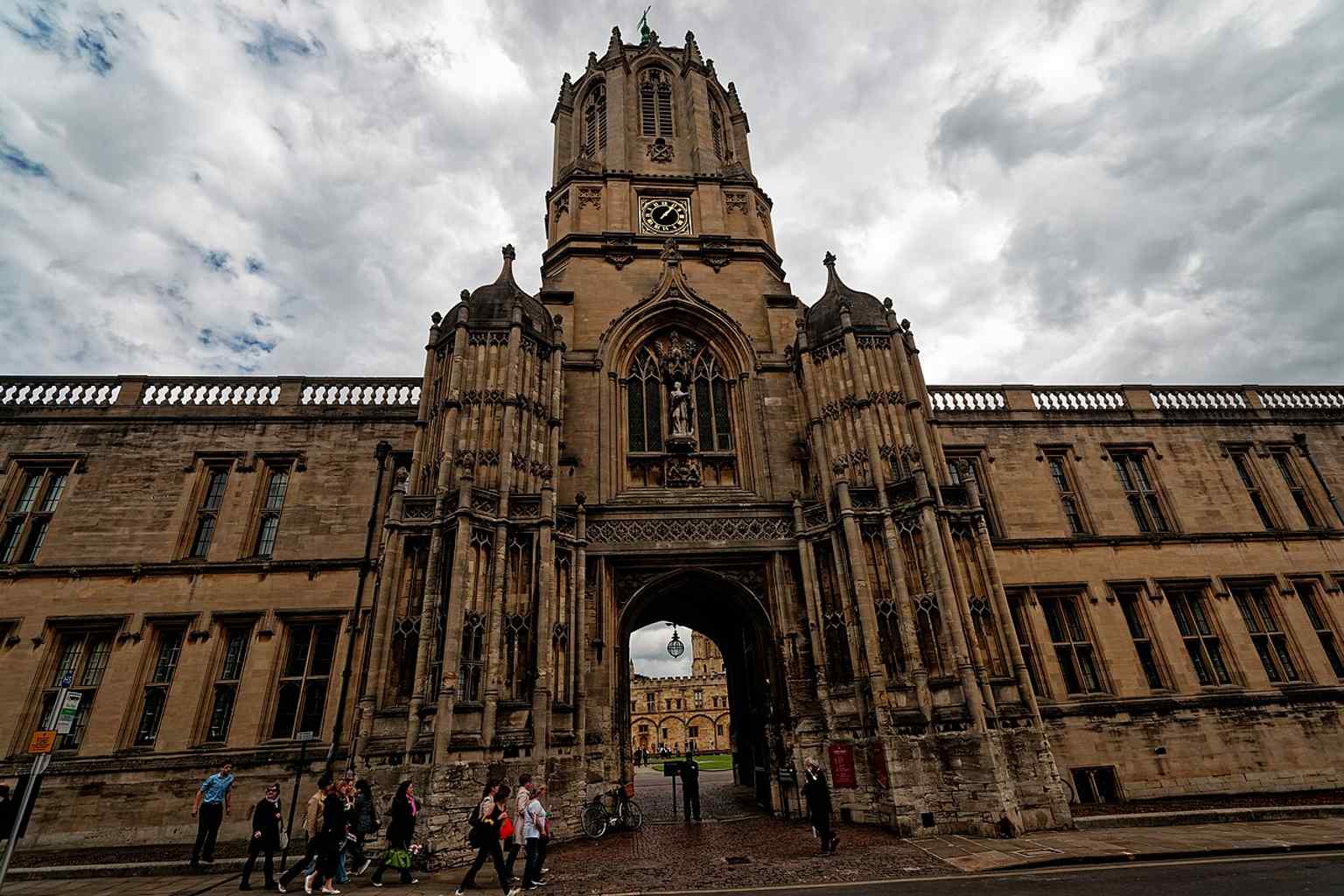
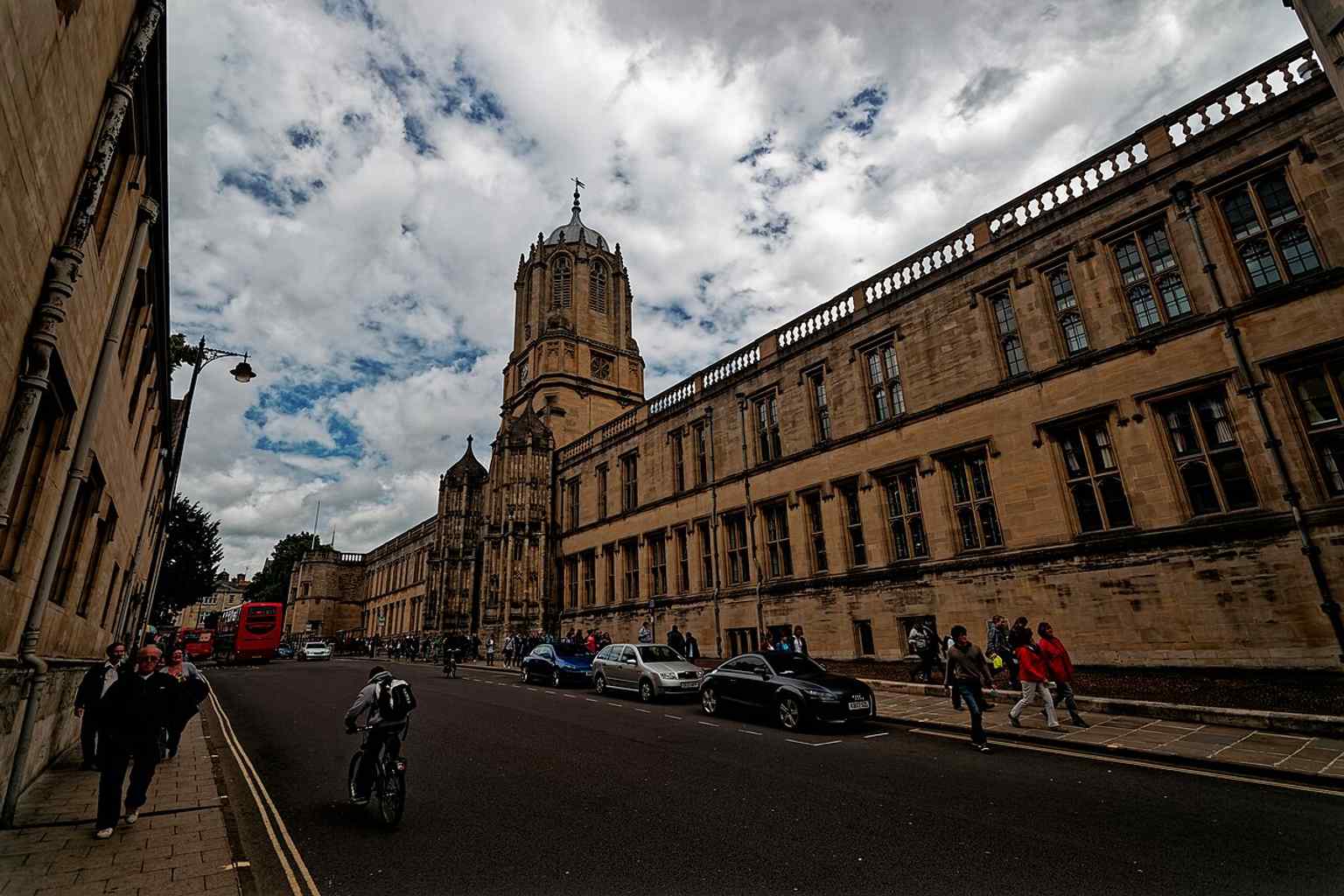
Ahead of you is a pale stone square tower over a broad arched gateway, crowned by an octagonal lantern and a curved ogee dome - that S-shaped dome is Tom Tower’s signature.
This is the main entrance to Christ Church, and Tom Tower finishes a job that sat unfinished for more than a century and a half. Cardinal Wolsey started the gatehouse, then fell from power in fifteen twenty-nine, and the structure stood roofless after that... a very grand shrug in stone. In sixteen eighty-one and sixteen eighty-two, Christopher Wren stepped in. Yes, that Christopher Wren, usually associated with classical architecture. But here he argued the tower “ought to be Gothick” so it would match the older work of the college’s founder, Henry the Eighth. Oxford does enjoy continuity, even when it takes a hundred and fifty years to get around to it.
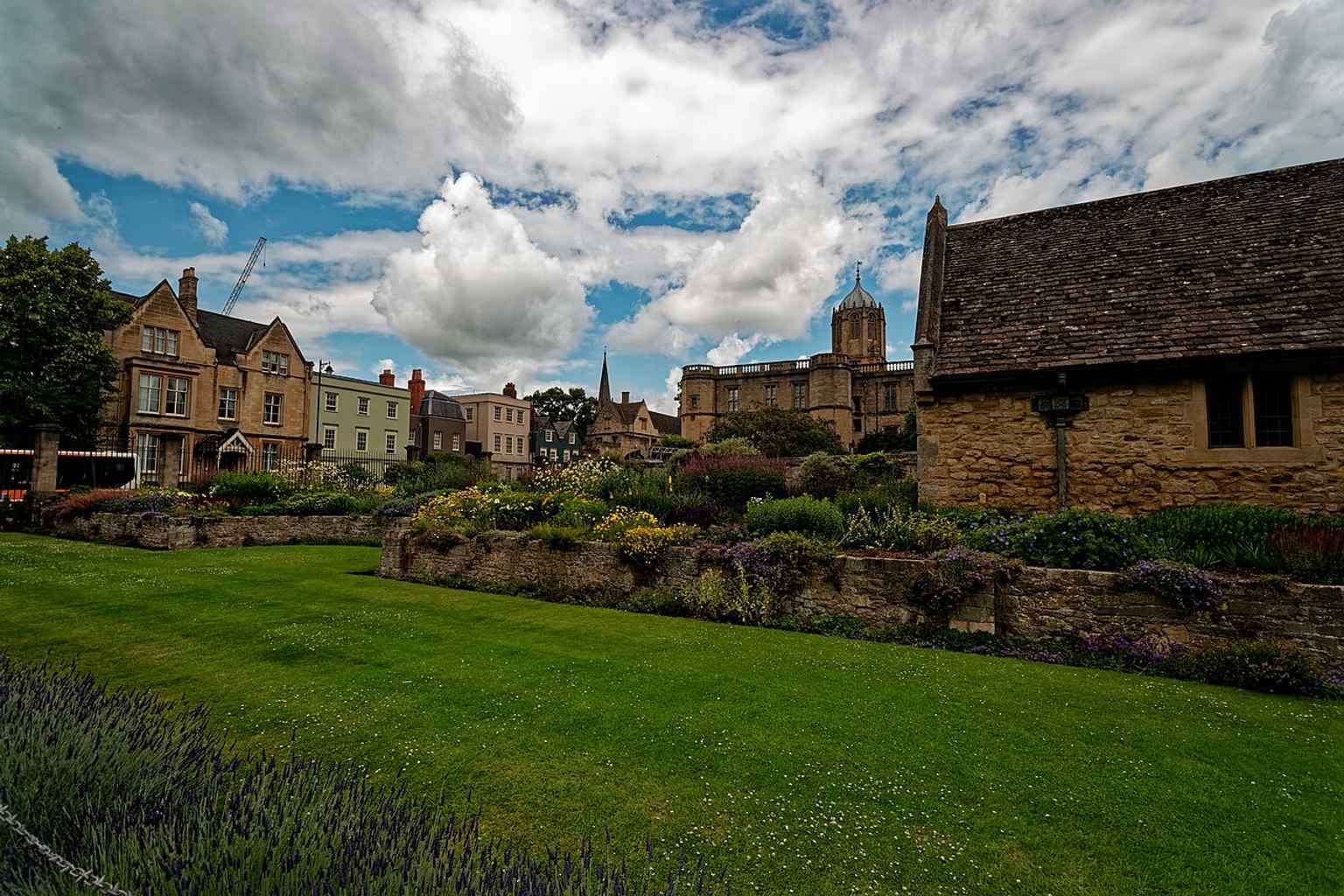
Look at the tower’s shape: a solid square base, then the lantern - the smaller windowed stage above - and then that faceted ogee dome. If you check your screen, image two shows that stacked silhouette especially clearly. Wren never actually came to supervise the building himself; the stonemason Christopher Kempster of Burford carried it out. Even so, the result became strangely influential. Later architects borrowed its dome for work at Hampton Court, and imitations turned up as far away as Harvard and Auckland. Not bad for a tower built to complete someone else’s unfinished business.
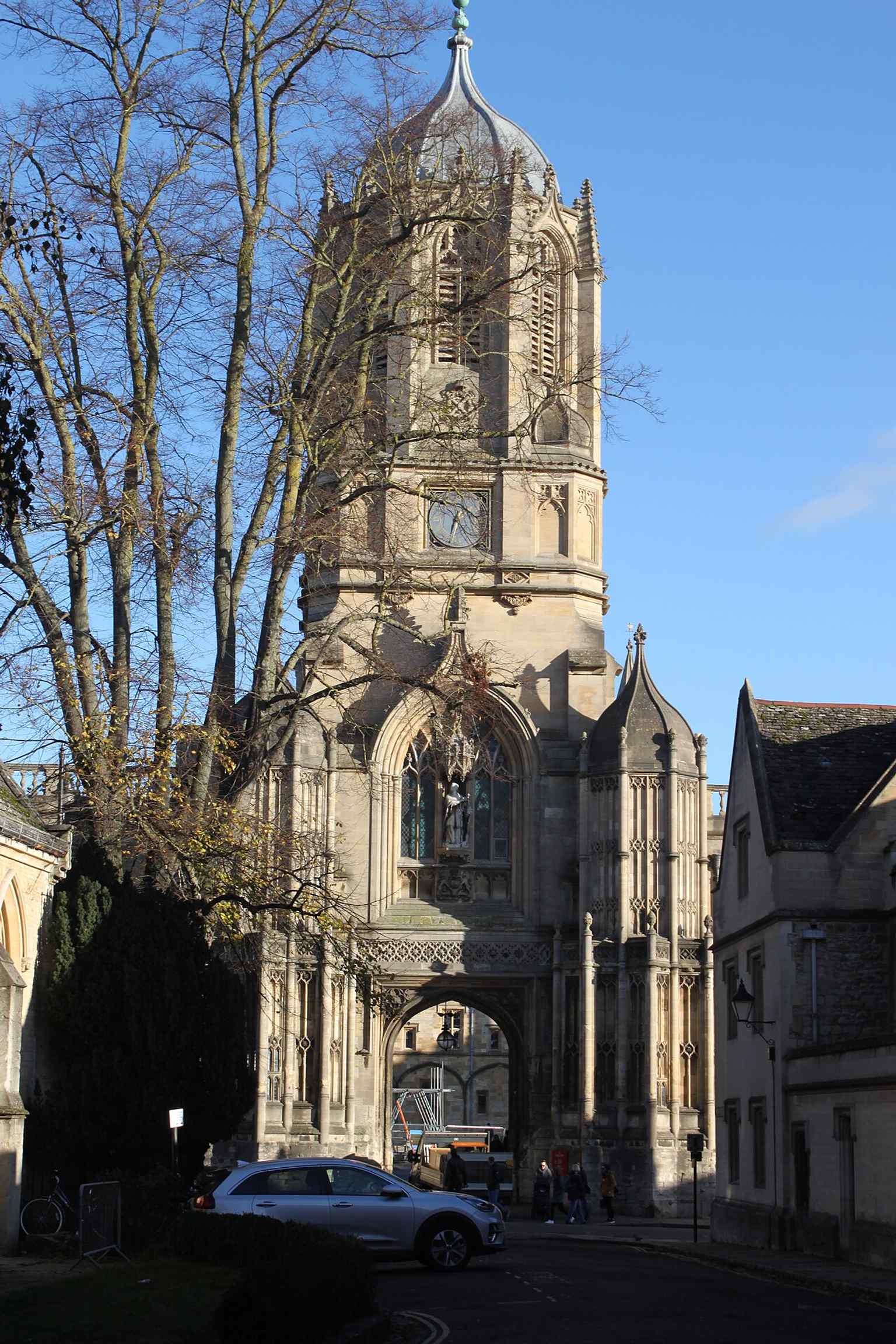
Its name comes from the bell inside: Great Tom, the loudest bell in Oxford. It weighs six and a quarter tons and began life at twelfth-century Osney Abbey, before officials moved it after the dissolution of the monasteries. The bell misbehaved for generations, wearing out clappers and surviving multiple failed recastings. Richard Keene of Woodstock tried three times in the late sixteen seventies and only made it heavier. Finally, in sixteen eighty, Christopher Hodson of London recast it successfully, and they hung it here in the new tower.
Great Tom still sounds one hundred and one times each night - one hundred for Christ Church’s original scholars, plus one added in sixteen sixty-three. It rings at nine oh five by modern time, which matches nine o’clock in old Oxford local time, when the city ran five minutes behind Greenwich. Once, that peal told Oxford colleges to shut their gates. If you want to picture the threshold it guards, image eight on your phone looks through Tom Gate into Tom Quad.
The clock also got a serious Victorian brain transplant in eighteen eighty-nine, when J. B. Joyce and Company installed new works using Lord Grimthorpe’s gravity escapement - the mechanism that releases the clockwork in tidy, controlled steps.
If you plan to go in, Christ Church generally opens from ten thirty A-M to four thirty P-M on most days and closes on Tuesdays. Tom Tower is Oxford in one frame: authority, ceremony, and a bell with a personality disorder. When you’re ready, continue on to Christ Church itself, just beyond this famous gate.






%20-%20Christ%20Church%201546%2003.jpg)
