
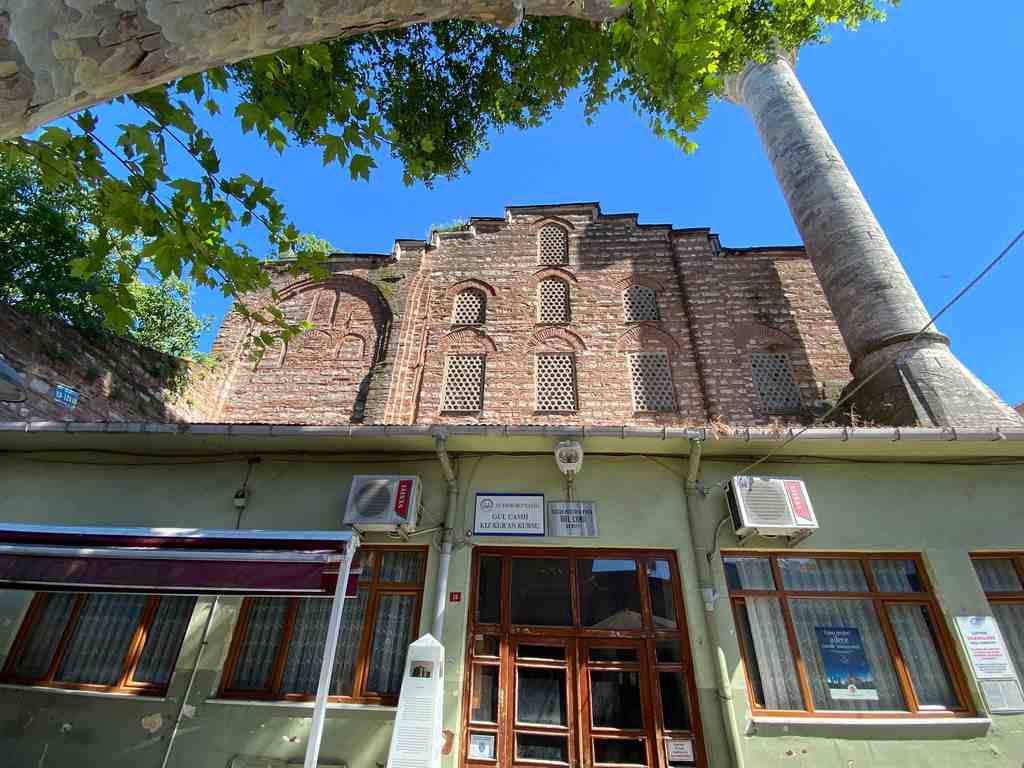
As you stand here in the district of Fatih, Istanbul, you can't help but admire the commanding view it offers. Positioned at the end of the valley between the fourth and fifth hills of Constantinople, the Gül Mosque overlooks the sparkling Golden Horn.
Now, let's delve into the intriguing problem of identification that surrounds this remarkable building. Scholars have debated the dedication and construction date of the Gül Mosque, creating an air of mystery.
Some believe it may have been the church of the nunnery of Saint Theodosia or the monastery of Christ the Benefactor. In the late 15th century, it was identified as the church of Hagia Theodosia en tois Dexiokratous, thanks to the research of Stephan Gerlach. However, Jules Pargoire challenged this theory at the beginning of the 20th century, proposing that it was the church of Hagia Euphēmia en tō Petriō from the reign of Basil I.
More recent investigations by the German archaeologist Hartmut Schäfer shed light on the possible construction period. He estimated that the Gül Mosque was built between the late 11th and early 12th century during the Komnenian period. Schäfer also questioned the belief that this was the church where Hagia Theodosia's body was brought at the end of the Iconoclasm period.
The uncertainty surrounding its history only adds to the allure of the Gül Mosque. As you explore its intricate architecture and soak in its peaceful atmosphere, take a moment to appreciate the layers of mystery that shroud this remarkable conversion from a Byzantine church to an Ottoman mosque.


