
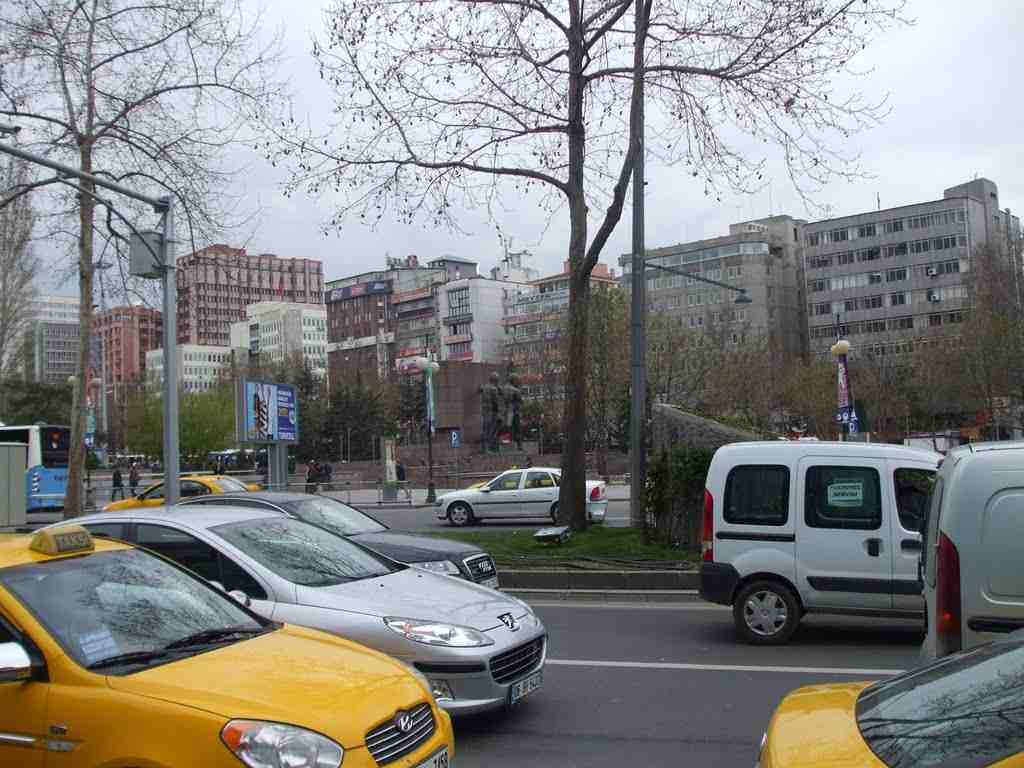
In front of you, you’ll see a busy boulevard lined with tall office and apartment buildings and plenty of yellow taxis; to spot the location, look for the intersection next to a green park area just off the main road, with traffic buzzing all around and a large cluster of bus stops nearby.
Now, pause here for a moment - you’re standing at a spot that looks like just another busy city corner, but it holds the weight of a story that changed Ankara forever. Picture it: it’s a regular Sunday evening in March 2016. This area, Atatürk Boulevard near Güvenpark, is always alive, packed with commuters waiting for buses, rush-hour conversations mingling with the hum of engines and footsteps.
On that day, just as people were heading home, chatting on phones or looking for their next ride, the everyday city noise was shattered by a roaring explosion. A car packed with explosives targeted the very buses that so many relied on. The blast tore through the area, shattering windows, knocking over trees, and leaving cars and a bus twisted and burning - the echo of that moment is hard to imagine standing here now, but if you listen closely, you can almost sense the shift from the chaotic energy of city life to a stunned, terrible silence.
At least 37 lives were lost, with over a hundred more injured - people just like those you might see now, waiting by the curb, hurrying under the trees, or returning from football matches. A father of two who was just trying to get home, a student who dreamed of teaching, a volunteer who helped children, a taxi driver finishing his shift, and young students bursting with plans for the future - all caught in the wrong place at the wrong time. Some had only just stepped off the metro, others were waiting to catch their ride home. In their memory, things like science clubs, art projects, and even parks for children sprang up so their dreams could live on even after that terrible day.
Security in Ankara was already tight, with threats lurking and warnings sent out - but no one expected the horror to strike here, in the very heart of the capital, at one of the most crowded intersections right by the metro and Ankaray stations. Bans on media coverage followed quickly, as authorities rushed to keep panic at bay and investigations secret - but it only made people’s anxiety sharper, as Facebook and Twitter ground to a halt, and the city held its breath.
And like a plot from a suspenseful detective story, the police had been searching for suspicious cars, gathering whispers from intelligence. Even the US embassy had warned its citizens of potential threats, though they guessed a different neighborhood. In the end, a bomb-laden BMW appeared among the crowd, changing the city in a heartbeat.
Responsibility was claimed by the Kurdistan Freedom Hawks a few days later, in the midst of Turkey’s struggle with militant groups and unrest in the southeast. The group offered a chilling apology for civilian casualties, warning such losses might continue. It was the third major attack in Ankara within just six months - the city’s nerves already stretched, its people worn down but still unbowed.
The aftermath echoed through every corner of life here. Fighter jets thundered away for reprisals, while arrests swept across provinces. The economy barely blinked, but in homes and on the streets, fear and sorrow settled in long after the shock faded. Stores went quiet, and even the ever-hopeful shopkeepers wondered aloud when laughter and crowds would return.
Official reactions poured in - from Turkish leaders vowing unity to journalists and politicians calling for remembrance, and international voices defending the hope for peace from Argentina to Australia. And yet, here where you stand, the real mark of history is in the invisible layer of stories - of school children, parents, friends, and everyday people whose journeys ended where yours continues down this very street.
It’s a place of heavy memory, but also a symbol of resilience, reminding everyone in Ankara - and all of us visiting today - that tragedy leaves a shadow, yes, but also a stubborn ray of hope each time the city moves forward, one day at a time.
Want to explore the background, attack or the victims in more depth? Join me in the chat section for a detailed discussion.




