
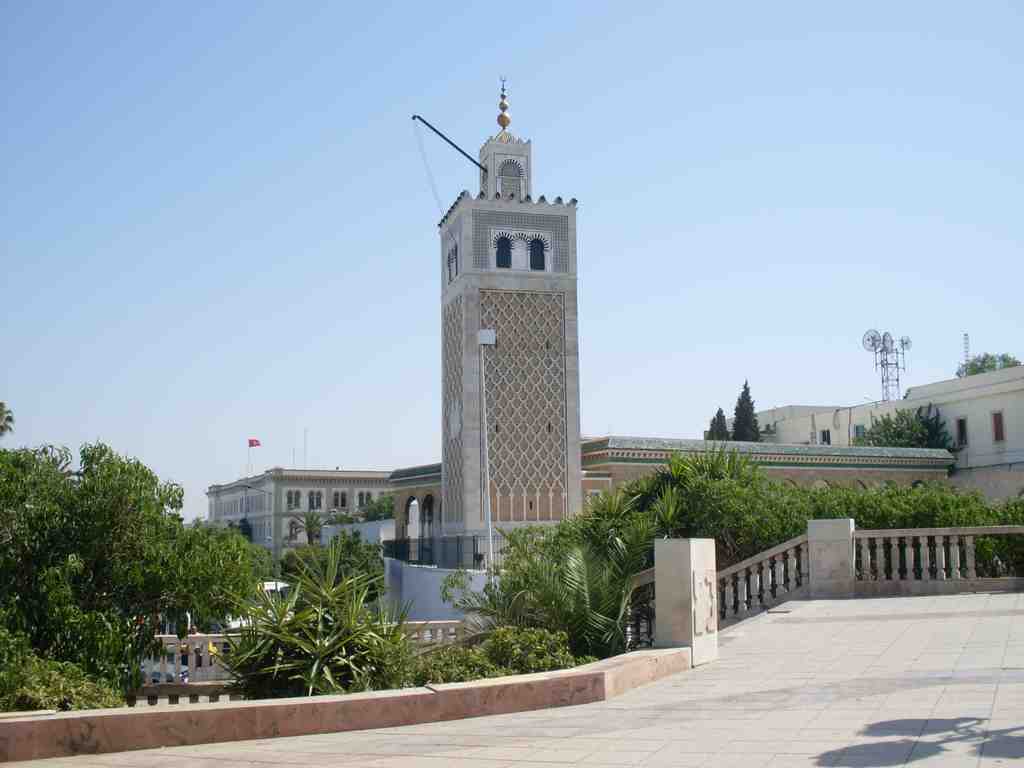
Straight ahead, you’ll spot the Kasbah Mosque by its elegant square minaret rising above the greenery, with pale stone walls covered in intricate, diamond-patterned decorations-just look up above the garden-like trees and you can’t miss it!
Alright, picture this: It’s the year 1230, and you’re standing in the heart of the Medina’s Kasbah district, where government secrets and royal plans swirl in the air-seriously, you might expect to see a sultan pace by at any moment! The man behind this remarkable mosque was Abu Zakariya Yahya, a ruler with ambition bigger than his beard. Just after boldly declaring his independence from the mighty Almohads, he decided that if you’re founding a Hafsid dynasty, you’d better have a mosque fit for a king-or at least for Friday prayers that would leave the neighbors gawking.
Back then, the Kasbah bristled with government buildings, palace walls, and the relentless bustle of courtiers. Abu Zakariya wanted something that would announce his new power: enter master architect Ali ibn Muhammad ibn Qasim, whose crew set to work right here. Now imagine the clink of chisels on stone as they shaped the first great Friday mosque after the celebrated Al-Zaytuna. The minaret-yep, that regal column you’re eyeing-was finished in 1233 and though it resembles the famous Kasbah Mosque in Marrakesh, it’s uniquely Tunisian in its stonework.
In the earliest days, whispers and prayers in the mosque were reserved for rulers and their officials-after all, why crowd your lovely new building with commoners when there’s royal business to do? But as power shifted and centuries passed, the mosque’s doors flung open to all for Friday prayers. Step (just in your imagination!) inside: marble columns, horseshoe arches, and a prayer hall deeper than it is wide-quite a rare sight for the time. Look up in your mind’s eye at the dome above the mihrab, a veritable stalactite cave of sculpted muqarnas. This decorative flourish was so unusual in Tunisia that it was almost like the Hafsids showing off their global taste.
Time marched on and by 1584, the Ottomans did a little redecorating: out went the old wooden minbar, in came a sturdy stone one, echoing with each sermon. Today, the style of this minaret stretches its influence across Tunisia-think of it as the trendsetter of Tunisian skylines. So while you stand here, remember: you’re on sacred and historical ground, where every stone tells a tale of power, ingenuity, and a little architectural one-upmanship!


