
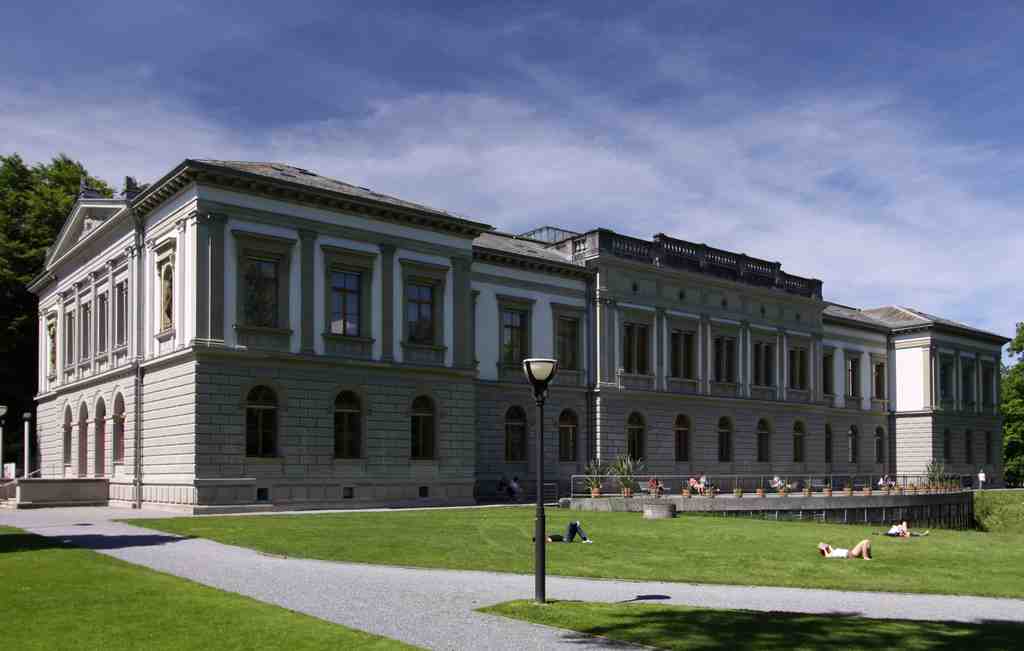
On your right is a pale stone museum, broad and symmetrical, with tall rectangular windows and a central stair rising to the entrance.
This is the Kunstmuseum St. Gallen, though the building itself has had a complicated career... which, for an old museum, is almost a hobby.
In nineteen twenty-one, St. Gallen and the East Swiss Geographical-Commercial Society moved their historical and ethnographic collections into a new building on Museumsstrasse. That shift freed the entire upper floor of the old museum for art, and this place slowly became the city’s main art home.
The collection began in a fairly human way: not with a grand master plan, but with works that happened to arrive. Early pieces mattered more for local history than for artistic fame. One notable exception came in eighteen sixteen, when Anton Graff gave the city his portrait of the engraver Adrian Zingg. Then collecting grew more intentional. In eighteen forty, the local art association bought François Diday’s Autumn Evening near Bouveret on Lake Geneva. In eighteen seventy-two, the Gonzenbach family donated a major print collection with names ranging from Albrecht Dürer to Rembrandt.
Friendships shaped the museum too. East Swiss painters with ties to Munich helped bring in Anselm Feuerbach’s Brawling Boys in eighteen seventy-eight, and Franz von Stuck followed in nineteen thirteen. Then came Ferdinand Hodler’s Song from Afar in nineteen oh-six, a sign that St. Gallen had started collecting living, modern Swiss art, not just respectable ancestors.
This building nearly disappeared from the story. It had to close in nineteen seventy because it was unsafe, and people even considered demolition. Instead, the city, the local citizens’ community, and the art association created a foundation in nineteen seventy-eight to support the museums, and after major renovation this old building reopened in nineteen eighty-seven. If you like, take a quick look at the before-and-after image in the app; it neatly shows how the museum and the square around it changed over more than a century and a half.
Inside, the range is surprisingly wide: Dutch Golden Age painting, Swiss masters like Hodler, French Impressionists including Pissarro and Monet, and modern voices from Paul Klee and Andy Warhol to Richard Serra, Nam June Paik, and Pipilotti Rist. A major leap came in nineteen twenty-six with the Sturzenegger collection, and later funds helped the museum acquire works like Pissarro in nineteen thirty-six and Monet in nineteen fifty. Space remains tight, so only part of the collection can be shown at once... a very civilized version of having too much treasure.
If you glance at the app image, you can also see the Gauklerbrunnen, Max Oertli’s fountain from nineteen sixty, standing in front like a slightly cheeky greeter.
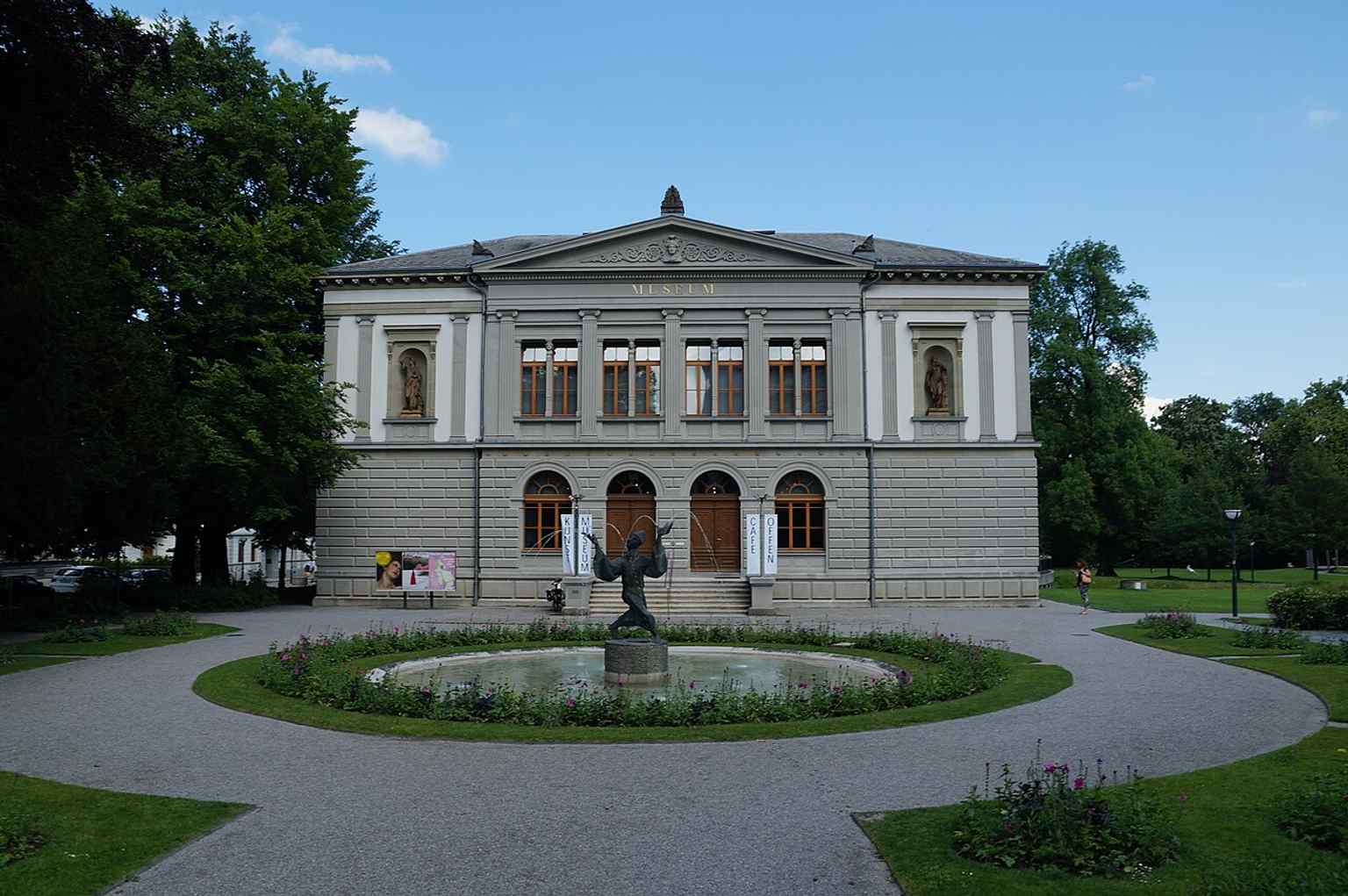
Since the Nature Museum moved out in two thousand sixteen, the Kunstmuseum has had the whole building to itself. If you plan to go in, it’s generally open Tuesday through Sunday from ten to five, with Thursday open until eight, and closed on Monday.
For a building that nearly vanished, it now holds an impressively stubborn slice of European art.
Take your time here, and when you’re ready, we can continue to the Museum of Culture.





