
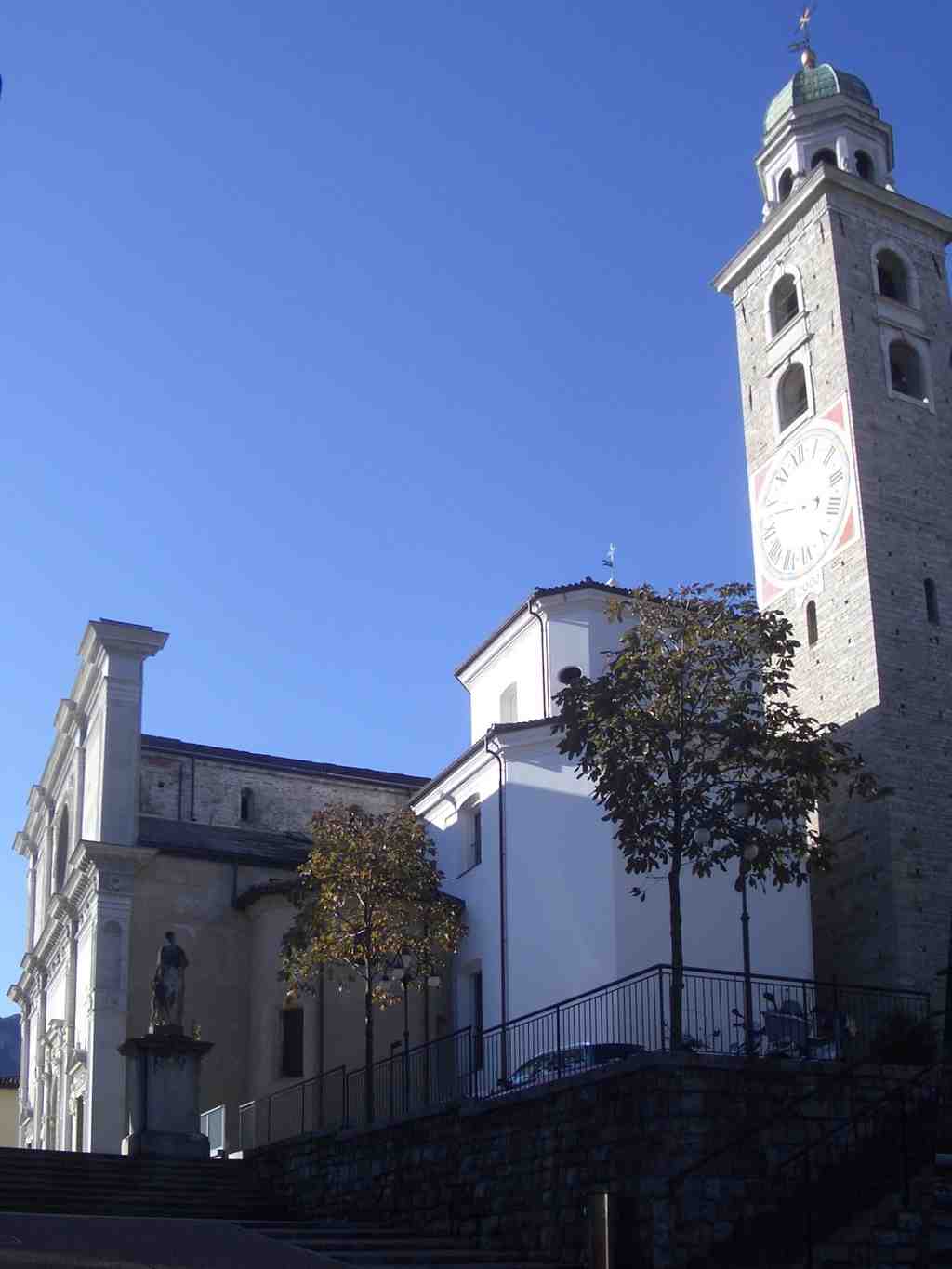
To spot Lugano Cathedral, look for a striking white stone façade and a tall bell tower with a clock-it's right up the hill at the top of the steps, standing out against the sky.
Welcome to the heart of Lugano’s spiritual and architectural history! You’re now standing before the Lugano Cathedral: imagine the cool air of centuries humming around you as you gaze up at its impressive white stone and marble façade, pieced together like a puzzle in the 1500s. The church has been here since at least the year 818-that’s well before people even started saying “middle ages”! Back then, its entrance faced the other way, and if you could peek under your feet, you’d discover the remains of the ancient church’s apse, still sleeping below the stones.
By the 15th century, folks decided the church needed expanding-clearly, medieval crowds weren’t keen on tight spaces! The entrance moved, the roof came down, and up went the magnificent groin-vaulted ceiling. Step closer to the main portal, and picture the chisels at work, crafting cheeky puttoes, birds, and even lions popping out at visitors. You’ll see angels carrying torches like something out of a Roman victory parade-because the designers wanted this place to look like a grand entrance to another world.
If your eyes wander up the bell tower, you’ll notice its lower half is Romanesque-solid and old, like a medieval castle. The top, though, has a Baroque flourish and a lantern topped with a little green dome, the creation of Costante Tencalla. Inside, after a big makeover in the early 1900s (bye-bye Baroque chapels, hello fancy frescoes by Ernesto Rusca!), the walls shimmered with new color.
This cathedral became the bishop’s seat only in 1888-so for more than a millennium, it’s been shifting and adapting just like Lugano itself. Take a deep breath and listen; sometimes it almost feels like the clock on the tower ticks a little louder with all this history. Now, ready to step into the next chapter of Lugano’s story?




