
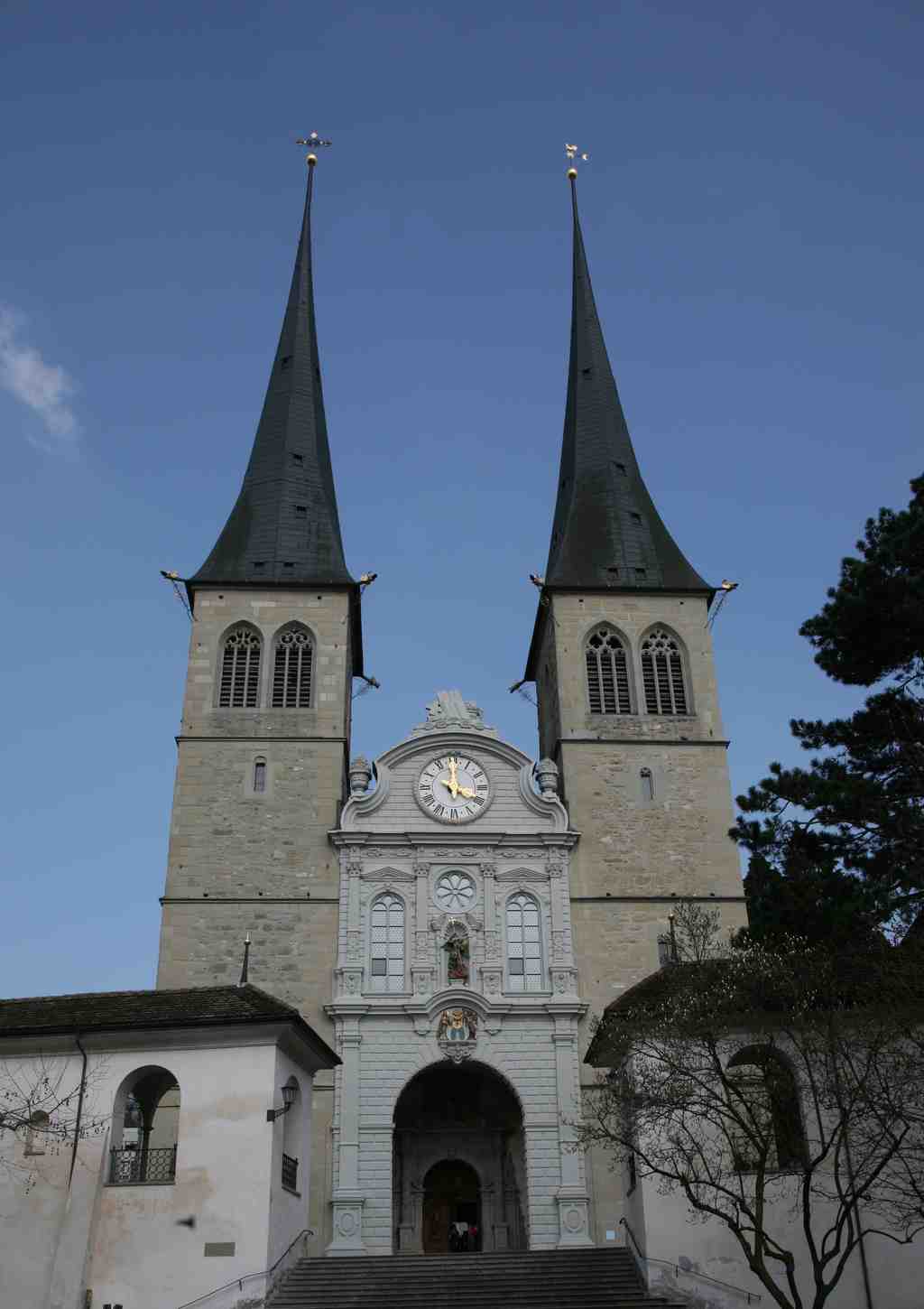
To spot St. Leodegar in the Courtyard, simply look for the two tall, thin towers rising high above everything else, with a grand stone staircase leading up to an intricate white façade and a golden clock in the center.
Welcome to St. Leodegar in the Courtyard! Imagine for a moment, you are standing before Lucerne’s answer to Hogwarts-but instead of magic wands, this place is filled with stories, legends, and the chime of bells echoing across centuries. These twin towers shoot up 69 meters like two stone rockets determined to puncture the Swiss sky, each corner decorated with gargoyle-style dragons glaring down in stony silence, daring anyone to disturb their centuries-old nap.
Close your eyes for just a heartbeat, and picture this: in the whispers of morning fog, southern German nobles gathered here in the year 735, determined to build a tiny monastery and dedicate it to Saint Maurice, a warrior so holy he probably could have blessed a cheese fondue and made it into a feast. But history is never simple-twenty years later, King Pepin the Short donated servants to the monks, and by 800 that first little monastery flickered out, only to be resurrected, like a good hero in a fairy tale, in 850. Eventually, the church found its heart in Saint Leodegar himself, who became the patron and namesake of the church.
Centuries rolled by and rulers traded hands; the Habsburgs even owned this land for a dramatic spell until Lucerne reclaimed it. And then came the Renaissance, that era of flamboyance and peril. Here, as the Thirty Years' War raged across Europe, Lucerne saw something rather miraculous: while others were busy with battles, townsfolk and Jesuit architects were busy building one of the grandest churches north of the Alps, right here!
But not all stories in church history are solemn. On Easter Sunday 1633, a rather unlucky roofer was asked to shoo away some snooping jackdaws from the choral tower. In true slapstick fashion, his effort ended with the roof-and the entire Romanesque basilica-bursting into flames. With the church burned down, the townspeople didn’t sit and brood; they called in a Jesuit named Jakob Kurrer from Ingolstadt and started rebuilding straight away! Maybe they should have left a “no birds allowed” sign, just in case.
When you look up, the two majestic towers you see now are survivors from the Middle Ages, robust and square. But in between, the white façade that gleams before you is Renaissance at its finest-elegant, almost theatrical, with Corinthian columns and massive arched doors. Over the entrance, you’ll see statues of Lucerne’s superstar saints: Leodegar with his trusty drill (don’t ask-let’s just say the tool is part of his legend), and Mauritius waving his flag like a champion. Three styles-gothic, Renaissance, and baroque-all meld together like a cake with layers from every Swiss grandma’s recipe.
Step inside and you’re greeted by airy columns, one of Switzerland’s most impressive late-Renaissance altars made of black marble, golden light spilling in through enormous rosette windows, and a choral stall carved with almost as much passion as a chocolate-maker pouring pralines. Don’t miss the legendary organ, hidden above the western entrance-complete with a rain machine, so organists can whip up a thunderstorm just for fun. That’s what I call a real “Swiss weather forecast.”
St. Leodegar is also famous for its treasury: a secret chamber filled with priceless chalices, silver busts of saints, and relics so precious, they can only be shown under strict supervision. My personal favorite? The kneeling silver figure of Saint Nicholas of Flüe, which narrowly escaped being melted down for wartime repairs. Sometimes, even saints need a lucky break.
Even the grave halls and surrounding chapels are steeped in history, with the tombs of influential Lucerne families and the city’s oldest timber house nearby. Every year, strange and wonderful ceremonies unfold here, from the Hofsamichlaus-Lucerne’s own St. Nicholas wrapped in trumpet fanfares and followed by a cheerful band of children-to processions of solemnity and joy.
So take a moment right here. Imagine hundreds of years of footsteps in this courtyard-monks chanting, craftsmen hammering, townsfolk gasping at flames, organ music rolling like thunder, and bells calling out over the lake. If walls could talk, these ones would never be quiet. And between you and me, always watch out for the birds on Easter.
To delve deeper into the exterior of the hofkirche, interior or the treasury and lucerne abbey treasury, simply drop your query in the chat section and I'll provide more information.




