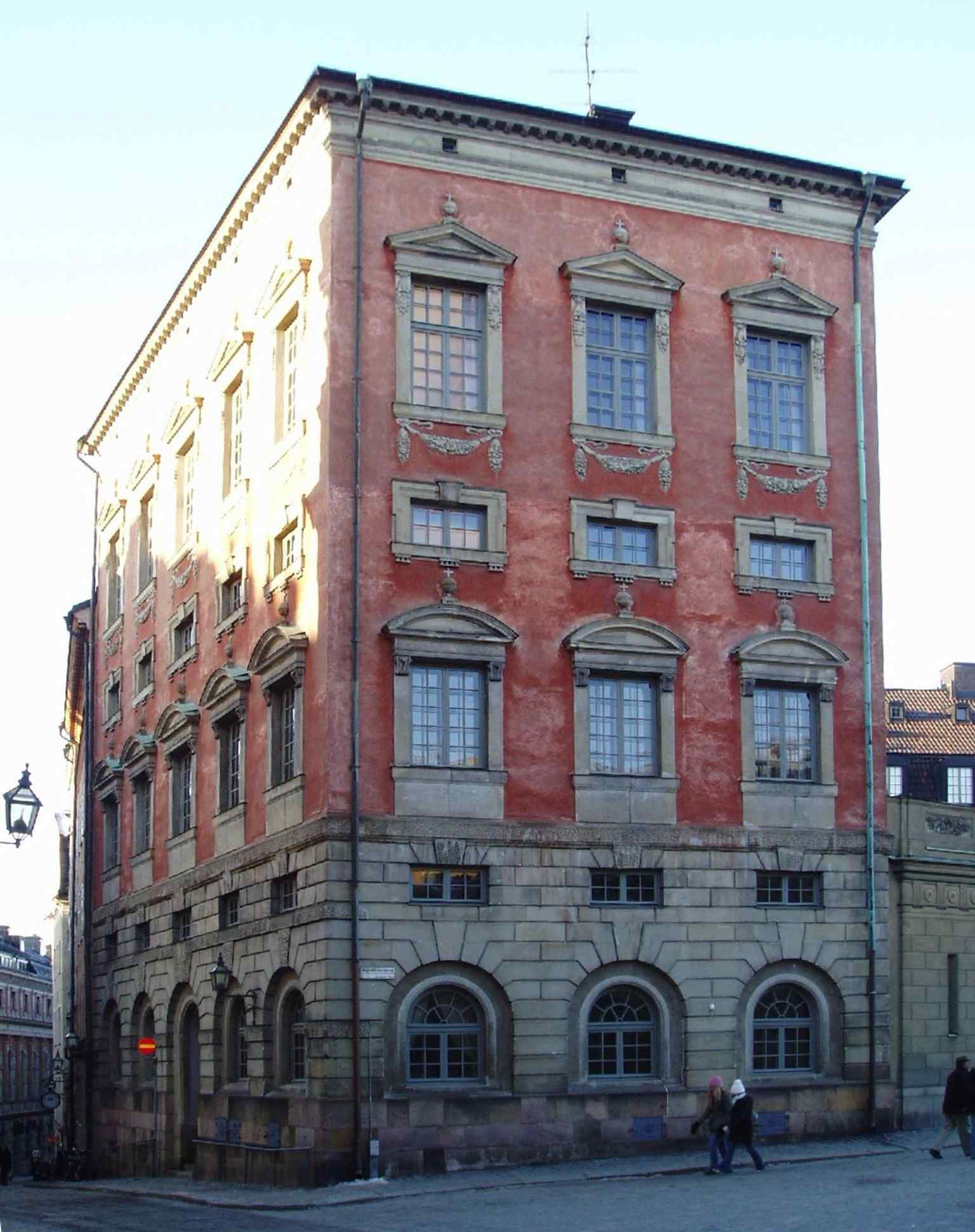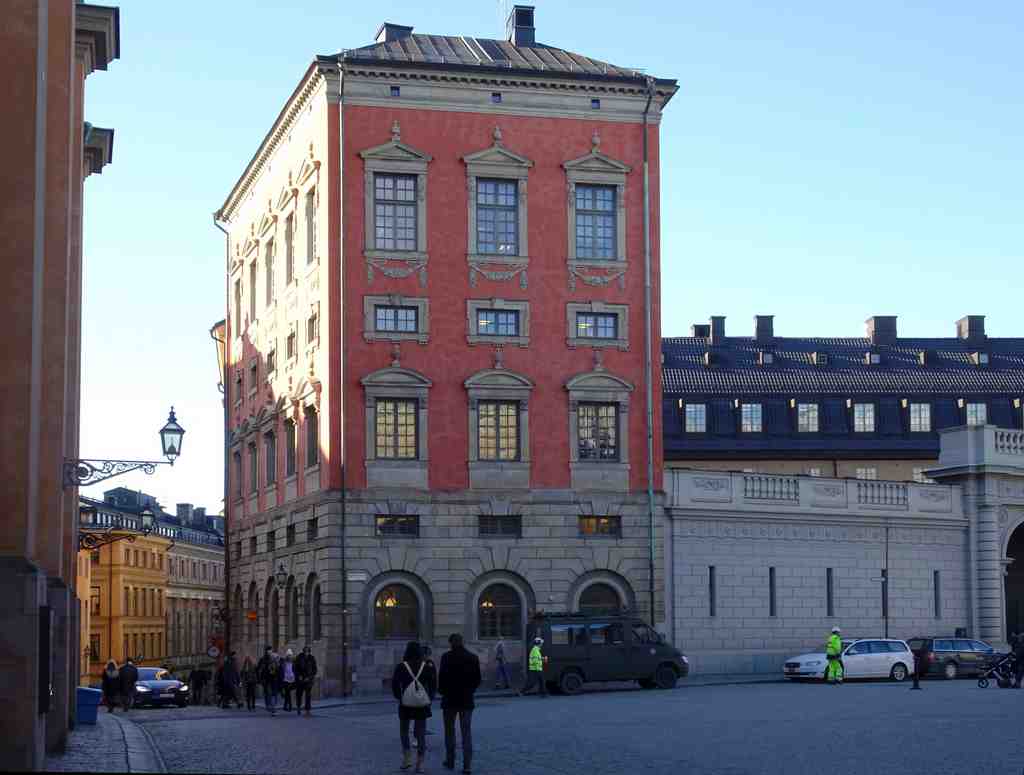
Take a look at this tall rectangular building with its rust red plaster walls, alternating rows of large and small windows, and a heavy grey sandstone base featuring deeply arched doorways. This is Axel Oxenstierna's Palace. Or rather, a fragment of it.
If you check your app, you can see a seventeenth century illustration showing the grand, sprawling complex this was supposed to be. What stands before you was meant to be merely the southern wing.
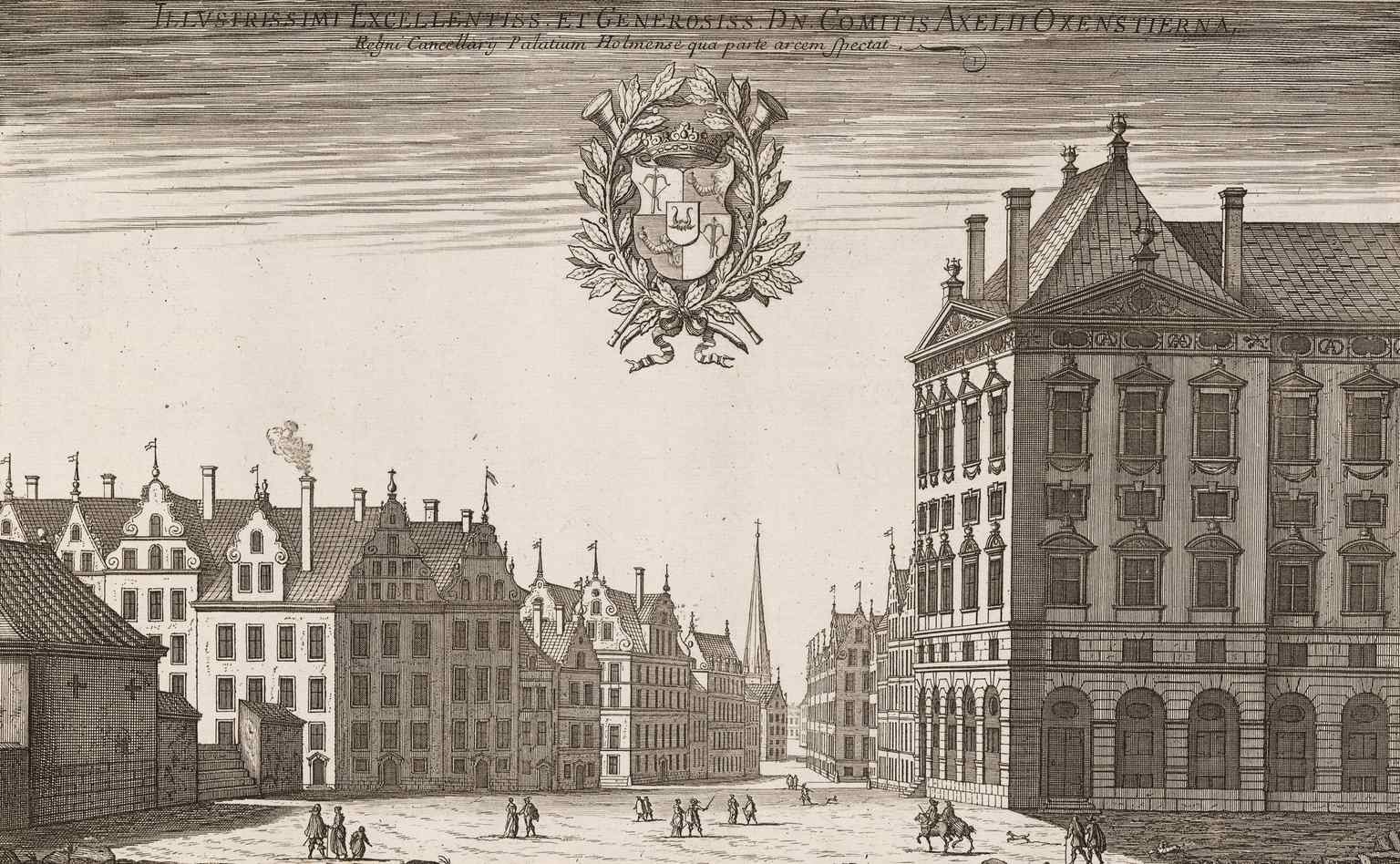
The story of why it stopped here is soaked in blood and bitter irony.
The man who designed this was Jean de la Vallee. He became the royal architect not through a joyful promotion, but because he had to pick up the pieces after a brutal tragedy. His father, Simon de la Vallee, was the brilliant architect who was murdered in the streets, a brutal crime we learned about earlier. Jean now found himself designing a palace for Chancellor Axel Oxenstierna, the head of the very family connected to his father's tragic death.
The father was gone, murdered by a member of the very family that young Jean would eventually have to work for. Jean took up his father's mantle. When Chancellor Oxenstierna commissioned this palace in 1653, Jean designed a masterpiece. It is considered Stockholm's first building in Roman Mannerism, an architectural style that takes strict classical rules and deliberately bends them for dramatic, almost playful effect.
You can see that dramatic bending in the windows. Because the lot sits on a slant, Jean used a forced perspective, cutting the window niches at an angle into the facade. It tricks the eye into thinking the building aligns perfectly with the street. Notice too the windows themselves. Between the tall, grand floors are rows of smaller, squarer windows. These mark what are known as mezzanines, low intermediate floors tucked between the main levels. At five stories high, it towered over the typical two story stone houses of its day.
But a curse seemed to hang over the project. Just a year after construction began, Axel Oxenstierna died. His son Erik inherited the vast project, only to die of illness two years later at the age of thirty two. The grand vision you saw on your screen died with them. The Oxenstierna family never even lived here.
Instead, this unfinished, imposing shell became the home of the world's first central bank, rising from the ashes of a spectacular financial disaster. Before this bank, Swedes had to lug around massive copper coins that could weigh up to forty pounds each. A man named Johan Palmstruch revolutionized things by printing Europe's first paper money, but he printed far more than he could actually back up in his vaults. When the public panicked and demanded their copper, the bank collapsed, and Palmstruch was sentenced to death. He was later pardoned, but the government took over the banking system, moving it right into this empty, sturdy palace to reassure the public.
The creators of this city poured their lives, and sometimes lost them, building monuments for ambitious men whose grand designs were ultimately cut short by fate.
Let us keep walking now, deeper into the heart of the old town. Our next stop is the Stock Exchange Building, just a minute away.