
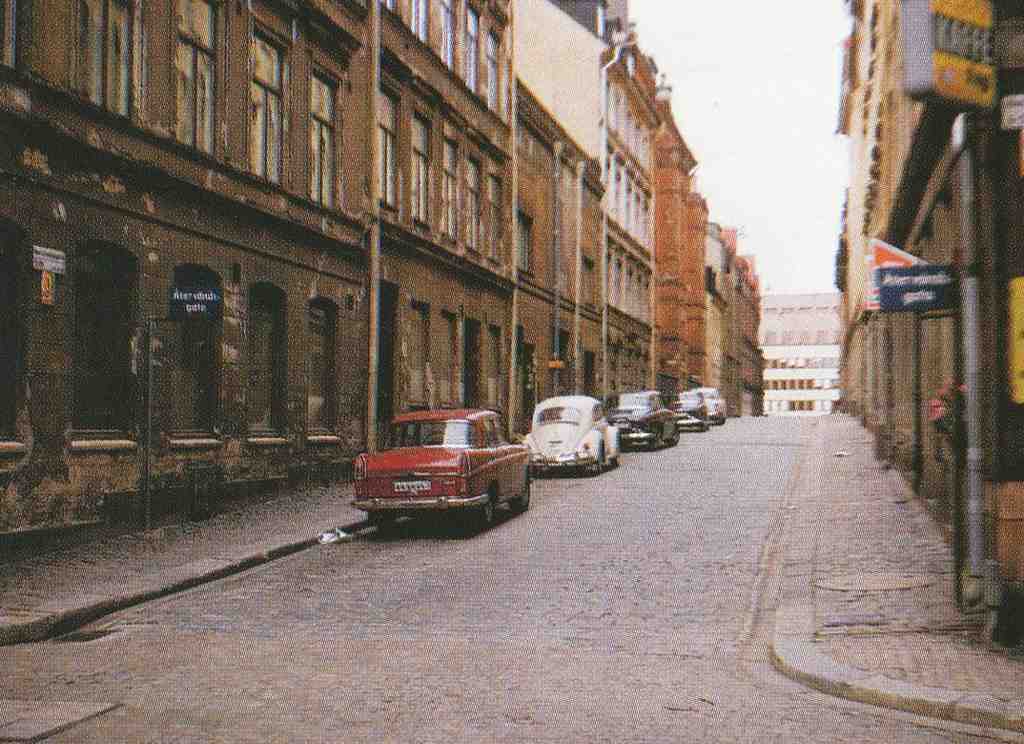
Look to your left at the narrow, sloping cobblestone path bordered by tall, flat-fronted masonry buildings lined with tight rows of rectangular windows. You are looking at a ghost... because this is the exact location of Norra Smedjegatan, famously known as the street that disappeared.
It is incredibly rare for an entire street to be wiped completely off a city map, but that is exactly what happened here. Norra Smedjegatan existed in some form since the 1640s, originally taking its name from the heavy iron blacksmiths that operated in the area. Over the centuries, its character shifted dramatically. By the 1800s, it was a notoriously shadowy thoroughfare. It was actually a well-known red-light district where prostitution was officially tolerated by the authorities. It was a narrow, remote-feeling strip packed with small craft shops, gloomy hotels, and residential buildings. The famous Swedish writer August Strindberg even wrote about the dark and lonely Catholic Eugenia Chapel that sat right along this stretch.
So how does a centuries-old street just vanish? In 1967, Stockholm was deep into a massive urban redevelopment project known as the Norrmalm regulation. The goal was to modernize the city center, but the execution was incredibly destructive. Wrecking balls swung through Norra Smedjegatan, obliterating 45 historic properties in one fell swoop, including architectural treasures like the Felix Sachs house.
The original plan was to build a colossal, 15-story mega-hotel right here, backed by an American hotel chain. They called the project Storviggen. But right in the middle of this sweeping demolition, the Americans backed out. The city was suddenly left holding a massive, empty crater of dirt and rubble with absolutely no plan. It was a complete disaster. The public was furious, and the empty pit became a glaring symbol of a badly mismanaged city makeover.
Desperate for a solution, architects pivoted to an entirely different concept. Instead of a hotel, they decided to build a massive galleria, which is an enclosed, climate-controlled indoor shopping center. The Gallerian opened its doors in 1976, effectively swallowing the old street whole. If you walk down the main indoor corridor of the mall today, you are actually walking the exact historic path of Norra Smedjegatan.
In 2009, politicians even tried to officially rename the mall's main aisle to Norra Smedjegatan to honor its vanished past, but the motion was unfortunately denied. If you want to explore the shops that sit on top of this lost street, the mall is generally open from 10:00 AM to 8:00 PM most days, closing slightly earlier on weekends. The original cobblestones and dark hotels may be gone, but the footprint of the forgotten street is still hiding right under your feet. Take a breath here before we move on to our next site.




