
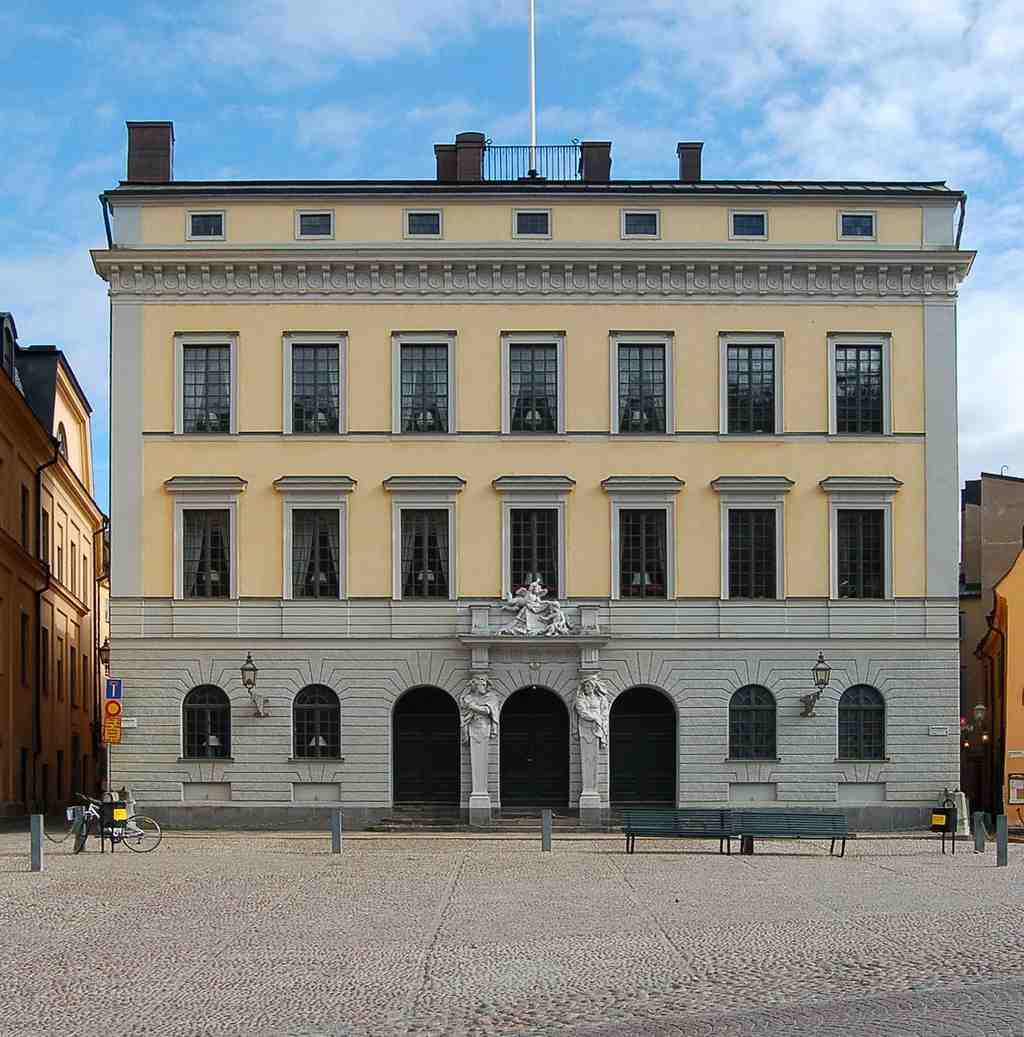
Look for a stately, light yellow baroque mansion with grand windows, elegant stonework, and a decorative white entrance perched right in front of you, facing the open square.
Step up and imagine Stockholm in the late 1600s: powdery wigs, swirling cloaks, horses clip-clopping over the cobblestones, and... oh, the smell of bread baking somewhere nearby! Now, right here, Nicodemus Tessin the Younger, a master architect with a flair for drama, watched his dream palace rise brick by brick from 1694 to 1700. This wasn’t just a home-it was a baroque masterpiece, a kind of “look at me!” statement for the entire city. Picture Tessin, perhaps with ink-stained fingers and a slightly crooked periwig, sketching bold lines late into the night. It must've felt like pure magic seeing it all come to life.
But, just as the paint dried, fate added some suspense: the palace ended up with Tessin’s son, Carl Gustaf, who unfortunately had a knack for spending more money than he had. In 1755, with a heavy heart (and probably a lighter pocket), Carl had to sell this beautiful mansion. The king swooped in, and soon enough, the palace became the official nest for Stockholm’s governors. Today, the Tessin Palace stands as a testament to grand ambition, family drama, and a touch of royal mystery-don’t worry, though, the only ghosts here are of old architects muttering about window symmetry!




