
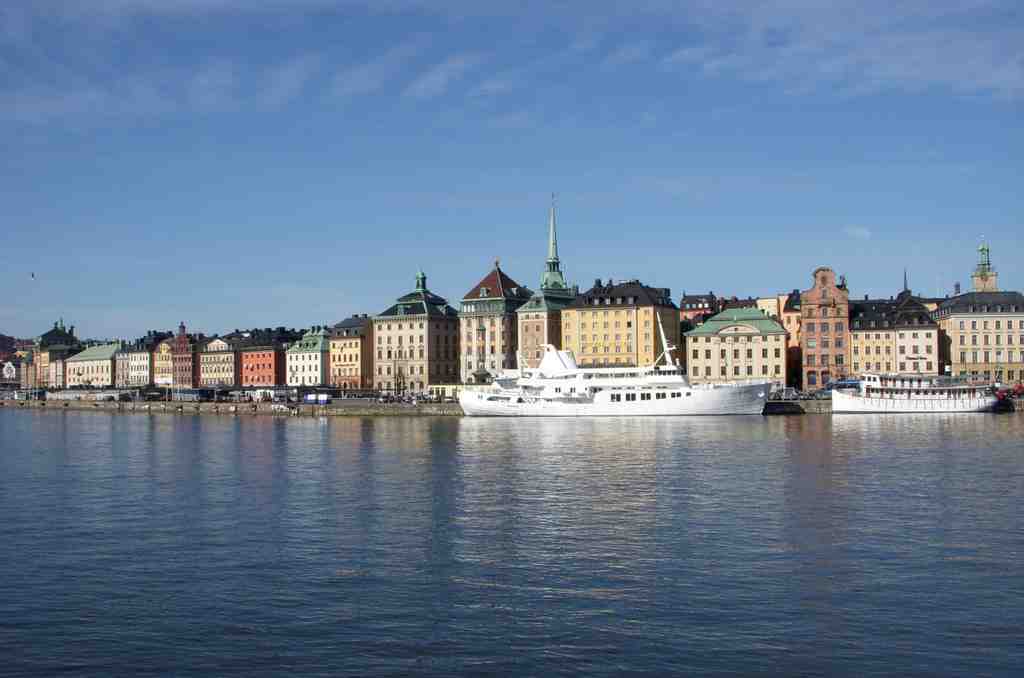
To spot Skeppsbron, look ahead for a row of tall, colorful, narrow buildings facing the shimmering water, with boats moored along the quay and the spires of Gamla Stan reaching up behind them.
Now, as you stand before the bustling waterfront of Skeppsbron, imagine the salty wind on your face and the echoing footsteps of sailors, merchants, and dreamers who’ve passed through here for nearly four hundred years. The scene before you is more than just a pretty postcard-it’s the historic front porch where Stockholm once greeted the world.
In the early 1600s, as Sweden was rising to power, King Gustav II Adolf looked out at this eastern shoreline and saw more than workmen and briny cargo. He saw the promise of a grand parade street, a shimmering gateway where Sweden could show off its wealth and ambition. By 1634, Stockholm had become the country’s official capital, and people flocked here: traders, politicians, intellectuals, adventurous souls from all around Europe. Over two-thirds of the country’s foreign trade passed right over this very quay, making Skeppsbron a place of endless commotion and wild opportunity.
But let me take you further back-imagine standing here in the 17th century, when the city finally tore down its medieval eastern wall. Skeppsbron’s name, which actually means “the ship’s quay,” became the very definition of commerce and connection. This new street, facing the broad Saltsjön bay, replaced the much older, more hidden medieval quay, and the shoreline itself had to be forged with both human hands and nature’s help-land was literally reclaimed from the water with fill dirt, rubbish, and anything they could find. It’s a little-known secret that some of the houses’ foundations here are built partly on medieval debris, and you can even read the city’s history in the cracks and sloping lines of older facades: as the land rose and materials shifted, some buildings began to tilt, stubbornly holding onto their patch of Stockholm through centuries of change.
The houses of Skeppsbron were designed to dazzle: tall and narrow, packed onto long, slender plots, their proud faces turned towards the brimming harbor. Downstairs, you would’ve found busy packing houses and offices, while above, lavish apartments gazed out at the never-ending parade of masts in the harbor. Carvings and symbols of sea gods, merchant gods, and ship’s prows still decorate their walls, each telling stories of risk and reward, of fortunes made and lost at sea.
This was once the beating financial heart of Stockholm. The so-called “Skeppsbroadeln,” or “Skeppsbron nobility,” were merchant families who built impressive dynasties-with names like Hebbe, Küsel, Tottie, and Arfwedson-trading in everything from spices to iron to silks. Their houses became as much a part of the city’s skyline as the ships that clustered along the quay, bringing all the colors and clamor of a world marketplace right up to the city’s doorstep.
But time works its changes: by the late 1800s, Skeppsbron had lost its dominance as the city’s primary port, thanks to bigger ships and the shifting needs of modern transportation. Yet passenger ferries ran until the 1970s, and hulking freighters still moor out in the deeper waters of Saltsjön, while the railway and new harbors crept ever further from Stockholm’s historic heart.
Even today, if you listen closely, you can hear the layered past-underneath the hiss of traffic and the calls of seagulls, the echoes of ancient merchants discussing grain prices and grand plans, or the thud of heavy barrels being rolled off a ship. The streets and quay are watched over by statues: to the north, you’ll find the proud bronze of King Gustav III, who strides ashore in victory after a war, forever frozen in a moment of royal drama. And to the south, by the old customs house, stands the mammoth red granite “Sea God” by the artist Carl Milles, a whimsical monument to Stockholm’s everlasting conversation with the sea.
Up until recently, parts of Skeppsbron bristled with traffic and parking lots instead of cargo and excitement. But the city never forgets the value of its old harbor: proposals dream up new restaurants, markets, and places for pleasure boats to berth, hoping to recapture the magic that has always made Skeppsbron the place where Stockholm meets the world.
So take a last look at those proud facades and the endless blue beyond-here, more than anywhere else in Stockholm, you stand at the threshold between past and present, between the city’s ambitions and the unending promise of the sea.
Want to explore the history, architecture or the foundation problems in more depth? Join me in the chat section for a detailed discussion.




