
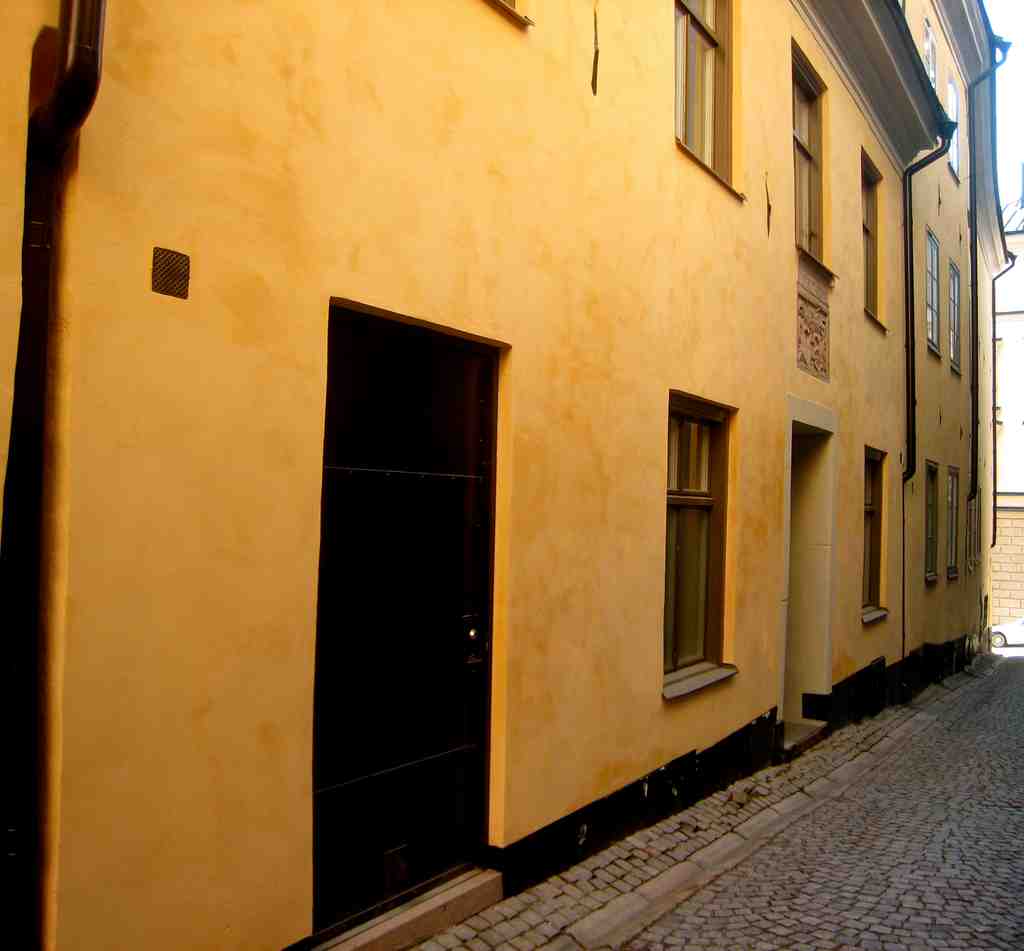
To spot Baggensgatan 27, look for a pale yellow, slightly rough-textured house with simple rectangular windows and a heavy dark door right along the narrow, winding cobblestone lane-just before it bends to reveal the sunlit street beyond.
Now, let me take you deep into the centuries-old layers of this unassuming facade. Imagine you’re standing right where pilgrims, royals, clergy, and curious townsfolk have passed for nearly 700 years. You might not guess it from the modest windows and pale yellow walls, but behind them lies one of the oldest surviving dwelling houses in Stockholm-built so long ago, in fact, that its story began in the time of knights, kings, and roaming monks.
Way back in 1336, King Magnus Eriksson himself ordered a house built on this very spot, giving it to the Johanniter-an order of knights famous for hosting pilgrims and wanderers. They were to run it like an inn, a kind of medieval hostel for those braving the mud, hunger, and bandits on the pilgrim trails of Europe. Envision the flicker of tallow candles, voices murmuring in Latin and German, tired boots kicked off next to rough wooden benches, and the heavy scent of wet cloaks and hope. In those days, this was a haven in the storm and a place to rest before facing the wild outside city walls.
By the 1400s, this building slipped into a new chapter. It was passed, through a woman named Gertrud Hansdotter, to Vadstena Abbey-another echo of ancient piety. Imagine the plots and whispers, the endless paperwork of monks and nuns as this house, through tangled inheritances and poetic chronicles, wound its way deeper into church ownership. Some records called it Bernt Taskemakares hus for a time-it belonged to a certain "Taskemaker Bernt"-evidence that even in medieval Stockholm, colorful nicknames reigned.
Soon, the tides of history swept through. When the Swedish king broke the monopoly of the monasteries in the sixteenth century, the house ended up in secular hands, but its thick walls remembered more sacred times. There are iron anchor plates on the facade that date back much farther than the house’s later owners-simple, ancient technology clinging quietly to survival.
The story turns lively and even dangerous in the late 1500s. Simon Nilsson signed it over to Anders Keith, a Scottish knight and favorite of King Johan III-and Keith’s coat of arms, along with those of his noble wife, are still carved in stone above the door, daring you to peek up for a glimpse of forgotten glories. Picture the grand parade when Keith hosted feasts here, or the more somber gatherings when, after his death, the house came to shelter secret Catholic services under King Sigismund, the Catholic monarch who inherited the crown to Protestant suspicion and unrest. Imagine: priests in black robes murmuring Latin prayers, keeping their faith alive in hushed defiance, while city authorities nervously sent requests to the king-“please, can we shut this Papal priest down?”-hoping for peace in a city divided by faith.
Because of these secret services, the house got a nickname it has never quite lost-Papistekyrkan, or the “Papist church.” Yet, if you look at it now, there’s nothing church-like at all: no soaring spires, no bells, just windows stacked in yellow walls and a mysterious silence beneath the carved shields. Yet buried in the cellars, especially facing Österlånggatan, are ancient brick vaults-echoes, they say, of those very Catholic rituals centuries ago. King Sigismund himself is rumored to have handed the house to the Jesuits, and for a fleeting, dangerous moment, this ordinary house was the beating heart of forbidden worship in the city.
Through the next centuries, Baggensgatan 27 moved from one owner to another-sold at auctions, passed through wealthy merchants, wine dealers, and spice sellers, even surviving a fire in 1770 that nearly devoured both house and history. Each new hand left its mark, whether it was a flamboyant tiled stove decorated with porcelain birds and parasols, or a coat of gesso chased onto the façade during a grand 1800s renovation.
Today, if you step quietly and imagine, you might almost hear the heavy door creak open for a hungry monk-sense the prayers whispered through the granite or the flickering flames reflected in blue-and-white tile stoves. Deep beneath your feet, the ancient stones remember it all. What’s left from 1336? Maybe just the cool cellar vaults, a portion of the oldest floor, and a thousand tales-one of which you’ve now witnessed, right here on a quiet Stockholm lane, in a golden house that remembers everything.
For a more comprehensive understanding of the 15th century, 16th century or the 17th century, engage with me in the chat section below.




