
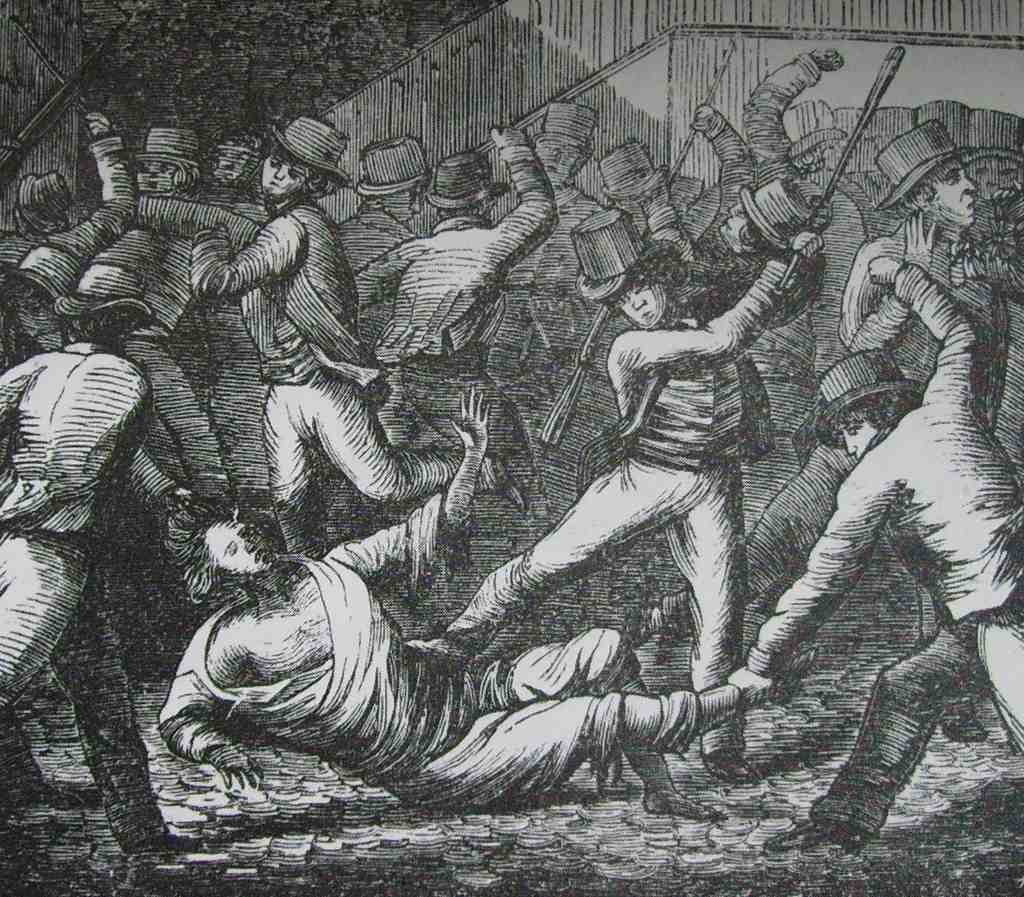
Look for a detailed old illustration showing a chaotic crowd, men in hats with sticks raised, and a lone figure on the ground-you’ll spot it right in front of you, where people once gathered in a fervor at the edge of Riddarhustorget.
Now, picture the cobblestones beneath your feet on a hot June day in 1810. The city is buzzing, thick with tension and suspicion, as crowds press against each other, voices rising and muttering with the taste of free spirits-quite literally, for that day, brännvin was flowing through the streets. All of Stockholm seemed on edge, whipped up by rumors and fueled by anger. At the center of it all was Axel von Fersen, the kingdom’s marshal, a man dressed head to toe in the brilliant white regalia of the Seraphim Order, his long grey hair falling over his shoulders just as etiquette demanded. He had refused warnings to stay away; bound by duty, but also-perhaps-a touch of pride, he climbed into a grand carriage crowned in gold and glass, pulled by six shining white horses.
The day began with solemn bells, echoing across the city as church after church joined the mournful chorus for the beloved Crown Prince Karl August, whose sudden death in distant Skåne had cast a deep shadow of suspicion. Many believed he hadn’t died from a stroke, as the doctors claimed, but from poison. And the name being whispered behind every hand, scribbled in satirical pamphlets and whispered over drinks? Axel von Fersen.
As the royal procession wound through Stockholm’s narrow streets, the mood curdled. Hands gripped stones, shouts of “Murderer!” cut the air, and the glare of the noon sun sparked off the jagged edges of broken glass as projectiles shattered the marshal’s ornate carriage windows. In moments, the spectacle turned savage. The angry mob surged forward, hurling sticks, coins, whatever they could grab. By Hornsgatan, the attack was relentless; by Kornhamnstorg, the violence swelled to a storm as Fersen’s carriage was battered, and on Stora Nygatan the mood was blistering with rage.
Staggering, Fersen was dragged from the carriage and into a nearby house-a noisy tavern owned by a police officer named Hultgren. But inside, the threat only grew. As shouts and blows echoed off the timber walls, Fersen’s last hope was a dash across the square towards Bondeska palatset, desperate to reach the protection of soldiers from the Svea Life Guards. Amid the press of bodies, he lost his grip on his companion, called out for help-“Boys, save me!”-but the soldiers, pinned by their orders, would not move. Around him, the crowd roared, feverishly striking him again and again until, in a matter of moments, the man who had served kings lay motionless upon the street, nothing done to save him.
What followed was chaos no less shocking. The mob didn’t scatter; for hours they milled under the summer sun, demanding more blood, taunting generals as they tried to restore order with cannon fire, only to be met by showers of stones. It took the threat of loaded muskets and sabers before the crowd finally, reluctantly, broke and the square fell silent.
But the violence of that day lingered. For months after, Stockholm whispered of conspiracy, of bribes and hidden plots, blaming everyone from the officers on duty to the government itself. In the end, despite interrogations of nearly a thousand souls, almost no one was ever convicted; only a handful bore any punishment. Years later, the law decided: Karl August had died from natural causes, Fersen and his sister were just rumors’ unlucky victims. Yet, the shame of that day stuck-a moment often described as “the absolute bottom of Swedish dishonor.”
And if you listen closely, some say on quiet nights you might yet hear ghostly footsteps in the old house at Stora Nygatan 1, where Fersen’s blood was once spilled. Some even claimed a certain shiny cobblestone-always finding its way back, no matter how many times the paving was redone-marked the place of the marshal’s fall, though now even that mysterious stone has vanished beneath decades of new pavement. As you stand here, imagine the cries, the thunder of feet, and let the shiver of history wash over you-Stockholm hasn’t forgotten what happened on this very ground.
Wondering about the background, murder or the later events? Feel free to discuss it further in the chat section below.




