
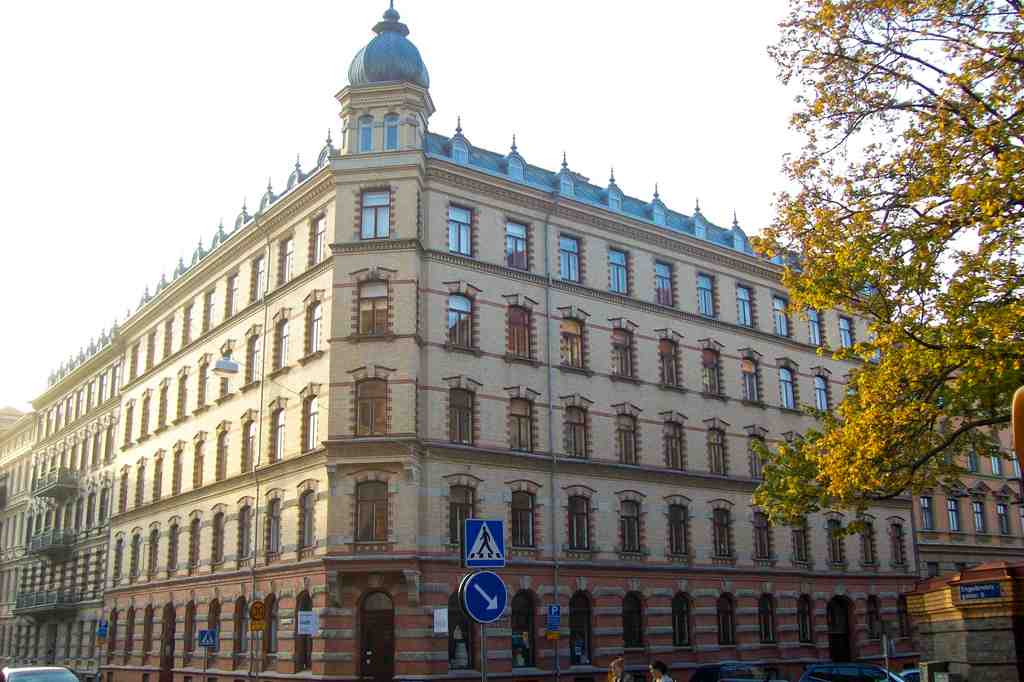
To spot Vasastaden, look for a grand, cream-brick stone building with rows of tall windows and a rounded corner tower topped with a pointed dome-right at the lively corner ahead of you, surrounded by leafy trees and broad streets.
Now, let’s take you back in time! Imagine you’re standing where cows once grazed and the only passersby might’ve been the odd sheep or a farmer whistling his favorite tune. Before these elegant stone buildings sprang up, this place was called Hagaheden, a sprawl of open fields and tiny homesteads. If you listen closely through the city buzz, you might almost hear an old cow mooing in the distance! But don’t worry, no cow crossings here anymore-just stylish streets and grand architecture.
Back in 1861, the leaders of Gothenburg faced a challenge: How to turn these pastures into something as magnificent as Vienna or Paris? So, they held Sweden’s very first city planning competition, like the “Idol” of urban design, with hopeful architects sending in ideas. No one won first prize, but two scrappy proposals split second place-so they mashed them up and voilà, Vasastaden was born in 1866, thanks to a plan full of broad streets, leafy esplanades, and sturdy stone blocks.
From 1868 right up until the Roaring Twenties, skilled hands built these homes, many drawn by star architect Johan August Westerberg. Picture the hustle: bricks clinking, laughter from workers, and the scent of fresh mortar mixing with rich earth. Today, five of these buildings are so important, they’re protected as historical treasures-like the Heyman Villa and even the mysterious “Tomtehuset,” or House of Santa!
So as you stand here, look at the solid face of Vasastaden and feel the mix of elegance and history. It’s not just bricks and windows-it’s a living snapshot of how Gothenburg wanted to be grand, green, and a little bit European. And you didn’t even need a time machine, just good walking shoes!




