
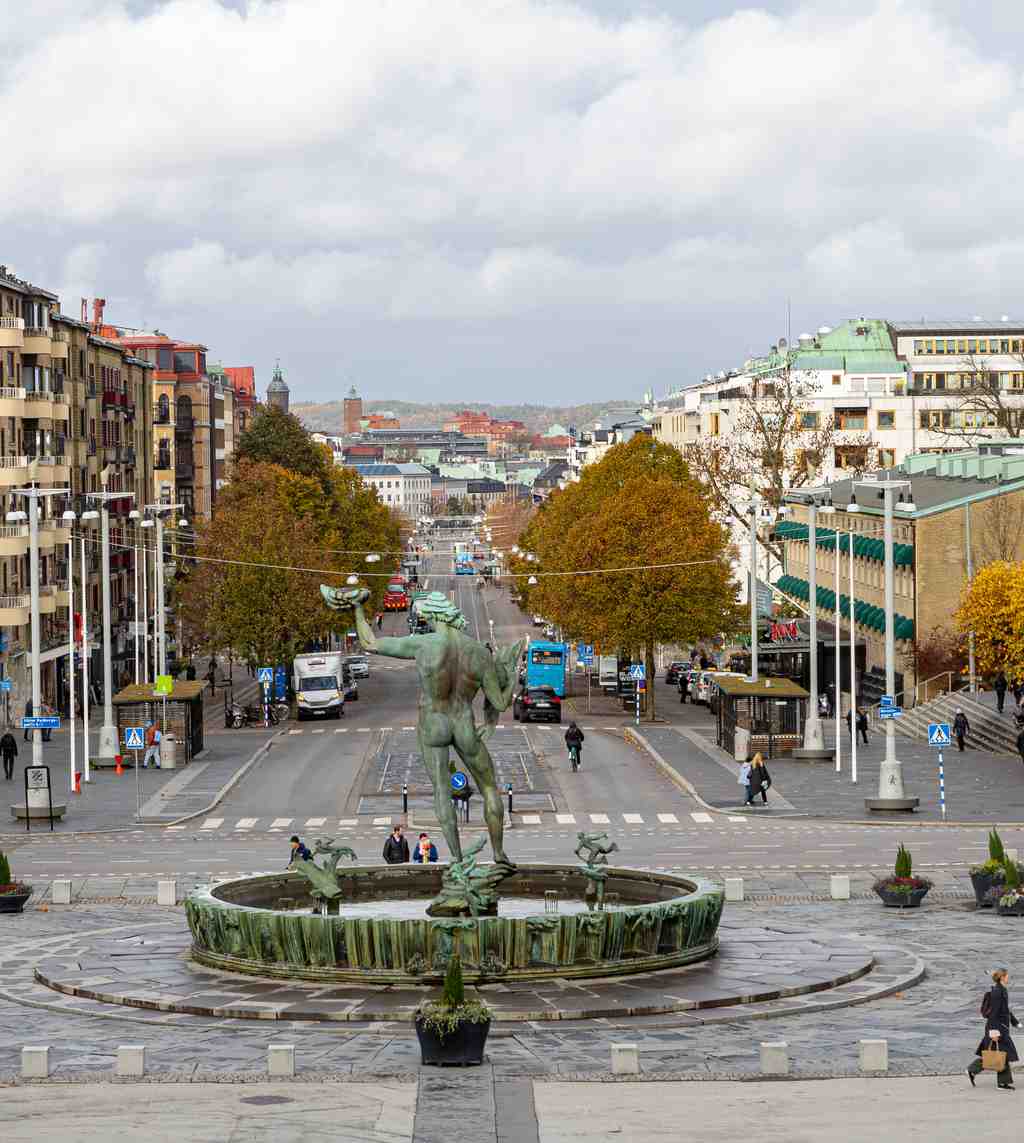
To spot Kungsportsavenyen, just look straight ahead: you’ll see a long, tree-lined boulevard stretching out before you from the big Poseidon statue, running gently downhill and disappearing into the cityscape with grand buildings flanking both sides.
Now, take a good breath of that city air and imagine you’re about to stroll along Gothenburg’s very own parade avenue-locally known as just "Avenyn." If Gothenburg were a theatre, Avenyn would be the spotlight-lit stage, dazzling at 840 meters long and always hosting a grand performance of lively city life. Back in the mid-1800s, though, this bustling stretch was nothing more than gardens, greenhouses, and quiet plant nurseries-an unlikely birthplace for the city's proud boulevard. In fact, in 1865, one meeting at city hall reimagined these sleepy plots as the backbone of their big-city dreams. Picture a wide avenue stretching from the old city bridge, cutting a straight line through what used to be the Kristinelund estate-where the only traffic was people bent over tending cabbages!
But oh, the drama started early! When the city fathers decided to call it "Kungsportsavenyen," the name itself caused a commotion. Some folks sniffed that "aveny" sounded far too foreign-almost as if Gothenburg was trying on fancy Parisian trousers. At one point, city leaders tried to rename it "Kungsportsgatan" instead, but property owners who didn’t want to change their addresses (and probably got tired of rewriting letters) protested loudly. In the end, tradition won, so “Avenyn” it remained-though people bickered about it as only Swedes can: politely, but incessantly.
The first block, Kalmarehus, popped up like a proud first tooth in 1872, but it took until 1914 for the avenue’s very first shop to open-just imagine those empty sidewalks waiting for their first can of pickled herring to be sold at number 24. As the twentieth century rolled in, those generous sidewalks-originally people’s front gardens, can you believe it?-eventually all became public walkways, and the avenue stretched further and further, up past what’s now the bustling Valand tram stop.
Speaking of trams, here’s a fun tidbit: stand in the middle of Avenyn and listen for the hum and rattle. Since way back, Valand has been a crossroads of blue trams-if you’re lucky, you might spot line 3, 4, 5, 7, 10, or even the fairy-tale-sounding Liseberg line gliding by. During the 1923 Jubilee Exhibition, the trams proudly rode all the way up to Götaplatsen, circling around like show horses after their big city parade.
But Avenyn isn’t just about grand plans and city politics. Over the decades, it’s tuned itself to the rhythms of popular culture and music-rock bands penned odes to it, newspapers held music competitions on its stones, and all sorts of artists and daydreamers have made it their stage. As you look down the avenue, you’re gazing at layer upon layer of history-where Paris met Sweden, addresses changed and changed back, trams sang their metallic songs, and every weekend, someone’s first night out became a story for the ages. Welcome to the living, breathing heart of Gothenburg! Soak it in-but keep an eye out; if you look long enough, you might spot a marching band or a rock legend tuning up for the evening.
To delve deeper into the history, valand tram stop or the in popular culture, simply drop your query in the chat section and I'll provide more information.




